Showing posts with label Dacia. Show all posts

Tuesday, 8 January 2013

Road Test: Dacia Sandero TCe 90 Alternative

 
Price as tested: €11,990

+ Cheap, cheerful, well equipped, ESP as standard
– Rear seat space could be better
= Solid, undemanding and affordable

When Renault’s budget brand, Dacia, launched itself into the Irish market last summer, it did so with just 10 dealers and a single model, the Duster SUV. Except it didn’t really even have a single model, as right-hand-drive production of the Duster didn’t begin until just last week, so all Dacia could do in Ireland was show potential customers some left-hand-drive demos, with an older design of cabin than would be arriving from the factory when Irish cars rolled off the line. Sounds like a recipe for disaster, but with that astonishingly low €15,995 price tag (around €10,000 less than most direct competitors) the Duster has already been a success; it’s sold out until April, with 500 orders just starting to be filled. Just goes to show what you can do with a headline-grabbing price.

Of course, price isn’t everything and Dacia has come in for much criticism since the Duster’s launch for its attitude to safety equipment. Many reviewers were upset to notice that the Duster (an obvious family car, don’t forget) doesn’t come with standard electronic stability control, and the Lodgy MPV (currently only available in Europe) was severely marked down by crash test experts EuroNCAP.

So with the arrival of this, the second-generation Sandero small car (the first gen was never built with right hand drive) Dacia has to prove that it can expand beyond the niche appeal of the Duster and take on the big (small) boys such as the Fiesta, Polo and Yaris.

Thankfully, a quick glance at the spec sheet reveals that the Sandero does indeed come with ESP as standard, as are ABS and brake assist. Why the standard ESP on a smaller car when the Duster continues to do without? According to Dacia, it’s because the Sandero sits on an all-new platform, so under EU regulations, has to have ESP as standard. The Duster, based on the original 2004 Dacia Logan, can get away for a while without it.

For a basic price of €9,990 (around €5-6,000 less than most of the competition) the Sandero comes with four airbags, Daytime Running Lights, height adjustable headrests, 60/40 split folding rear seat, electric front windows and Radio with CD, MP3, USB and Bluetooth phone connection alongside its standard safety toys, which seems pretty generous. Step up a level to the Signature trim and you get alloys, air conditioning, a trip computer and more.

That basic model comes with an old Renault 1.2-litre petrol engine developing 75bhp, which looks alluringly priced but whose Co2 emissions of 135g/km will set you back €280 a year in motor tax. You could go for the 90bhp 1.5 dCi diesel engine, but we reckon you’re much better to upgrade yourself to the 895cc turbo three cylinder TCe 90 engine. It’s not only cutting edge (a first for a Dacia, which usually just sticks with older Renault tech) which cuts your Co2 emissions to 116g/km and your tax bill to €200.

Quite apart from which, it’s a terrific engine, pulling cleanly from low rpm and proving both entertainingly muscular and really very refined. It would be an outstanding engine in any car, but in an €11,090 Dacia (€13,090 if you want it in the ritzier Signature grade), it’s close to amazing.

If you’ve ever owned a Renault in the past decade, you can amuse yourself for a few minutes by just sitting in the Sandero’s cabin and playing Spot The Switch. A little bit of old Clio here, some Laguna there and a smattering of Megane over there. Still, while it may be a ‘bitsa’ the Sandero feels well put together and Dacia’s reliability record is generally very good. Space in the front is fine and there’s a 320-litre boot (with a rather too high loading lip) but it would be good to see a touch more legroom in the back. It’s OK back there, but taller passengers, or those loading up bulky child seats, will feel the pinch. There are a few rough edges to the quality of the plastics, and the seats are a little too narrow and perched-up for taller drivers, but otherwise there’s nothing to complain about.

That goes equally for the dynamic performance. Certainly, the Sandero’s chassis case is helped by the performance of that TCe 90 engine, whose 90bhp and 135Nm of torque help to cover up any holes in the cornering deportment, but the plain fact is that the Sandero is perfectly fine, if totally unexceptional, to drive. It rides very well, especially around town where it’s particularly good at shrugging off speed bumps, and on the motorway it feels planted and secure. On a twisty road, well, you’re not going to get up early to drive it for fun, but it’s fine, although the mute, rubbery steering discourages any attempts at enthusiastic driving.

The Sandero is an avowedly simple car, and in an era when car makers are constantly trying to surprise and delight us with yet more gadgetry and gimmickry, that’s a rather refreshing take. It’s quietly handsome (Germanic, claims Dacia, as opposed to its cousin, the more Latin Renault Clio), practical and quite fine to drive. With those temptingly low prices, and now without the caveat of having to worry about trading up to get safety equipment, it’s a tough proposition to argue with.


Facts & Figures
Dacia Sandero TCe 90 Alternative
Price as tested: €11,990
Range price: €9,990 to €14,990
Capacity: 898cc
Power: 90bhp
Torque: 135Nm
Top speed: 169kmh
0-100kmh: 11.1sec
Economy: 4.9l-100km (56mpg)
CO2 emissions: 116g/km
VRT Band: A4. €200 road tax
Euro NCAP rating: Not yet tested

Tuesday, 25 September 2012

Road Test: Dacia Duuster 1.5 dCi 4x2 Alternative


Price as tested: €14,990

+ Almost stupidly affordable, surprisingly refined, spacious, comfy
– Feels a generation back, dynamically, lack of standard safety kit
= Refreshing and refreshingly affordable


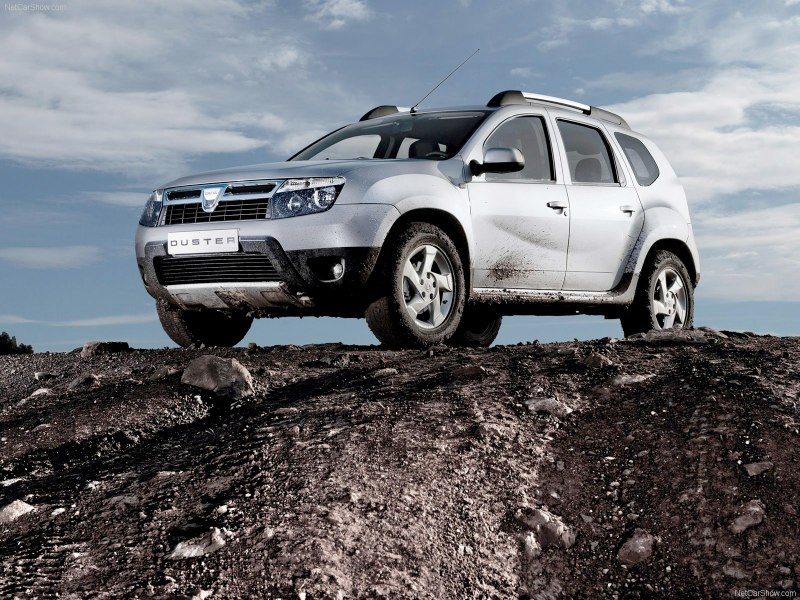
Yup. €14,990. For a brand new car, that’s not a supermini (as most if not all cars priced around the €14k mark are) but a big(ish) compact SUV with space in the back for the kids (for the adults, come to that) and a big boot. It looks nice (I think so at any rate), drives tolerably well (see below) and, thanks to Dacia Ireland’s headline-grabbing introductory finance offer, will cost you buttons on the monthly repayments. At a stroke, it will bring many hundreds of cash-strapped car buyers back into the new car market, buyers who need the space and the size but, because of tightened finances, would otherwise be shopping in the second hand car market.

It’s called Duster, and it’s not the first car to wear that badge. Back in the eighties and early nineties, when Dacia was still just emerging from Communist overlordship, there was another Duster, a car so bad that the legendary Car magazine pithily summed it up with the phrase “Duster to dust, ashes to ashes, please someone, pass us the matches.” Presumably, things could not be so bad this time around...

Needless to say, as with all deals that look too good to be true, it is, in some ways. But the essential fact of the price, and of Dacia Ireland’s introductory offer that will allow you to finance one for €149 a month (including a €4k deposit and a €6k final ‘bubble’ payment), is undoubtedly true.

So, how is Dacia able to do it for the money? A little history first off. Dacia was for many years the Romanian national car company, producing vehicles under the rule of the much-reviled Communist leader Nicolae CeauČ™escu. In that period, Dacia struck up a relationship with Renault, building a version of the old 12 saloon under licence – many of which can still be seen circulating the streets of Bucharest – a relationship that would eventually lead to Renault buying a majority stake in Dacia. The idea was, and is, that Dacia uses older Renault components whose investment has already been paid for, builds cars out of them in a low-cost environment behind the former Iron Curtain and flogs them to you and I at bargain prices, giving Renault a bulwark against the ever-encroaching Korean brands and the constant danger of the massed ranks of Chinese cheap car makers.

It’s a recipe that has worked rather wonderfully. Dacia and its various models have been well received in Europe and it’s currently the fourth best-selling brand in France. Its launch here has been somewhat delayed (the Duster itself has been on sale in Europe for two years already) but with that price tag, it could prove to be a canny move for Renault Ireland, catching buyers whose car purchasing power has been eroded by recession and cutbacks. Next year, once the Duster is properly on sale (you can test drive and order one right now but Irish-build right-hand-drive cars don’t arrive until January), there will be other Dacias, including the already-beloved Sandero hatchback (thank Top Gear’s James May for that one) and the Lodgy mini MPV. Presumably all at genre-defying prices too but that’s getting ahead of ourselves somewhat. We have the just the Duster to deal with for now.

For your supermini money, you do genuinely get a large family car. Not so tall and wide as to be intimidating in tight car parks and urban manouvres, but large enough to allow one six-footer to sit comfortably behind another and with a spacious 475-litre boot (as long as you stick to the front wheel drive models).

Those expecting a poverty spec cabin will be surprised. The left-hand-drive version we tried had a perfectly pleasant interior, and the good news is that by the time Irish right-hand-drive production reaches these shores in January, the cabin will have been given an upgrade to make its touchy-feely quality even more appealing. You still get electric front windows, fingertip stereo controls (familiar for anyone who’s ever driven a mid-nineties Clio) and Bluetooth connection for your phone, with an aux-in socket for your iPod. All surprisingly sybaritic.

What you don’t get are electric side mirrors (you need to upgrade to the €16,990 Signature model for those, which will set you back roughly an extra €20 a month on the finance plan), alloy wheels, seatbelt pretensioners, air conditioning, a trip computer, rear electric windows or map lights (ditto). More worryingly, Electronic stability control doesn’t even appear as an option, and is only fitted to the range-topping €18,990 Signature 4WD model. Irish buyers tend to be pretty immune to a lack of safety options. Back when ABS brakes were still considered an option, we tended to spend the same cash on sunroofs or nicer alloys. Presumably so, few will notice or miss the inclusion of ESP, at least until they get into difficulties on a wet road, but such has always been the spec-blindness of the Irish car buyer. Quite what we should make of Dacia being happy to chuck in Bluetooth, electric windows and fingertip stereo controls, while leaving such vital safety kit on the pricey shelf is not clear yet. Buyers of course have the choice and the option to upgrade is there, but what price safety?

That range-topping 4WD model comes with, obviously all-wheel-drive, switchable from a simple rotary controller on the dash, and which gives the Duster a decent bit of rough ground, dirt track and ploughed field ability, and it this form it starts to feel a touch like a Land Rover Defender. Not in terms of ultimate off-road capability, of course, but the plain, unadorned cabin, upright driving position and sense of ruggedness are similar. The Duster’s a damn sight more refined on the road though...

Behind the bluff nose of the Duster sits Renault’s tried and tested 1.5 dCi diesel engine in 110bhp form. Fitted to a 2WD Duster, it returns a claimed 5.0-litres per 100km on the combined fuel economy cycle (better than 55mpg, which we got nowhere near on our brief test drive, but then it was in a car with barely-run-in mileage) and emits 130g/km, so will cost you just €225 to tax for the moment. Impressively, the 4WD model’s figures are only slightly poorer, and it’s still in Band B. It comes as standard with a three-year warranty, but you can upgrade to five-year cover.

Surprisingly, it won’t rattle your ears off. The first casualty of cheap car design is usually refinement, but the Duster idles quietly, is only mildly noisy on the motorway and shouts excessively only if you give it the beans in the rather short-geared first or second ratios. On other than main roads, the Duster does its best work shunting between third and fourth in the six-speed gearbox, although its rubbery shift mechanism will discourage you from getting too enthusiastic.

Dynamically, the Duster is hardly what you’d call sharp, but neither does it display the dreadful manners that its bargain bucket price would have you suspect. The steering is light, over-assisted and entirely fake feeling, but the nose does follow its instructions with reasonable faithfulness. There’s lots of body roll, but the trade off for that is a pleasingly pliant ride, and the Duster is quite happy being hustled along country roads, as long as you don’t get too optimistic with the cornering speeds. Mind you, overcook things and the reassuringly firm brakes mean you pull up smart and straight in an emergency stop. Basically, the Duster is happiest when loping along, and it feels entirely pleasant in that role.

So, the ultimate question beckons. Should you buy one? Well, given the fact that it’s around €10,000 less than its direct competitors, you’d be a bit mad not to at least consider it, and it certainly doesn’t feel like it’s packing €10k less when it comes to quality, dynamics or practicality. Yes, the likes of the Skoda Yeti and Nissan Qashqai have a much deeper varnish of sophistication, and come with things like air conditioning and electronic stability control as standard. If you’re happy doing without such things (or you’re equally happy to upgrade to a more expensive Duster that has them, which is still significantly cheaper than its rivals) then it’s a car well worthy of your consideration. It feels not cheap and cheerless but rather rugged and utilitarian, a significant distinction. It’s a simple, practical device, a car ideally suited to the rigours of family use and abuse (that lack of standard ESP notwithstanding) and you certainly won’t care if the kids spill, the dog sheds or the ice cream leaks.

Introducing the Duster at such a startling price is a remarkable calling card for Dacia’s debut. If the Duster proves popular, then Dacia’s more established rivals will have to do some serious pruning of their price lists.


Dacia Duster 1.5 dCI 4x2 Alternative
Price as tested: €14,990
Price range: €14,990 to €18,990
Capacity: 1,461cc
Power: 107bhp
Torque: 240Nm
Top speed: 171kmh
0-100kmh: 11.8sec
Economy: 5.0l-100km (56mpg)
CO2 emissions: 130g/km
Road Tax Band: B €225
Euro NCAP rating: 3-star; 74% adult, 78% child, 28% pedestrian, 29% safety assist