Showing posts with label Honda. Show all posts

Wednesday, 23 January 2013

Road Test: Honda Civic 1.6 I-DTEC SE


Price as tested: €23,795

+ Terrific engine, quality, space, practicality
- Dynamically not as sharp as it should be
= Lovely engine but doubters will still need convincing


Just over a decade ago, Honda didn't make Diesel engines. In spite of the great advances that, even that long ago, had been made in making diesels smoother, gruntier and more refined, Honda regarded them as anathema. Too noisy, too smelly and just not us, old boy. We'll stick to high-revving, lightweight VTEC petrol screamers, thanks.

Given that, it was a pleasant surprise that the original 2.2-litre i-DTCi engine was, and remains, so good. And if it has taken this long to get a second, more compact, Honda diesel to the market then at least, as with John Mills' pint at the conclusion of Ice Cold In Alex, it was worth waiting for.

Honda's new 1.6-litre i-DTEC engine makes its debut in the Civic, a car which pushed Honda Ireland's sales up by a healthy 12% last year, against the background of a stagnant market. And given that the Civic's lonely 2.2-litre diesel, even with its Band A emissions, excluded Honda from the bulk of the c-segment market, its expectations for the new engine are commensurately high. It's expected not just to expand overall Civic sales, but to do so while simultaneously taking over most of the 2.2-litre's sales.

Just as well then that Honda's engineers haven't simply sleeved-down the old 2.2 to make a 1.6. The engine is new from the sump up and Honda claims that it's the lightest engine in its class. So sylph like is its weight that Honda has retuned the Civic's front suspension and steering to take advantage, with claims for improved feel and agility being made.

Honda makes great claims for its refinement, even fitting an active acoustic damping system in the cabin, and the result is indeed hushed; you only get a distinct diesel clatter when you venture beyond 2,500rpm. Better again is the performance. The 120bhp Honda gets from its 1.6 makes mincemeat of the similarly sized engines in the rival Ford Focus and VW Golf (95 or 115bhp and 105bhp respectively) and the i-DTEC engine makes a decent fist of convincing you that it's much larger in capacity,thanks to largely lag-free delivery and solid mid-range punch.

We doubt you'll ever match the claimed fuel consumption of 3.6-litres per 100km (78mpg) in real world driving, but on our brief test drive, we got 4.6l/100km (61mpg) so it's not what you'd call thirsty. 94g/km bests the standard Golf (albeit not the BlueMotion model) and Focus and means you can tax your Civic for €180 a year.

So, with the engine now bang-on the par for the class in terms of size, and potentially even class-leading in terms of its overall performance, can the Civic now meet the mighty Golf and Focus head-on?

Well, not quite but it's closer than it was before. The current Civic, when launched, seemed too detached in its driving style and too crude in its ride quality. Honda's decision to continue with a simple torsion bar rear suspension brings boons in weight, affordability and space efficiency, but it's simply not at the races when compared to Ford and VW's more complex multi-link rear ends.

So what happens is; you barrel happily into a corner in your shiny new Civic, enjoying the recalibrated steering which, while still a touch too light, feeds back a little better than before. You also notice, and enjoy, the fact that the lightweight engine means the front end is more eager to sniff out the apex. The Civic lacks the outright driver involvement of some rivals, but it's still a fun drive.

And then you hit a mid corner bump and feel the rear end bang, hop and skip. It's not as bad as the reaction you'd get from the VW Beetle (which we tested this week also and which has a similar rear suspension arrangement) but it still feels unacceptably crude compared to the best of the competition.

Which is a shame, as the rest of the Civic feels so sophisticated. I've heard some colleagues complain that the cabin feels 'too Japanese', and I can kind of see the point. The multi-level displays, a mix of analogue and digital, won't be to all tastes and yes, the surfaces and materials don't have that final Volkswagen-esque sheen of touchy-feely niceness. But the sense of sheer quality in the assembly is easily noticed. Honda has better chops when it comes to bolting together cars that last than most (even the vaunted Germans, and notwithstanding the 2.2 diesel's habit of having an expensive flywheel-related off-day) and you can feel that sense of quality in the cabin. It's very much a love/hate thing (as is the exterior styling) but for what it's worth, I like both. It's more distinctive by far than either a Toyota Auris or Mazda 3 and feels more special than a Focus or Golf. It's also more versatile, with a big cabin and those clever back seats that either fold flat horizontally or flip up vertically, like cinema seats. The payload options are almost infinite and it's the only mid-size hatch with which you'll feel truly smug in the IKEA car park...

Prices start from €23,975 for the SE model; a touch more than a Focus or Golf but it is better equipped, including climate control, stop-start and alloys as standard. If you buy into its quirkiness, or Honda's engineering-led image, then it's a more interesting alternative to the mainstream masses, and one with a deeply impressive new engine. John Mills was right, all those years ago...

Facts & Figures
Honda Civic 1.6 i-DTEC SE

Price as tested: €23,975
Range price: €21,895 to €30,395
Capacity: 1,598cc


Power: 120bhp


Torque: 300Nm


Top speed: 207kmh


0-100kmh: 10.5sec


Economy: 3.6l-100km (78mpg)


CO2 emissions: 94g/km

VRT Band: A2. €180 road tax


Euro NCAP rating: 5-star; 94% adult, 83% child, 69% pedestrian, 86% safety assist


Friday, 18 January 2013

News: Is this Honda's next Jazz?


This is the Honda Gear, a concept small car introduced, with no small amount of surprise, at the Montreal motor show this week.

With all eyes across the lake on Detroit (where Honda was showing off its NSX and Urban SUV concepts) the Gear kinda snuck in under the radar a little.

Now, so far, Honda has not made any official comment about the concept's production chances, nor whether or not it's even meant to be viewed as styling signpost for the next Jazz, but what we do know is that it's about Fiesta-sized, and designed to be both simple and functional and yet customisable with lots of options.

Explaining the Gear's purpose in Montreal, Dave Marek, Design Director at Honda R&D Americas said “Subcompact cars are usually either utilitarian, but uninspiring or they’re fun, zippy cars that are impractical and too expensive for the Gen-Y buyer. GEAR Concept tears down those walls – it’s practical but fun, customizable, connected and affordable. Everything that young, discerning urban buyers would want in a car.”

Well, what do you think? A welcome return to funky design at Honda? A hint of original Civic in that recessed grille and headlights? Would you chop your Jazz in for one? 


Thursday, 17 January 2013

News: Detroit Show roundup... in 5 words or fewer...


Look, we're all leading such busy lives now and, frankly, the Detroit Motor Show (or North American Interational Auto Show, to give it its full and correct name) is massive. If we were to give you the full low-down on every car there, we'd be here a month. We've all got better things to do. So, to keep things brief, here's our run down of the Detroit highlights. In five words or fewer...


Jeep Grand Cherokee facelift:

Our favourite Jeep, now better.


Kia Cadenza.

Kia makes a Camry. Nice.

Lexus IS.

No diesel, just hybrid. Shame?


Honda NSX concept.

Closer to reality now. Awesome.


BMW M6 Gran Coupe.

So much want, it hurts.


Chrysler 300C Motown edition.

Chrome wheels kick-ass, right?


Cadillac ELR.

Electric Caddy, basically a Volt.


Chevrolet Corvette Stingray C7

Essentially, show-stopping. 'Nuff said.


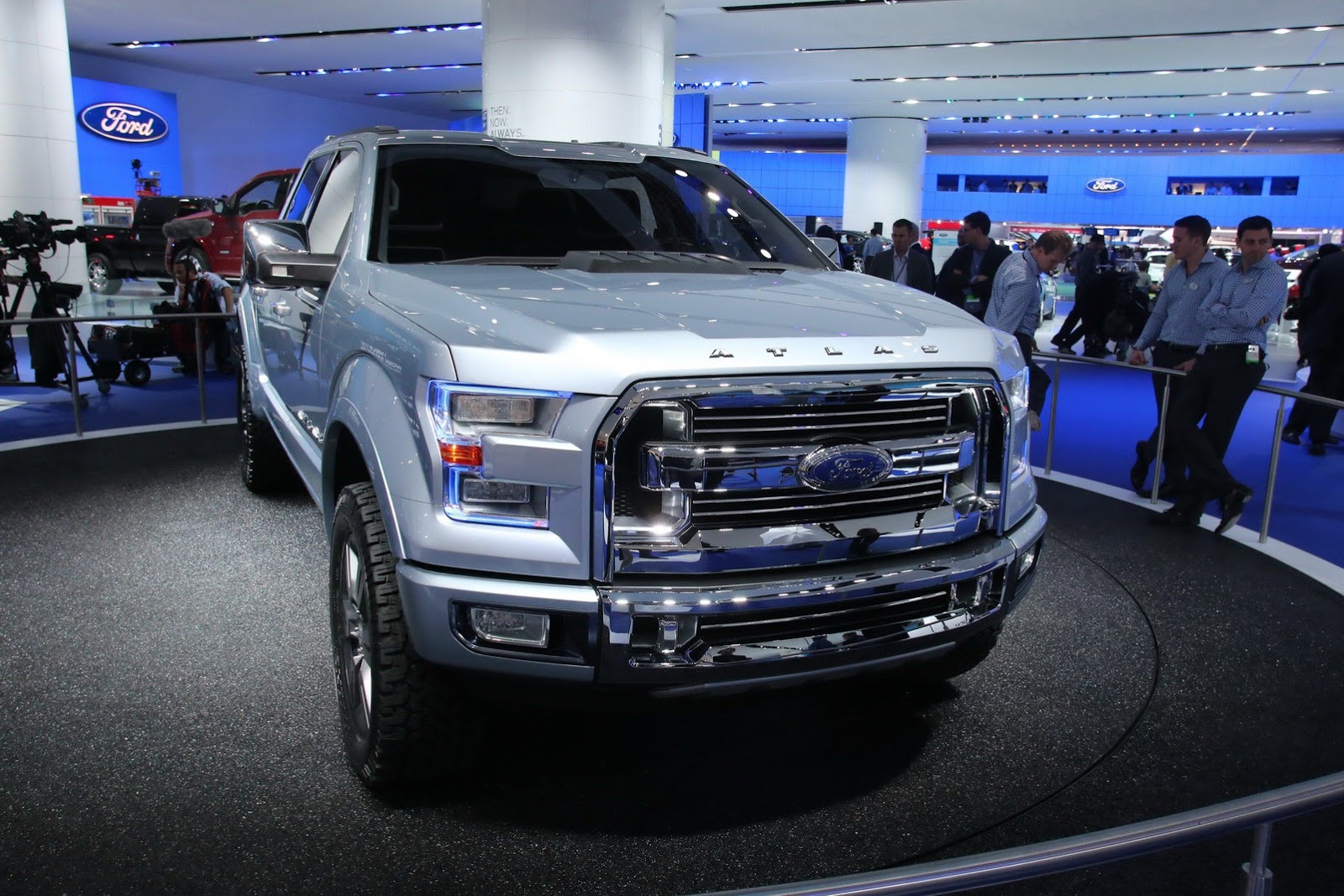
Ford Atlas concept.

Utterly massive. Not coming here.


Honda Urban SUV concept.

Jazz-based Yeti rival. Slick.


Hyundai HCD-14 Concept.

Korean limo in desirability shock.


Mercedes-Benz CLA.

Still want that C-Class, pal?


Nissan Resonance Concept.

Basically, it's the next Murano.


Ford Focus ST Shelby.

No extra power, bit vulgar.


Tesla Model X

Electric, gullwing doors, simply stunning.

Toyota Corolla Furia concept.

New Corolla. Had you guessed?


Volkswagen CrossBlue SUV concept.

Underneath, it's a Golf. Honestly.

Don't forget to check back with us in a few week's time when we'll be summing up the Geneva Motor Show entirely in mime...


Tuesday, 6 November 2012

News: Honda's new Civic diesel to hit 78mpg


Honda is at last starting to reveal technical details of its upcoming Civic 1.6 iDTEC diesel and the first figures to emerge are somewhat startling. How does 94g/km and 78mpg grab you?

Honda's official figures are 3.5-litres per 100km (which translates as 78mpg) and 94/km, putting it well ahead of the current Ford Focus 1.6 TDCI in emissions and consumption terms too. It's ahead on power too, with 118bhp, against the Ford's 115bhp and the Volkswagen Golf BlueMotion's 105bhp. Mind you, the new MkVII Golf will beat the Civic's Co2 figure, with an 88g/km average, but the Civic's rating is still a massive step forwards for Honda.

You can currently buy a Civic only with a 2.2-litre diesel engine, which is frugal enough to emit just 110g/km of Co2 and set a 4.2-litres per 100km average (64mpg).

Sales of the new 1.6 diesel Civic will start in the new year, and they'll be followed by a version of the new CR-V SUV using the same engine, which is expected to record equally startling emissions figures of just 99g/km.

Friday, 26 October 2012

Road Test: Honda CR-V 2.2 iDTEC SE


Price as tested: €37,785

+ Space, quality, comfort, steering, off-road ability, styling
– Cabin too plain for this price level, some refinement issues
= A solid SUV from Honda, but will find life tough against sharp competition

It seems almost crazy to think of it now, but back when the original Honda CR-V was launched, the Japanese brand controlled one quarter of the Irish SUV market. Back in 1998, it seemed, we just couldn't get enough of one of the original soft-roaders.

Spool forward to 2012 and things have changed rather a lot, not least of which, the CR-V itself. The outgoing generation was larger than before, and centered around a Diesel engine rather than the petrol-focused original. High in quality and comfort, it was a rival to the likes of the BMW X3 and Audi Q5 as much as its more obvious sparring partners, the Toyota RAV 4 and Ford Kuga. But good car though it was, the outgoing CR-V had to content itself with a much smaller slice of the market, not least because instead of the mere handful of rivals the 1998 original had to contend with, now there is an army of them.

With this new generation model of CR-V, Honda will be trying to claw back some of that original sales dominance and it's going about that in three distinct ways.

For a start, the new CR-V carries over the previous models' two most successful features; its cabin space and its 2.2-litre 148bhp diesel engine. The spacious interior and cavernous boot mark the new CR-V out as one of the few SUVs that can actually boast proper Utility; you can really cram it full of people and cargo, not something you can say for all  of its rivals.

Meanwhile, the still-excellent 2.2-litre iDTEC engine, while it lacks outright power compared to such rivals, is still smooth, punchy and impressively economical. It has even managed to drop a tax band, from Band D to Band C, saving owners a significant amount in annual motor tax.

The second strand to the CR-V's strategy is its styling, which looks much bluffer and more striking than it did before. The old CR-V always looked a touch apologetic. This new one is much more assertive, and all the better for it.

Finally, Honda has realised that it must compete on price, and the most affordable version of the new CR-V clocks in with a €37,795 price tag – within €1,000 of its most significant new rival, the new Hyundai Santa Fe.

The CR-V can even trade equipment and specification blows with the Hyundai, for while it lacks some toys as standard (such as Bluetooth phone connection, and it also lacks the Hyundai's seven seat layout) the CR-V comes with four wheel drive as standard.

And that all-wheel-drive is not just there for show. Honda was quite happy for us to take our test car off into the muddy outback, slipping and sliding over surprisingly tough terrain. Few owners, if any, will put it to the test, but the CR-V can certainly tackle the rough stuff.

On the smooth, it's as good as ever, retaining the old CR-V's combination of tidy handling, a comfortable ride quality and sharp, alert steering. Again, it's very close to the Hyundai in dynamic terms, and that's a good ball park to be in.

There are two let-downs to the CR-V though, and both of them are inside. We've already mentioned the excellent space, and the seats, both front and rear, are comfy and supportive. But there's a lack of flair to the cabin design and layout, a sense of plain-ness that disappoints, especially given Honda's premium-status aspirations.

That's not helped by a distinct, bassy boom that comes up from under the boot floor, and makes its presence known throughout the cabin from speeds as low as 70kmh. It's a black mark against the CR-V's refinement, which is a shame.

Those two issues apart, though, it's hard not to like the CR-V. The new styling is pleasingly distinctive, the engine and chassis as good as ever and the cabin and boot as spacious as you could hope. We can't think of a good reason why it wouldn't be close to the top of your SUV shopping list.

Well, actually, there is one good reason. It's that this 2.2-litre, 4WD CR-V might not be the best CR-V to buy. Later in 2013, there will be a front-wheel-drive CR-V, using Honda's all-new 1.6-litre Diesel engine, that will be more affordable again and will, apparently, boast astonishingly low 99g/km Co2 emissions, putting this large, spacious SUV on a tax band par with the likes of a Volkswagen Golf and Ford Focus. So while we like this new generation of CR-V, it might be worth holding off on buying one for a while yet...


Honda CR-V 2.2 iDTEC SE

Price as tested: €37,795
Price range: €37,795 to €50,095
Capacity: 2,199cc
Power: 148bhp
Torque: 350Nm
Top speed: 190kmh
0-100kmh: 9.7sec
Economy: 5.6l-100km (51mpg)
CO2 emissions: 149g/km
Road Tax Band: C. €330
Euro NCAP rating: Not yet tested


Tuesday, 9 October 2012

News: Honda to develop fuel-cell cars for Scandinavia


Today in Copenhagen Honda, along with Toyota, Nissan, and Hyundai, signed a Memorandum of Understanding (MoU) with organisations from the Nordic Countries supporting the market introduction of fuel cell electric vehicles (FCEVs) and hydrogen refuelling infrastructure between 2014 and 2017, further highlighting Honda’s commitment to fuel cell electric vehicles as the ultimate zero emission technology. 


Honda has been engaged in fuel cell Research & Development since the mid 1980s and has been at the forefront of the industry in both R&D and sales of this technology. Last month Honda announced an all-new fuel cell electric model for Japan, the U.S. and Europe to be launched from 2015. This new vehicle will showcase further technological advancements and significant cost reductions. 

The MoU signed today seeks to generate dialogue with public and private stakeholders in Norway, Sweden, Iceland and Denmark on accelerating the market introduction of FCEVs and follows an agreement signed by car manufacturers in Europe in 2009 which identified 2015 as a potential point for market introduction in regions where hydrogen refuelling is available. 

Commenting on Honda’s involvement in this project, Ken Kier, Executive Vice President, Honda Motor Europe said, “In 2002 Honda became the world’s first carmaker to put a fuel cell car on the road with regular customers, delivering the Honda FCX to fleet users in the United States and Japan. We want to continue to lead the way for fuel cell technology across the world including Europe. This MoU signifies that commitment.” 

The MoU was signed in the presence of the Danish Minister for Transport and the Director of the International Energy Agency, directorate of Sustainable Energy Policy and Technology at the 3GF conference in Copenhagen.

Wednesday, 3 October 2012

News: Honda teases new Civic estate


Honda has teased us with a sketch image of an upcoming Civic estate. The picture, flashed up on the screen at Honda's stand at the Paris motor show, seems to show a tightly-contoured compact estate with a distinctive wraparound rear-end.


Honda is keeping tech details close to its chest for the moment, but when a pre-production version gets an airing at the Geneva show next March, expect it to have a slightly stretched version of the current Civic hatch's platform and Honda's all-new 1.6 diesel engine which should push emissions well below the 100g/km mark.

Wednesday, 26 September 2012

Features: Water Wings; the Honda powerboat challenge


The salty, briny water is dripping down the neck of my waterproof jacket and my spine feels as if it’s going to shatter every time the keel of the boat drops, with a sickening crash, down into a trough. And there’s a lot of troughs.


With the usual Murphy’s Law applying, the day I chose to go for a boating trip is not bright, sunny and calm. No, the waters of the Solent estuary are choppy, foamy and reflecting the grey, heavy overcast above. Despite all of this, I’m having some of the best fun, ever.

Which is exactly point, really. Although the Honda Four-Stroke Challenge racing series is a very serious event for the competitors, the boats are designed to function as pleasure craft during the off-season, so that the owners get full use out of their investment, not just a racing craft that has to be locked up during the winter months.

The boats are called Honda Sport Cruisers (there’s also a more extreme Honda Sport Racer, deemed too hot for a novice land-lubber like myself to handle) and although Honda supplies the 150bhp outboard engine, the rest of the boat is designed and built by Cougar Powerboats in Southampton. And that’s where things get really interesting.

You see, Cougar isn’t just some crowd who slap together some sheets of fibre-glass and lob a Honda engine onto the stern. Cougar is owned and run by a guy called Steve Curtis. Not familiar with the name? Well, if you’ve an ounce of salt in your veins, you will have. Steve is the all-time king of off-shore powerboat racing, the series with the huge, twin-cockpit boats powered by twin (yes, twin) Lamborghini V12 engines that skip from wave-crest to wave-crest at nearly 200mph. And Steve is a six-time World Champion at this, with the overcrowded trophy shelf to prove it. So going for a spin in a boat built by Cougar is a bit like taking Michael Schumacher’s Ferrari for a belt.

Thankfully, the Sport Cruiser lives up to its name. It’s an absolute piece of cake to pilot, even in the choppy waters we found. There are no awkward navigation devices to learn, no arcane start-up procedure. The Honda engine fires on the turn of an ignition key, and despite being out in the open, idles and revs as quietly and smoothly as your Granny’s Civic. Controls amount to a big throttle pedal, a steering wheel and a switch for adjusting the angle of attack of the engine. Apparently, that can help you gain extra speed on straight stretches and then, with careful adjustment, grant you extra ‘grip’ on corners. Sensibly, I ask my companion from Cougar, the aptly-named Alan Goodwin, to set it to whatever is the nearest thong to idiot-proof and leave it there.

From then on in, it’s just accelerate, turn and accelerate again. Well, it’s not quite that simple. The Solent is a crowded waterway and you have to keep a sharp eye out to avoid being run over by cruise liners, oil tankers and other pleasure craft. One salt-encrusted eye, too, which makes things trickier again. And then you have to be careful of wake turbulence, which can severely unsettle your own craft, make a note of wind direction and be aware of how it affects your steering… OK, so maybe not quite as easy as all that.

Still, the boat itself is ultra-friendly. With a deep-V hull it’s manages the neat trick of feeling impressively stable while still being incredibly agile. It feels, in fact, more than a little like a water-borne Civic Type-R, all revvy engine and sixpence-sized turning circle. Max speed is only around 80-90kph on the water, but when there’s no wind (or spray) protection, that feels more than fast enough.

For about STG£35,000 you too can get your hands on one of these boats, go racing for a season and then use it to go fishing or take the family out for jaunts across the lake. And get to rub shoulders with a multiple-world champion and his mates. And get to put ‘Racing Boat Pilot’ down on any forms you happen to fill in. Which sounds like staggeringly good value to me. Bring on that salt spray, I’m hungry for more…

Many thanks to Alan, Steve and all at Universal Honda Ireland for their help, without which, this feature would not have been possible.


Tuesday, 25 September 2012

Road Test: Honda Civic 2.2 iDTEC ES


Price as tested: €25,820

+ Looks, quality, space, clever rear seats, engine, economy
– Over-light steering, a touch pricey
= Deserves a sharper chassis, but quality and engine win you over

To say that the 2006 Honda Civic was a bolt from the blue would be an understatement roughly along the lines of “Liverpool in the eighties were a bit win-y” or “NASA’s Saturn V rocket; that’s a bit quick, innit?”

We had become used to Honda producing beautifully engineered, but relatively conservative cars. OutrĂ© styling and dramatic flourishes were not the Honda way. But then the Civic arrived and buried all of that, forever it seems. Space-age styling, dramatic proportions and an interior that, you’ll forgive the David Hasselhoff quote, looked like Darth Vader’s bathroom meant that the Civic left behind its plain-wrapper past and became the most distinctive family hatchback around.

Of course, that was all surface treatment. Under the skin, the Civic was actually a bit of a backward step, ditching the old model’s sophisticated wishbone suspension for simpler, cheaper struts and a torsion bars. It meant for cracking interior space but also for a driving experience that felt cruder and less well settled as the years went on and the competition hotted up. It also had a diesel engine that could only manage Band C emissions and the styling had started to arguably age quite badly.

So, quite a list of issues for the all-new Civic to work on, except it’s not actually all-new, merely instead a thorough re-working of the old one. The suspension is still struts and torsion bars, the flip-up “Magic” (and they really are) rear seats remain and the split level dashboard owes as much to the Blackpool illuminations as it does to fighter aircraft displays.

The first and foremost thing you notice about the new Civic though is its styling. Nothing new there, of course, but by sticking to the same rough template as before, yet honing the details, Honda has made the Civic look fresh and exciting again. With the split rear screen, ultra-sharp looking tail lights and finely cut lines and arches, we reckon it’s even better looking than before. There is a slightly droopy piece of plastic in the grille/bumper at the front, but you will be thankful of that when it comes time for parking knocks.

Inside, the style is again similar to what went before, but with better detailing. Certainly, the quality of the materials used has stepped up a notch, and the displays are clearer and simpler. There is one oddity though; the multi-function trip display (which incorporates a colour reversing camera on our ES spec model) allows you to do something as arcane as correct the outside temperature display (presumably after having consulted Met Eireann) yet it can’t display fuel range and average consumption on the some display, requiring you to click through about three sub-menus just to toggle between the two.

Mind you, you won’t actually need to be paying all that much attention to those two readouts as the updated 150bhp 2.2-litre iDTEC diesel engine has really, seriously raised its game. It’s a little bit noisier than the very best in the class (step forward the VW Golf’s 140bhp 2.0 TDI) but how does a claimed (and very realistic) 4.2-litres per 100km average economy figure and a Band A-friendly 110g/km Co2 figure sound? Better than the engine itself? Oh yes.

But this is not some poverty special with gutless mid-range and astronomical unit gearing. Work the lovely, snicky six-speed manual gearshift (a seven-speed DSG-style box is coming eventually) and the 2.2 displays a wonderfully muscular side to its character, flinging the surprisingly hefty 1,367kg Civic along. It is, in short, an absolute belter of an engine.

Sad to say though that the chassis doesn’t quite match it. The Civic feels, and is, very sure footed and rides with a firmly-damped assurance that feels more Germanic than Japanese. Relatively small wheels and high profile tyres on our test car doubtless helped with that. But the steering is a let down, lacking any of the meat and feedback that comes as standard with any Golf or Focus, and feeling disconcertingly Atari-like. Get used to it, learn to trust it and the Civic will go where you want it, hold a tenacious cornering line and never displays a bad handling habit, aside from a tendency to allow the unloaded inside wheel to spin exiting a tight junction. But it refuses to engage the driver.

That’s not helped by a driving position that feels too high-set, with the chunky wheel sitting in your lap, and seats that are just a touch too narrow across the seatback, even if they’re mostly comfortable.

Still, there are things that the Civic does very well. Like almost any Honda, it’s exceptionally well made and transmits that through to you by way of silky smooth surfaces in the cabin. Even the harder plastics on the dash, of which there are a few, feel better than most car makers’s high-grade stuff.

Then there’e the refinement. Aside from an occasional engine gurgle or clatter, there is very little noise allowed into the cabin. Tyre roar and wind noise are very well suppressed.

And then there’s the space. It does feel a little tighter than the old Civic, but there’s still good space to be had in the back, the ‘Magic’ seats allow you more versatility with how you carry your cargo and the boot is big (477-litres), square and deep.

So, where does the Civic fit within the fiercely competitive family hatchback world? Well, it’s not as engaging to drive as either a Focus or a Golf, but it sits well ahead of the likes of the Peugeot 308, Citroen C4, Toyota Auris or Renault Megane when it comes to the quality of its build and the quality of its engine. Of course, it damn well should do, as the cheapest diesel model, at €22,445 is a good €2k more than even the most expensive diesel competitor. Our ES test car clocks in at €25,820. That will improve a touch when Honda’s new 1.6 diesel arrives in 2013, but Honda always prices its products at a distinctly premium level.

Is it worth it? On balance, yes, but only if you’re happy to pay the premium demanded. We love the styling, the quality, the engine and the refinement, but truly keen drivers will be better served elsewhere, and more cheaply to boot.

Facts & Figures

Honda Civic 2.2 iDTEC ES
Price: €25,820
Range price: €21,395 to €28,825
Capacity: 2,199cc
Power: 150bhp
Torque: 350Nm
Top speed: 217kmh
0-100kmh: 8.5sec
Economy: 4.2l-100km (64mpg)
CO2 emissions: 110g/km
Tax Band: A. €160 road tax
Euro NCAP rating: Not yet tested


Friday, 21 September 2012

Road Test: Honda Accord 2.2 iDTEC 180bhp Type-S


Price as tested: €39,465

+ Immensely satisfying in almost every way
– Messy cabin layout, needs better Co2 performance
= Buy one, keep it forever

A warm sense of quiet satisfaction. That’s the best way we can describe the feeling that comes over you as you slip behind the wheel of a Honda Accord, in this case the latest sporty Type-S with its uprated 180bhp 2.2-litre diesel engine. There are very, very few cars in the world that can hold a candle to the Accord in terms of its engineering excellence and its build quality, and you can feel that as soon as you click open the handle, sigh onto the seat and clunk the door behind you. It feels built. To last.

OK, we’re not blind to the Accord’s few shortcomings, and we’ll get to those in a moment, but I can honestly say that, when presented with the chance of an Accord test drive in the past, many supposedly more desirable and certainly more expensive cars have been shunned in favour of time with the Honda.

What makes it so good? It’s a little hard to explain, actually. It’s not the price. At €39,465, the Accord Type-S is slightly more expensive than a BMW 320d SE, albeit somewhat better equipped, but is also only a little cheaper than a BMW 520d SE, which is equipped to a more or less similar level. That’s a very tough middle ground to occupy and that will make it hard, we suspect, for Honda to attract ‘floating voters.’

Still, if you are of the right mindset, there is a major benefit to the Honda over the more vaunted Germans, and it goes something like this. Give an average bloke a couple of grand to spend on a high end watch, and he will almost certainly make a beeline for Weirs and pluck a shiny Rolex, Breitling, TAG Heuer or Omega. Fine watches all, but it won’t be long before said bloke finds out that those glorified brands have issues. Issues of quality, of reliability, of servicing.

Meanwhile, someone given the same amount of money but who has bothered to learn something about what they’re buying will go instead to the Seiko counter, purchase an expensive, but still more affordable, model and live a long and happy life secure in the knowledge that they have bought the, objectively, superior timepiece. That’s what buying an Accord is like.

OK, so the cabin’s a mess. Too many buttons by far and a confusing menu system that must be followed on the sat-nav display. But there are upsides. The main instruments are clear and crisp, the seats wonderfully comfortable and the quality levels simply off the scale. Space in the back is decent, if lacking in under-seat space for taller passengers to stow their feet.

Ahead, much work has been done on the long-lived 2.2 iDTEC diesel engine to raise it from 150bhp (a version that remains on sale in more affordable Accord models) to the 180bhp of the Type-S. It’s still a very fine engine, if one given to bouts of growly, grumbly tickover. Very smooth at speed though, and with the extra power (and 380Nm of torque) you will really notice the extra thrust relative to the 150bhp version. It mates very well with the beautifully weighted six-speed manual gearbox (why bother with an auto when the manual is this good?) although some drivers felt that the gear lever itself was too narrow and delicate in feel.

Claimed economy of 5.6-litres per 100km feels about right to us, although we haven’t yet had a chance to test that over a long timeframe, but Co2 emissions of 147g/km are disappointing when you remember that the larger 5 Series is now well on its way to Band A emissions.

Chassis wise, the setup is a bit of a compromise between sporty and comfortable and not always an entirely ideal one. Certainly, you’ll never feel especially ruffled or have cause to gripe about the Accord’s rolling refinement or its ride quality, but on the big 18” Type-S alloys (gorgeous though they are) and with its too-light speed-sensitive electric power steering the Type-S can occasionally feel both too disconnected from what’s happening below and yet still too firmly sprung for the worst of Irish roads. Stick to reasonably smooth surfaces and you’ll never find this out; the Accord is wonderfully sure footed. But get on to a more corrugated surface and it will sometimes feel out of sorts, oddly enough, something that the cheaper Type S 150bhp Accord, with its 16” wheels simply doesn’t suffer from. In fact, we’d say that the 150bhp actually has the superior chassis balance overall, even if it does lack the 180bhp’s extra oomph.

But these seem like minor flaws indeed when you click, sigh and thunk back behind the wheel again. Here’s the ultimate litmus test of the Accord’s character; if you told us, car critics that we are, that as of 9am tomorrow, we would be driving nothing but the Accord (no more Ferraris, Aston Martins, Porsches etc etc) I don’t think we’d be especially disappointed.


Facts & Figures

Honda Accord 2.2 iDTEC Type S 180bhp
Price as tested: €39,465
Price range: €30,875 to €42,250
Capacity: 2,199cc
Power: 180bhp
Torque: 380Nm
Top speed: 220kmh
0-100kmh: 8.8sec
Economy: 5.6l-100km (50.4mpg)
CO2 emissions: 147g/km
Road Tax Band: C €302
Euro NCAP rating: 5-star adult: 86% adult, 79% child, 54% pedestrian, 86% safety assist