Showing posts with label Kia. Show all posts

Tuesday, 5 February 2013

News: Updated Kia Sorento goes on sale


The new 2013 Kia Sorento goes on sale in Ireland this  week .Powered by an improved and more economical 2.2 197bhp diesel engine both trim levels available Ireland will be fitted with All Wheel Drive as standard. The Sorento is a 7-seater with the  EX model  priced at €37,990 and the Platinum model at € 41,790. Astonishingly, given the similar looks to the model that came out in 2010, it's all-new from the ground up.

Thursday, 31 January 2013

News: Is Kia going to do a Range Rover rival?


Kia could be about to launch a new range-topping 4x4 that would rival the likes of the VW Touareg, Land Rover Discovery and even the mighty Range Rover. The Cross GT (pictured above) is a concept car for the moment, but it will be shown at the Chicago Motor Show and Kia has a habit of putting its concept cars into production.

Tuesday, 29 January 2013

News: Kia to take on Golf GTI with Cee'd GT


We've become used to Kias with high quality, Kias with style and Kias with a long warranty, but are we ready for a Kia with a high performance engine? Well, we will find out very soon as Kia will be presenting its Cee'd and Pro_Cee'd GT models at the upcoming Geneva Motor Show, with a new 1.6-litre turbocharged engine with 200bhp. 


That will put Kia head to head for the first time with the likes of the Volkswagen Golf GTI, Ford Focus ST and Peugeot 208 GTI. The GT models get lower, stiffer suspension, LED running lights, Recaro bucket seats and 18-inch alloy wheels. It sounds like an enticing cocktail, but once again; are we ready for a high-performance Kia?

Designed in Europe under the direction of President and Chief Design Officer, Peter Schreyer, the two debutants feature bold athletic styling, distinctive LED daytime running lights, dual-exhaust pipes, Recaro seating, 18-inch alloy wheels and eye-catching red brake calipers.

The new turbocharged 1.6-litre GDI petrol engine will produce 204 PS (201 bhp) and 265 Nm (195lb/ft), powering the front wheels through a six-speed manual transmission and allowing the Kia pro_cee’d GT and cee’d GT to accelerate from 0 to 100km/h (62mph) in 7.9 seconds.

Production of the newest members of the latest generation cee’d family is scheduled to start at Kia’s Žilina plant in Slovakia in mid-May.  The Pro_Cee’d GT is anticipated to go sale in the UK and Ireland from the middle of the year and be joined by its Cee’d GT counterpart towards the end of 2013.

Prices and specifications will be confirmed closer to the on-sale dates. Meanwhile, Kia will also be bringing a concept car that point the way to the replacement for the Soul compact SUV and a future rival for the Nissan Juke, Peugeot 2008 and Mini Countryman. No mechanical details as yet, but expect it to be based on the same platform as the hugely successful Rio supermini and that sharp-edged front styling and expanded grille should be the new corporate 'face' of Kia.


Thursday, 17 January 2013

News: Detroit Show roundup... in 5 words or fewer...


Look, we're all leading such busy lives now and, frankly, the Detroit Motor Show (or North American Interational Auto Show, to give it its full and correct name) is massive. If we were to give you the full low-down on every car there, we'd be here a month. We've all got better things to do. So, to keep things brief, here's our run down of the Detroit highlights. In five words or fewer...


Jeep Grand Cherokee facelift:

Our favourite Jeep, now better.


Kia Cadenza.

Kia makes a Camry. Nice.

Lexus IS.

No diesel, just hybrid. Shame?


Honda NSX concept.

Closer to reality now. Awesome.


BMW M6 Gran Coupe.

So much want, it hurts.


Chrysler 300C Motown edition.

Chrome wheels kick-ass, right?


Cadillac ELR.

Electric Caddy, basically a Volt.


Chevrolet Corvette Stingray C7

Essentially, show-stopping. 'Nuff said.


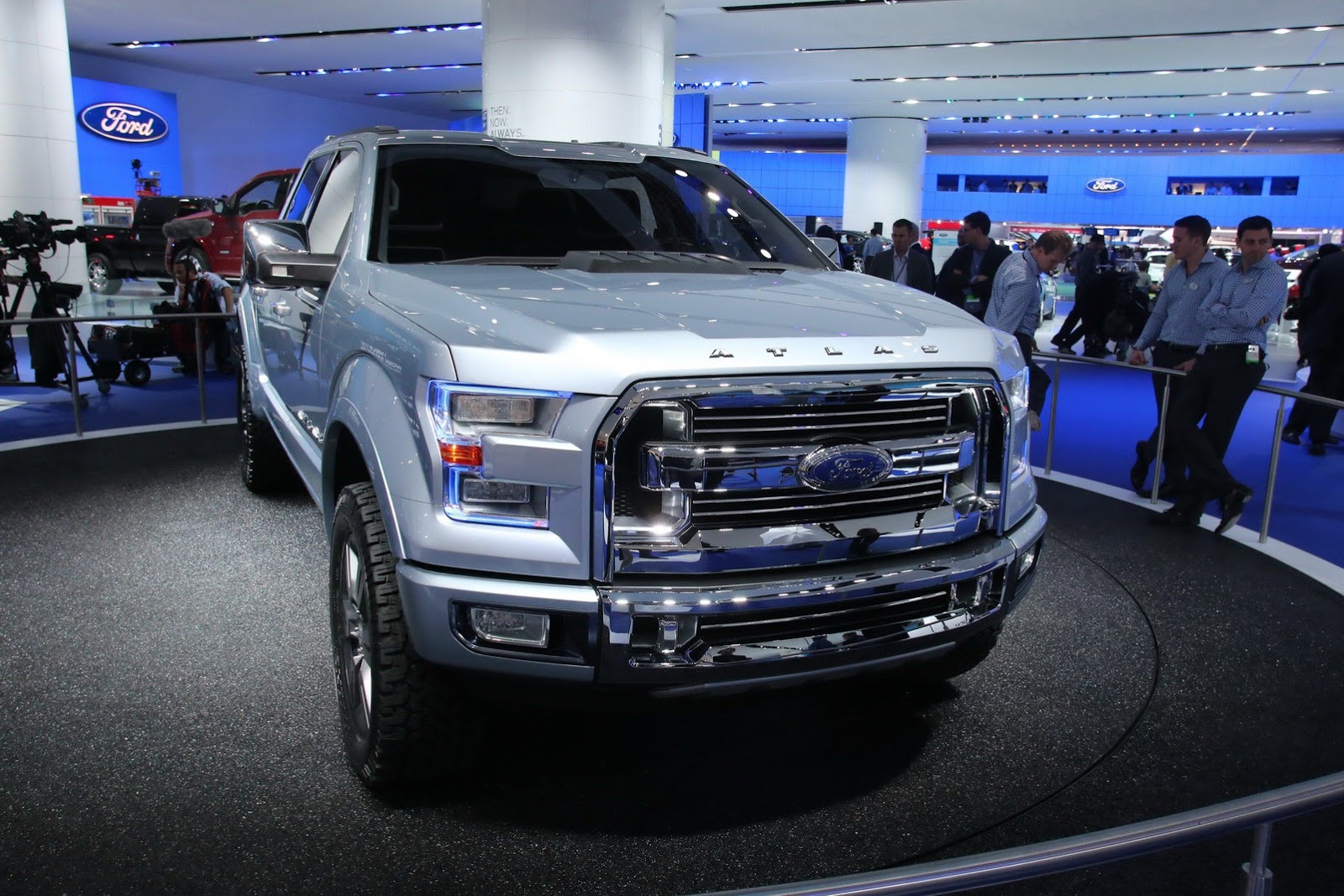
Ford Atlas concept.

Utterly massive. Not coming here.


Honda Urban SUV concept.

Jazz-based Yeti rival. Slick.


Hyundai HCD-14 Concept.

Korean limo in desirability shock.


Mercedes-Benz CLA.

Still want that C-Class, pal?


Nissan Resonance Concept.

Basically, it's the next Murano.


Ford Focus ST Shelby.

No extra power, bit vulgar.


Tesla Model X

Electric, gullwing doors, simply stunning.

Toyota Corolla Furia concept.

New Corolla. Had you guessed?


Volkswagen CrossBlue SUV concept.

Underneath, it's a Golf. Honestly.

Don't forget to check back with us in a few week's time when we'll be summing up the Geneva Motor Show entirely in mime...


Wednesday, 28 November 2012

News: Kia turns up the heat

Kia, which has now built itself a massive European and Irish customer base on the back of its value for money proposition (and that now-famous long seven-year warranty) is winding up to launch it’s first ever high-performance model. 


Based on the three-door coupe Pro_Cee’d version of the popular Cee’d hatchback, the Pro_Cee’d GT (seen here in design sketch form) will be a rival to the likes of the VW Golf GTI and Ford Focus ST.


The design is, once again, down to Kia’s famed ex-Audi stylist Peter Schreyer, and will feature an aggressive bodykit, a prominent GT badge in the grille and red highlights along the body. The three-door Pro_Cee’d GT will arrive first, and that will be followed by a five-door hatchback version, while apparently an estate version is under consideration, such is the popularity of the load-lugging version of the Cee’d.


Under the bonnet will be a tuned and tweaked version of the same 1.6-litre turbocharged petrol engine already found in the turbo versions of the Hyundai Veloster coupe (Hyundai and Kia are, of course, part of the same company these days). In the Veloster, that engine makes 184bhp but that will be increased to a much more muscular 200bhp for the Kia. The only transmission for the moment will be a six-speed manual gearbox; Kia isn’t yet ready to offer a rival to VW’s dual-clutch DSG ‘box.


Depending on how the car is received, this could be the start of something big for Kia. It’s known that Kia is keen to kick off its own in-house tuning and performance arm, rather like Mercedes’ AMG, but it needs the Pro_Cee’d GT to sell well initially to justify the investment. 


If it comes off, then we could see hot versions of both the Rio hatchback and Soul crossover, as well as the possibility of a large, rear-drive coupe to take on the likes of the Audi A5 and Mercedes-Benz E-Class Coupe.

Friday, 21 September 2012

Road Test: Kia Optima 1.7 CRDI 136bhp


Price as tested: €27,595

Fab styling, drives nicely, high quality, spacious cabin
– Ride and refinement need polishing
= Another slick, well-judged product from Kia

I can pretty much guarantee that, if you buy a Kia Optima, at some point in the first few weeks of ownership, someone is going to accost you in a supermarket car park and ask “Wow, what is that?”

Their response to your answer may well depend on just how clued up they are about modern cars and the technology behind them. It could well waver between “Aaah, a Kia...” and “Ugh, a Kia?” simply because not everyone has heard about the rise and rise of Korea’s fastest performing automotive star.

In fact, since 2006, in the face of Lehman Brothers, the credit crunch, the Euro Crisis and Merkosy-nomics, Kia has managed to double its worldwide sales and dramatically increase its European market share. And now, for the first time with a truly competitive vehicle, it’s entering the closely fought D-segment of family saloon cars.

There is no question but that the Optima is striking. And it’s far better looking, and more coherent in the flesh (so to speak) than it is in photographs. In fact, to these eyes, it has more than a hint of the current Jaguar XJ about it. Not in the details, but in the overall stance and body language. And that truly sets it apart from the class norm. The Optima’s rivals, the likes of the Ford Mondeo, Toyota Avensis, VW Passat and Peugeot 508, all play relatively safe, even staid, styling cards. The Optima is rakishly upping the ante though, and it may well scoop sales on the basis of its looks alone.

Inside, it’s got the best interior that Kia has done yet. There are a lot of buttons, depending on the spec though. In fact, we counted more than thirty between the door panel and the edge of the steering wheel alone, so expect to spend some time scouring the owners’ manual for answers. The cabin designers have obviously been boning up on eighties BMWs too, as the centre console, with its optional touch screen, is angled sharply towards the driver in the manner of an old E30 3 Series. Space is excellent, with stretching room in the back for adults (helped by a class-leading 2.8-metre wheelbase) and quality levels are most certainly on the high side of good. It looks good in there too, with sharp instruments and eye-catching design flourishes.

Engine-wise, the Optima sticks to the same script as its close cousin, the Hyundai i40. The primary engine for Ireland will be the 236bhp 1.7-litre CRDI diesel, which emits 128g/km of Co2 and returns, claims Kia, 4.9-litres per 100km on the combined fuel economy cycle (as long as it’s fitted with Kia’s ISG stop-start, which isn’t standard on all models). Our test car was the more profligate 155g/km, 6.0-litres per 100km automatic, but those are still reasonable figures for an old-school torque convertor gearbox. Oddly, Kia Ireland hasn’t yet confirmed that it will be bringing in Optimas fitted with the lower-emissions (113g/km) 116bhp version of the same 1.7 diesel engine, as fitted to the i40. Only the 129g/km (or 133g/km if you don’t spec it with ISG stop-start) 136bhp engine is available for the moment.

Definitely don’t spec the automatic gearbox though; it just doesn’t suit the engine. Refinement is an issue, even on the manual gearbox models, but the auto’s habit of holding onto a ratio for longer than is ideal allows the engine to growl, grumble and moo far too much for our liking. Certainly, rivals from Ford, VW and Peugeot have the legs on the Optima for quietness, and by a surprisingly broad margin.

The ride quality may be an issue too. Now, these are conclusions drawn from a drive on unfamiliar French tarmac in cars fitted with large (and drop-dead-gorgeous) 18” alloy wheels, so hold your breath for a full drive in Irish conditions for a definitive verdict but... it jiggles.

Large obstacles are brushed off with a nicely damped shrug of the body, but smaller, sharper bumps (of the type that Irish tarmac specialises in) make themselves both felt and heard with too much abruptness. Would smaller wheels help? Possibly, but a damper or spring tweak would probably also help.

Other than that, the Optima’s dynamic performance is pretty good. The steering is light, but pleasantly so and while you cannot feel anything of the front tyres through the rim, after a while, you realise that the Optima will go where you want it, if you show just a little faith. Grip is plentiful and body control good, so you won’t be upsetting your passengers with lurching direction changes.

All that remains to settle are price and equipment levels. Kia Ireland is still deciding exactly how to pitch the Optima, but it seems safe to bet that it will meet the likes of Mondeo and Avensis head on in price terms, but out-do them with extra equipment and Kia’s lengthy seven year warranty. Kia Europe is talking of items like heated seats, self-parking and more as standard, which seems like a lot, but we’ll certainly get daytime LED lights, electronic parking brake and six airbags as standards at a minimum.

A little more dynamic polish would make the Optima a very serious player, but even without the fluidity of the likes of the Peugeot 508, it’s already looking like a very tempting prospect. With a circa €25k price tag, lots of standard kit, that warranty and those looks, it should provoke a lot more Ahhhs than Ughs.


Facts & Figures

Kia Optima 1.7 CRDI 136bhp
Price as tested: €25,900 (approx)
Range price: €TBC
Capacity: 1,685cc
Power: 136bhp
Torque: 325Nm
Top speed: TBA kmh
0-100kmh: TBA sec
Economy: 4.9l-100km (57.6mpg)
CO2 emissions: 128g/km
VRT Band: B. €225 road tax
Euro NCAP rating: Not yet tested


Road Test: Kia Rio 1.25 EX


Price as tested: €16,495

+ Sharp looks, capable chassis, spacious, well made, excellent Co2
– Ummmm... nothing much really
= A massive thorn in the side of the European and Japanese Grandees

It has become a terrible old cliche, even in the short span during which it has been done, to say that Kia has ‘come a long way.’ But it’s true, Kia’s journey from bargain-bucket dreck to pukka performance has been rapid, steep and successful.

And no one model illustrates that better than the Rio. The first-gen, 2001, Rio was, frankly, awful. Pinched and narrow looking, with a horrid interior and a chassis of rare incompetence. It was utterly awful.

But then came the second-gen Rio and, suddenly, there was a sense of something good happening. OK, so it still looked a bit plain, but the chassis was decent (surprisingly good steering) and the cabin was airy, spacious and well made. It was good.

And now comes the all-new Rio and there can be no finer encapsulation of just how far Kia has come.

Peter Schreyer must take a solid chunk of the credit for this. The former Audi designer has done great work with Kia, but the Rio is possibly his best effort yet. It looks crisp and clean, with the combination of ‘Tiger Grille’ and big headlights adding a whiff of aggression. Certainly, it makes shrinking violets like the Toyota Yaris and Hyundai i20 look pretty ordinary, and even the likes of the Ford Fiesta and Suzuki Swift will be glancing, anxiously, over their shoulders.

Ever more anxiously once the driving experience has been tried out. Kia’s 1.25-litre petrol engine packs a reasonable 83bhp and Nm of torque, and returns a very impressive claimed 5.1-litres per 100km on the combined fuel economy cycle and 119g/km of Co2. So far, so economical, and we managed to get 6.0l/100km out of our test car on a briskly driven run, so the figures look realistic.

Better yet, it’s no sluggard. Neither is it a GTI, and you do need to keep the engine spinning above 2,000rpm to get any meaningful shove, but you can hustle the Rio along quite nicely and the 1.25 is sweet, revvy and enjoyable to stretch out to the redline, the snappy, easy gearchange working nicely.

And the chassis is up to the job too. Again, you won’t mistake it for a hot hatch, but there’s a very Ford-like feeling in the way the Rio deals with the road. It’s quite firmly sprung; never harsh or bouncy, but with a tautness that you could, on a dark night, mistake for sportiness. The steering feels well weighted and nicely balanced, and is pleasingly brisk across its locks. Front grip is excellent, with the economy-minded tyres only washing into understeer when really pressed. Best of all is a feeling of fluidity and competence about the way the Rio drives. There’s no nervousness, nothing waiting at the edges of adhesion to bite you, but instead a calm and assured feeling of, well, excellence frankly. It is, quite simply, very enjoyable to drive.

Inside the cabin, refinement is pretty good, although it does suffer a bit from the standard small car bugbear of road noise. The main dials are clear and neat, the seats comfy and the driving position good. All the major surfaces feel well made and screwed together and there’s a pleasing lack of cheap, nasty plastics. Space in the back is pretty good too, albeit behind the class leader, the Honda Jazz. The 288-litre boot is right on the class average, and can be expanded to 923-litres if you fold the seats.

This being a Kia, you’d expect the standard equipment list to be long,  and you’re not wrong. In €16k EX form, you get “ alloys, electric folding mirrors, Pod connection, Bluetooth phone, steering wheel audio controls, a full bevvy of airbags plus ESP stability control, hill start, air conditioning and a gear shift indicator. Most of which is also standard on the cheaper €15,295 LX version. Frankly, if Ford, VW, Toyota and Renault aren’t seriously looking to their laurels reading that list then shame on them.

It used to be that such major European and Japanese manufacturers could wave off comparison with Kia, pointing out that the lengthy equipment list was a smokescreen to hide drab styling, underwhelming driving experiences and poor safety records behind. No longer. The Rio isn not just every bit as good as a Fiesta, Yaris or Polo, it is in quite a few ways even better. The fact that it’s sensibly priced, munificently equipped and comes with a seven year warranty... well, frankly if that doesn’t put it at the top of your shopping list, I don’t know what will.


Facts & Figures

Kia Rio 1.25 EX
Price as tested: €16,495
Range price: €15,295 to €17,895
Capacity: 1,248cc
Power: 83bhp
Torque: 121Nm
Top speed: 168kmh
0-100kmh: 13.1sec
Economy: 5.1l-100km (55.3mpg)
CO2 emissions: 119g/km
VRT Band: A. €104 road tax
Euro NCAP rating: Not yet tested


Friday, 14 September 2012

Road Test: Kia Picanto 1.0 EX


Price as tested: €12,595.

In brief: Kia ups the quality, safety and equipment bar with the new Picanto. Good looking and sweet to drive too.


Seven years doesn’t seem like an especially long time, yet it has become a virtual cliché to point out just how far Kia has come in that span of years. Why seven? Why not a decade? Simple, because it was seven years ago that the first generation Picanto was launched and we all got an inkling that Kia could actually make a decent car.

That first Picanto was hardly earth-shattering, but it was a shining beacon in amongst the low-cost dreck that Kia was peddling at the time. It had a pleasant, nicely-appointed cabin, a sweet-revving little 1.0-litre engine and a chassis that actually seemed to enjoy being chucked about. As a city nipper, it was nigh-on perfect and when Kia’s seven-year warranty kicked in, buying one became something of a no-brainer.

So, what of the 2011 Picanto? Can it stand out in amongst the horde of very decent (and occasionally outstanding) Kias that now populate the Korean maker’s range?

Well, the simple fact is that it can’t possibly stand out like the original simply because  Kia no longer makes dreck, and in the shape of the Cee’d and Sportage makes some genuinely excellent cars.

Still, stylistically, Kia (under the guidance of design director Peter Schreyer) has done much to make the new Picanto stand out in a given motoring crowd. Quite apart from the, ahem, ‘jaunty’ colour options (powder blue and banana yellow among them), the Picanto looks much more chiseled and handsome than before. The cats-bum grille of old has gone, replaced by a jutting Thunderbirds puppet jaw of a front bumper, that distinctive ‘Tiger Mouth’ grille and a sense of being well proportioned and balanced – not always a given on a tall, narrow city car.

Inside, there is a surprising amount of room, especially in the back where six footers can at the very least squeeze in for short hops without complaint. Up front, the fascia and instruments look and feel of the highest quality, while the two-spoke steering wheel with its funky faux-aluminium inserts, feels just right in your palms.

The 200-litre boot is a bit on the small side though. It’ll just about take a decent shopping trip, but kids buggies and bigger bags are going to be a squeeze at best, and possibly not possible.

We’ve become used to Kia offering better than decent standard equipment lists, but the Picanto really takes the biscuit. OK, so the basic LX mdoel’s entry price of €11,495 may look a touch high compared to some versions of the Fiat Panda or Nissan Pixo, but then the Picanto comes stuffed to the gills with spec, including side and curtain airbags, ESP, remote central locking and a trip computer.

Upgrade to the €12,595 EX model we tested and it feels practically Rolls-Royce-esque by city car standards. Air conditioning, iPod connection, all-round electric windows, electric folding wing mirrors and a Bluetooth phone hook-up. Crikey.

All of which would be worth three fifths of damn all if the Picanto felt cheap or was nasty to drive, but it just isn’t.

OK, so with 69bhp from 998cc, the little three-pot engine isn’t going to win any rice pudding skin pulling contests, but it rasps and whirrs away happily to itself and as long as you stir the five speed gearbox regularly (which moves with a positive, chunky feeling across its gate) then you won’t be left feeling too sluggish. Extra weight (especially in the form of well-fed motoring journalists) blunts performance noticably, but that’s the price you pay for 99g/km Co2 emissions (which should keep the Picanto in the lowest tax band whatever budgetary changes Obergruppenfurher Noonan has planned) and claimed 4.2-litres per 100km fuel economy. That economy will take a serious hit if you stretch the Picanto’s legs too much or too often on the motorway, but keep it around town (why no stop-start, incidentally?) and you should be able to get close to that kind of figure.

And while it’s no Lotus, the littlest Kia certainly doesn’t disgrace itself in the handling stakes. The steering is well weighted and communicative, while front end grip feels especially sticky and well sorted. It flicks and turns with agility and the sensation that you’ll be able to take advantage of pretty much any gap that opens up in traffic, but the tall roof and titchy length mean that the ride quality isn’t what it could be; big bumps are well and truly felt and shorter, sharper shocks aren’t sufficiently well ironed out. Good, but not great in that department.

It’s actually kind of hard to tell how good the Picanto is. Certainly, it’s at least as good as our class favourite, the Fiat Panda, and way ahead of Ford’s awful Ka. It’s also better looking, better equipped and more economical than its cousin, the Hyundai i10, which is also slightly more expensive. And it feels much more modern (as it should) than the likes of the Toyota Aygo or Peugeot 107. So it’s good then, very good indeed.

But is it just us, or does that fact that the rest of the Kia range is now also every bit as good somehow take the shine off the Picanto’s excellence? Suddenly, we’ve become used to Kia giving us terrific cars. The fact that the Picanto lives precisely up to that expectation is the best form of faint praise we can think of.

Facts & Figures

Kia Picanto 1.0 EX
Price: €12,595
Price range: €11,495 to €12,595
Capacity: 998cc
Power: 69bhp
Torque: 95Nm
Top speed: 153kmh
0-100kmh: 14.4sec
Economy: 4.2l-100km (65mpg)
CO2 emissions: 99g/km
Road Tax Band: A €104
Euro NCAP rating: Not yet tested