Showing posts with label affordable. Show all posts
Thursday, 7 February 2013
Road Test: Opel Mokka 1.7 CDTI SE
Price as tested: €26,495
+ Styling, handling, quality
– Noisy & outdated engine, tight rear seats and boot
= Firmly underscores Opel's premium ambitions
Tuesday, 5 February 2013
Road Test: Ford B-Max 1.0 EcoBoost Titanium
Price as tested: €23,170
+ Doors, comfort, engine, chassis, quality
– 1.0 not economical enough, needs more space in the back
= Better than the diesel version but still flawed
Labels:
1.0,
affordable,
B-Max,
Band A,
compact,
EcoBoost,
eDrive,
family,
Ford,
Ireland,
low emissions,
MPV,
new car,
Road Test,
sliding doors,
spacious,
turbo
Tuesday, 29 January 2013
News: Kia to take on Golf GTI with Cee'd GT
We've become used to Kias with high quality, Kias with style and Kias with a long warranty, but are we ready for a Kia with a high performance engine? Well, we will find out very soon as Kia will be presenting its Cee'd and Pro_Cee'd GT models at the upcoming Geneva Motor Show, with a new 1.6-litre turbocharged engine with 200bhp.
That will put Kia head to head for the first time with the likes of the Volkswagen Golf GTI, Ford Focus ST and Peugeot 208 GTI. The GT models get lower, stiffer suspension, LED running lights, Recaro bucket seats and 18-inch alloy wheels. It sounds like an enticing cocktail, but once again; are we ready for a high-performance Kia?
Designed in Europe under the direction of President and Chief Design Officer, Peter Schreyer, the two debutants feature bold athletic styling, distinctive LED daytime running lights, dual-exhaust pipes, Recaro seating, 18-inch alloy wheels and eye-catching red brake calipers.
The new turbocharged 1.6-litre GDI petrol engine will produce 204 PS (201 bhp) and 265 Nm (195lb/ft), powering the front wheels through a six-speed manual transmission and allowing the Kia pro_cee’d GT and cee’d GT to accelerate from 0 to 100km/h (62mph) in 7.9 seconds.
Production of the newest members of the latest generation cee’d family is scheduled to start at Kia’s Ĺ˝ilina plant in Slovakia in mid-May. The Pro_Cee’d GT is anticipated to go sale in the UK and Ireland from the middle of the year and be joined by its Cee’d GT counterpart towards the end of 2013.
Prices and specifications will be confirmed closer to the on-sale dates. Meanwhile, Kia will also be bringing a concept car that point the way to the replacement for the Soul compact SUV and a future rival for the Nissan Juke, Peugeot 2008 and Mini Countryman. No mechanical details as yet, but expect it to be based on the same platform as the hugely successful Rio supermini and that sharp-edged front styling and expanded grille should be the new corporate 'face' of Kia.
Labels:
200bhp,
affordable,
agile,
Cee'd,
eDrive,
fun,
GT,
GTI,
high performance,
hot hatch,
Ireland,
Kia,
new car,
News
News: Skoda to car buyers: Don't buy! At least not yet...

It's not often that you hear a car company exhorting buyers not to go out and put their hands into their wallets, but that's exactly what Skoda is asking Irish car buyers to do. At least, for the moment...
You see, Skoda has this week announced specification and pricing details for their third new model in just six months with the imminent arrival of the new Octavia to Ireland. Unveiled internationally late last year the new Octavia will be available in Ireland from March with three different specification variants, both manual and automatic transmission options and five engine alternatives the new Octavia offers the Irish motorist considerable choice with prices starting from €18,995.
Originally launched in Ireland back in 1998, the Octavia has become a firm favourite with Irish motorists with more than 40,600 sold to the end of 2012. Now as Skoda enters its 20thAnniversary in Ireland, the third generation of the Octavia will see Skoda challenge not only direct competitors in the medium family segment but, thanks to its increase in size, challenge vehicles in the Mondeo-Passat-Avensis class.
The new Octavia has grown significantly in length and width, the new model is 90mm longer and 45mm wider than the outgoing Octavia. The wheelbase has grown by 108mm enabling the Octavia break the mould for spaciousness in its model segment with interior length (1,782mm), more knee room (73mm) and more headroom at the back (980mm) as well as best in class boot volume of 590 litres.
The new Octavia is powered by the latest low emission TSI petrol engines as well as common rail diesel engines with Stop Start technology for excellent fuel economy.
Speaking on the price reveal for the new Octavia in Ireland, Raymond Leddy Head of Marketing, Skoda Irelandsaid: “We have increased specification levels for all versions of the new Octavia. Additional airbags, Electronic Stability Control for increased safety and Stop Start Technology for reduced emissions and improved fuel economy are now standard features across the range. Stylish alloy wheels are now offered on all models with the exception of the entry Active model. In dimension terms the new Octavia is wider and has grown in length by 9cm allowing for increased cabin space and luggage capacity. Despite this growth the new Octavia has in fact shed up to 100kg in weight compared to its predecessor. Less weight equates to better fuel economy and the new Octavia in its 1.6 TDI version consumes only 3.8 litres for every 100km travelled.
Leddy continued, “The new Octavia will be offered with attractive finance terms from €239 per month inclusive of servicing form Skoda Finance. The new Octavia goes on sale at Skoda Authorised retailers from 16thMarch. We would encourage anyone thinking of purchasing a new car for 2013 to consider the next generation Octavia before making that all important purchase.”
Labels:
2013,
affordable,
eDrive,
executive,
family,
hatchback,
Ireland,
low emissions,
new car,
News,
Octavia,
pricing,
quality,
reliable,
saloon,
Skoda,
spacious
Tuesday, 8 January 2013
Road Test: Dacia Sandero TCe 90 Alternative
Price as tested: €11,990
+ Cheap, cheerful, well equipped, ESP as standard
– Rear seat space could be better
= Solid, undemanding and affordable
When Renault’s budget brand, Dacia, launched itself into the Irish market last summer, it did so with just 10 dealers and a single model, the Duster SUV. Except it didn’t really even have a single model, as right-hand-drive production of the Duster didn’t begin until just last week, so all Dacia could do in Ireland was show potential customers some left-hand-drive demos, with an older design of cabin than would be arriving from the factory when Irish cars rolled off the line. Sounds like a recipe for disaster, but with that astonishingly low €15,995 price tag (around €10,000 less than most direct competitors) the Duster has already been a success; it’s sold out until April, with 500 orders just starting to be filled. Just goes to show what you can do with a headline-grabbing price.
Of course, price isn’t everything and Dacia has come in for much criticism since the Duster’s launch for its attitude to safety equipment. Many reviewers were upset to notice that the Duster (an obvious family car, don’t forget) doesn’t come with standard electronic stability control, and the Lodgy MPV (currently only available in Europe) was severely marked down by crash test experts EuroNCAP.
So with the arrival of this, the second-generation Sandero small car (the first gen was never built with right hand drive) Dacia has to prove that it can expand beyond the niche appeal of the Duster and take on the big (small) boys such as the Fiesta, Polo and Yaris.
Thankfully, a quick glance at the spec sheet reveals that the Sandero does indeed come with ESP as standard, as are ABS and brake assist. Why the standard ESP on a smaller car when the Duster continues to do without? According to Dacia, it’s because the Sandero sits on an all-new platform, so under EU regulations, has to have ESP as standard. The Duster, based on the original 2004 Dacia Logan, can get away for a while without it.
For a basic price of €9,990 (around €5-6,000 less than most of the competition) the Sandero comes with four airbags, Daytime Running Lights, height adjustable headrests, 60/40 split folding rear seat, electric front windows and Radio with CD, MP3, USB and Bluetooth phone connection alongside its standard safety toys, which seems pretty generous. Step up a level to the Signature trim and you get alloys, air conditioning, a trip computer and more.
That basic model comes with an old Renault 1.2-litre petrol engine developing 75bhp, which looks alluringly priced but whose Co2 emissions of 135g/km will set you back €280 a year in motor tax. You could go for the 90bhp 1.5 dCi diesel engine, but we reckon you’re much better to upgrade yourself to the 895cc turbo three cylinder TCe 90 engine. It’s not only cutting edge (a first for a Dacia, which usually just sticks with older Renault tech) which cuts your Co2 emissions to 116g/km and your tax bill to €200.
Quite apart from which, it’s a terrific engine, pulling cleanly from low rpm and proving both entertainingly muscular and really very refined. It would be an outstanding engine in any car, but in an €11,090 Dacia (€13,090 if you want it in the ritzier Signature grade), it’s close to amazing.
If you’ve ever owned a Renault in the past decade, you can amuse yourself for a few minutes by just sitting in the Sandero’s cabin and playing Spot The Switch. A little bit of old Clio here, some Laguna there and a smattering of Megane over there. Still, while it may be a ‘bitsa’ the Sandero feels well put together and Dacia’s reliability record is generally very good. Space in the front is fine and there’s a 320-litre boot (with a rather too high loading lip) but it would be good to see a touch more legroom in the back. It’s OK back there, but taller passengers, or those loading up bulky child seats, will feel the pinch. There are a few rough edges to the quality of the plastics, and the seats are a little too narrow and perched-up for taller drivers, but otherwise there’s nothing to complain about.
That goes equally for the dynamic performance. Certainly, the Sandero’s chassis case is helped by the performance of that TCe 90 engine, whose 90bhp and 135Nm of torque help to cover up any holes in the cornering deportment, but the plain fact is that the Sandero is perfectly fine, if totally unexceptional, to drive. It rides very well, especially around town where it’s particularly good at shrugging off speed bumps, and on the motorway it feels planted and secure. On a twisty road, well, you’re not going to get up early to drive it for fun, but it’s fine, although the mute, rubbery steering discourages any attempts at enthusiastic driving.
The Sandero is an avowedly simple car, and in an era when car makers are constantly trying to surprise and delight us with yet more gadgetry and gimmickry, that’s a rather refreshing take. It’s quietly handsome (Germanic, claims Dacia, as opposed to its cousin, the more Latin Renault Clio), practical and quite fine to drive. With those temptingly low prices, and now without the caveat of having to worry about trading up to get safety equipment, it’s a tough proposition to argue with.
Facts & Figures
Dacia Sandero TCe 90 Alternative
Price as tested: €11,990
Range price: €9,990 to €14,990
Capacity: 898cc
Power: 90bhp
Torque: 135Nm
Top speed: 169kmh
0-100kmh: 11.1sec
Economy: 4.9l-100km (56mpg)
CO2 emissions: 116g/km
VRT Band: A4. €200 road tax
Euro NCAP rating: Not yet tested
Range price: €9,990 to €14,990
Capacity: 898cc
Power: 90bhp
Torque: 135Nm
Top speed: 169kmh
0-100kmh: 11.1sec
Economy: 4.9l-100km (56mpg)
CO2 emissions: 116g/km
VRT Band: A4. €200 road tax
Euro NCAP rating: Not yet tested
Labels:
affordable,
cheap,
Dacia,
diesel,
eDrive,
ESP,
family,
hatchback,
Ireland,
low Co2,
low emissions,
new car,
petrol,
Road Test,
safety,
Sandero,
small car
Friday, 26 October 2012
News: New Renault Clio gets Irish launch
Renault has launched its hugely significant fourth-generation Clio on the Irish market, with prices starting from €14,990 for the most basic 1.2-litre petrol model.
Far from being a stripped-out base version though, and in keeping with Renault’s recent reputation for providing well-equipped models versus the competition, it benefits from a 4x20W radio with Bluetooth and USB connection, Bass Reflex system (enhanced speaker sound quality), driver/passenger/ front side airbags, 60/40 split-folding rear seat, daytime running lights, ESC, Hill Start Assist, height and reach adjustable steering wheel, electric front windows and door mirrors, keyless entry and ignition, plus cruise control and speed limiter.
If you want a Band A Clio though (the 1.2 is a Band B car) then you'll have to go for either the familiar, but updated, 1.5 dCi diesel (only 83g/km, without a hybrid battery in sight) or the all-new, high tech 900cc turbo petrol, which boasts 105g/km of Co2 and 60-odd-mpg.
Depending on spec, the new Clio is the first car to get Renault's new R-Link system, which uses a 7-inch touchscreen to control the infotainment systems, provide internet access on the go (not for the driver, natch) and has an integrated TomTom navigation system and a high-end Arkamys sound system.
The style of the new Clio is certainly eye-catching, and it's the first production Renault to get the new styling language previewed by the Dezir concept car. “Simple, sensuous and warm: these are the three words that sum up the design of Clio – just like that of DeZir. This is no accident, for both these vehicles were designed by the same team. As a five-door hatchback with the coupĂ© profile of a three-door, New Clio is all about passion. And thanks to the skills of our engineering teams, it has remained faithful to our original vision” said Antony Villain, Director, Exterior Design Studio.
Julien Lelorrain, marketing director of Renault Ireland told us that “New Clio embodies the renewal of Renault Design as part of an approach based on sensuality and warmth. New Clio allies a head turning design, come with economical engines, highest level of safety with 5 stars Euro Ncap and yet at very affordable price starting from €14990 or €149 per month with Renault Finance for a rather well equipped Expression Trim level. New Clio is the perfect car for those looking for a beautiful yet affordable car."
Labels:
affordable,
Band A,
Clio,
Clio 4,
Dezir concept,
economical,
eDrive,
family,
French,
fun,
high quality,
Ireland,
low emissions,
new car,
News,
Renault,
small car,
spacious,
stylish
Wednesday, 24 October 2012
News: Toyota offers three years' free servicing
Toyota Ireland has announced that from Monday October 22nd, 2012, until January 31, 2013, all customers who buy a new Toyota will receive three years free servicing at any authorised Toyota dealership.
Commenting on the announcement, Mr. David Shannon, Managing Director of Toyota Ireland said: "The three years free servicing offer not only provides Toyota drivers with a lower cost of ownership on their new car, but also gives them the peace of mind that they are free from servicing costs until 2016.
“Toyota has always been focused on delivering great value and service in Ireland and our new free servicing offer is just one more example of our commitment to our valued Irish customers.”
Commenting on the announcement, Mr. David Shannon, Managing Director of Toyota Ireland said: "The three years free servicing offer not only provides Toyota drivers with a lower cost of ownership on their new car, but also gives them the peace of mind that they are free from servicing costs until 2016.
“Toyota has always been focused on delivering great value and service in Ireland and our new free servicing offer is just one more example of our commitment to our valued Irish customers.”
Thursday, 11 October 2012
Ness: Skoda offering keen deal on run-out Octavia
Skoda's ever-popular Octavia is getting replaced early next year (shame) but the good news is that, to finish off production of the current model, Skoda is offering some killer deals (hurrah!).
Having made its first public appearance at the National Ploughing Championships in September the new Octavia Exclusive is available nationwide in both hatchback and Combi (estate) body styles.
Engine wise, Skoda's low CO2 Diesels are retained including the Band-A 1.6TDI, 105bhp and Band- 1.2 TSI 105bhp direct injection petrol unit. For those who demand more power a 2.0 TDI 140bhp Diesel unit is also offered. All engines are also available with a 7-speed DSG automatic transmission.
However it is its specification that justifies the Octavia its Exclusive title with factory fitted Satellite Navigation System, 16” Alloy Wheels and Half Leather Upholstery all added to an already impressive list including Cruise Control, BlueTooth Phone Preparation, Parking Sensors and Climate Controlled Air-Conditioning that were standard equipment on outgoing Octavia models.
Prices are competitive starting from €19,995 for the 1.2 TSI 105bhp petrol version and €22,995 for the 1.6 TDI Diesel.
Commenting Raymond Leddy Head of Marketing “Having sold over 35,000 Octavia’s in Ireland since 1998, the new Octavia Exclusive is certain to appeal to motorists seeking value and economy in 2013, this is a great offer and we have a limited quantity of these vehicles so we urge those interested to speak to their local dealership before January regarding availability to avoid disappointment”
Skoda has also enhanced the Octavia RS model with €900 worth of free equipment including new 18” Alloy Wheels, front and rear parking sensors, a new interior and Satellite Navigation system.
To support sales Skoda has also extended its PCP Solutions Finance package to the Octavia range. Including servicing the Octavia Exclusive can be purchased for less than €230 per month.
News: Could cheaper electric car batteries be coming soon?
New research being carried out by the University of California and Bosch could lead to smaller, faster-charging batteries for electric cars within three years.
Professor Miroslav Krstic and postdoctoral fellow Scott Moura of the University of California, San Diego have been researching into the way Lithium atoms 'behave' (if that's quite the right word) in a battery. Astonishingly, it seems that we don't actually have any great knowledge of exactly how chemical components of modern batteries behave, and this new research is helping to break down that barrier.The upshot is that we could shortly have batteries with much greater capacity, meaning that they could either make a car go for longer distances, or the same distance with a smaller battery. Even better, these new battery designs could cut lengthy charging times by as much as half, and be on sale within half a decade or so. They could even become significantly cheaper to manufacture as a result.
Monday, 1 October 2012
News: Mercedes announces Irish prices for the new A-Class
Mercedes has announced that it will be giving pride of place in Ireland to two models from their new A-Class range, both of which are due to arrive here in December. One will be an A180 petrol version at €26,435 (ex works) and the other an A180 CDI diesel version at €28,550 – the latter model being the one predicted to take the spotlight in Ireland, thanks in part to its greener CO2 emissions of just 98g/km.
Billed as the car that many believe will introduce the luxury car maker to a completely new, younger generation of customers, both models will come in a choice of three specifications and equipment lines – Style Pack, Urban Pack and Sports Pack. Entry models sold here will all be equipped with the Style Pack option – a package that includes items which, were they purchased separately, would have a value equivalent to €1,600.
To highlight what is seen as one of the A-Class’ USPs – its iPhone and iPad compatibility - the launch plan being put together by Mercedes-Benz will major heavily on Facebook and smart phone App technology to create an ‘interactive platform’ whereby prospective customers can scroll through its features to select the model that suits them best.
Since its debut at the Geneva Motor Show earlier this year, queues for the new A-Class have already begun to form, here and around the globe. With over 40.000 orders already placed even before production has commenced, Mercedes-Benz has had to supplement production capacity to meet expected demand.
As different from its predecessor as it is possible to be, the new A-Class sits some 18cm closer to the ground – a lower-slung posture that gives it a distinctly sporty, youthful appearance. Built on the B-Class platform, its on board high-tech functionality is such that iPhone Siri voice-activated units and iPad music and Apps can be played through the car’s infotainment system.
All engines offer an idle-stop system as standard, linked to a six-speed manual or seven-speed dual-clutch automatic transmission. Front-wheel drive, the new A-Class has a new four-link rear suspension system with a range of settings on offer that includes an optional sports setting with direct steer. Collision Prevention Assist, Attention Assist, Adaptive Brake Assist and Brake Hold are all part of its standard safety features.
Labels:
€26k,
2012,
A-Class,
affordable,
cool,
eDrive,
Ireland,
luxury,
Merc,
Mercedes,
Mercedes-Benz,
new,
new car,
News,
premium hatch,
price,
sexy
Thursday, 27 September 2012
Road Test: Fiat Abarth 500C
Price as tested: €31,000 (approx)
+ Styling, engine, handling, seats, quality, sense of fun
– Tiny boot and rear seats, quite thirsty, no official imports yet
= Funnest hot hatch of the moment
Like a Scottish Terrier carrying a Kalashnikov, the Fiat Abarth 500C is packing way more aggression than befits something so small. The standard 500 is cute, chic, even (whisper it) a bit girly. The Abarth is its mildly psycho brother who's into body piercing and headbutting walls.
As with all great Italian cars, the heart of the Abarth is its engine, a 1.4-litre turbo petrol developing 135bhp. 135bhp doesn't sound like much these days, but it's accompanied by a decent slug of 200Nm of torque and, in practice, there's more than enough grunt to both hoick you up the road at a suitably impressive rate and keep you making rapid gearchanges on the stubby five-speed manual, punching them through from the elbow.
When you do that, and especially during fast upshifts as you accelerate, the optional Monza exhaust (which actually adds 5bhp thanks to improved engine breathing, bringing the Abarth up to 140bhp), with its mildly hilarious quad exit pipe, bangs and growls like a grumpy howitzer battalion. It's all ludicrously entertaining, and thanks to the 500's diminutive dimensions, it all happens at a reasonable rate of consumption. 8.1-litres per 100km sounds a touch thirsty for a small car, but in the context of the fun on offer, it's a perfectly acceptable price of admission.
It always used to be the case that with high-performance Italian cars, you paid for the (glorious) engine and the rest of the car was thrown in (and together) for free. Famously, journalist and racer Paul Frére complained to Enzo Ferrari that his Testarossa Le Mans racer had such a big, flat windscreen that it was crawling down the Mulsanne Straight while the sleek Jaguars and others blasted past. "Well you know," declared Il Commentadore airily, "aerodynamics are for people who can't design proper engines..."
Thankfully, the Abarth 500 proves that such dismissiveness is truly a thing of the past for fast Fiats (effectively what Ferraris have been since the seventies; heresy I know). The 500C feels beautifully built for a start, with high levels of cabin quality and gorgeous high-backed Alcantara bucket seats. Rear space is somewhat compromised by these bulky buckets, but it was hardly all that roomy to begin with, and by choosing the C over the regular hatch 500, with its peel-back convertible roof, you are effectively resigning yourself to having no boot space to speak of. A squashy bag is about the limit.
No matter. Once you get rolling, you won't care about the practicalities. It may sound odd to say it of a stiffly sprung sporty thing with big optional alloys and watch strap Pirellis, but the Abarth actually rides better than the standard 500.It bounces around less, even though it's plainly harder than the standard car, and the steering, so remote on a normal 500, is here full of feel and delightful weight. There is simply tonnes of grip, a little hint of the back end squirming around when you corner seriously hard and an abiding sense of out and out fun and enjoyment. Occupying an even smaller amount of road than Mini's conceptually similar Cooper S Works, the 500C feels ideally suited to Ireland's twisty and narrow back roads. And because it's not over-burdened with some silly specific output, you can enjoy ringing its neck a little without attracting the attention of either sides of the legal profession.
When the going gets properly twisty and slippery, it’s best to thumb the TCC button just below the aircon controls. That activates an electronic differential which brakes an unloaded front wheel to prevent power being spun away and which also helps the Abarth’s chassis to reduce understeer to an effective minimum. Unlike some similar systems (or a pure mechanical diff) it doesn’t bring with it unnecessarily hefty steering or camber-following tendencies, it’s much more subtle and effective than that.
As yet, Abarth models are still not officially imported into Ireland, but their visa status is due to be updated any time now. For the meantime, you can personally import one (a process that I’m sure your local Fiat dealer would be more than happy to help with) and you’ll have to fork out in the region of €27,000 for the 500C, about €2,000 less for the hatch. Our test car came loaded with options including that wonderful Monza exhaust and the gorgeous high-back Sabelt seats which swelled its price by €4,000. Pricey for such a small car then, but very much worth it to my mind. Besides, try speccing a Mini Cooper S up to similar levels and see where you get to...
You could spend even more and upgrade to the Essesse kit, which brings with its more power (160bhp), uprated brakes and tweaked suspension, but the extra stiffness would probably ruin the Abarth’s rather lovely ability to flow with bad roads rather than fighting them, so I wouldn’t bother.
Personally, I'd skip the C part too (the roof is nice and all, and works at speeds of up to 80kmh, but its usability in Ireland is always going to be limited) and go for the hatch, which also brings with it a more practical boot and that slight cut in price. Would I buy one? Oh, if only I could afford it. Hot hatches have become, as a species, somewhat too refined and practical of late. Even the likes of a 200bhp Clio or DS3 can fail to provide much in the way of outright thrills, so steady and safe are they. The Abarth feels a touch more unruly, raw and on the edge than that. It's the hot hatch as she is meant to be spoken.
Fiat Abarth 500C
Price as tested: €31,000 (approx)
Price range: €12,895 to €27,000 (approx)
Capacity: 1,368cc
Power: 135bhp
Torque: 200Nm
Top speed: 205kmh
0-100kmh: 7.9sec
Economy: 6.5l-100km (43.4mpg)
CO2 emissions: 155g/km
Road Tax Band: C €330
Euro NCAP rating: 5-star adult, 3-star child, 2-star pedestrian

Wednesday, 26 September 2012
Road Test: Fiat 500L 1.3 MultiJet PopStar
Price as tested: €22,000 (approx)
+ Masses of cabin space, cute styling, good quality, well priced
– Only ordinary to drive
= Could be the best all-round Fiat yet
There is one caveat that needs to be observed for all that follows. Italian car launches are notoriously difficult things to actually assess a car on. Our time with the new 500L was relatively brief, and most of the mileage was in the tight, urban confines of downtown Turin. And we got lost, which never helps. So, now that you’re aware of all that, we can begin...
Fiat is in bad need of a big hit. Hmmm. I seem to have written those words before, five years ago, just before the Italians launched the little 500, the sales of which pulled the company back from the financial abyss.
Now though, while the abyss is not so deep as it was in 2006 and Fiat is not teetering on the edge of it (thanks to its finances being well and truly pumped up by a resurgent Chrysler), sales are falling in its European heartlands and with investment being reduced and factories being shut down, Turin needs a new sprinkling of the 500's magic.
And this, the 500L, is the car Fiat hopes will revive its European fortunes. Although it carries the 500 name, it's actually only distantly mechanically related to the chic city car. It's a 4.15-metre long MPV, styled to looks closer to an SUV and with a simply massive cabin for stuffing your family into. When they say the L stands for Large, they really weren't kidding. the 500L towers over a tiny 500 hatch, and there's sufficient cabin space for a six-footer to have genuine lounging space in the back seats. Honestly, space in the back makes a mockery of almost every rival I can think of. A Focus, Golf or Astra feels ridiculously tight in comparison and even such other high-roofed competition as the Citroen C3 Picasso and Opel Meriva don’t have the legroom to compete.
The fact that the cabin also looks and feels of very high quality indicates that Fiat is still pushing well along the road to eradicating its old reputation for fragility, however difficult it may be to unstick that impression from Irish minds. All the surfaces inside have a pleasingly hefty, yet silky, feel and as long as you specify some of the brighter colour options, it feels like a warm, welcoming place to be. The steering wheel, slightly squared off as it is in the new Panda, feels especially good and the complex, three-movement exterior door handles do a great job of making the car feel techie and interesting just by yanking the door open.
While Irish specs have yet to be decided (and a circa €22,000 price for the 1.3 MultiJet diesel model has still to be agreed) there will be an awful lot of high-end optional extra available, including a city safety self braking setup, a 1.5-metre long glass roof and a stereo designed by hip-hop legend Dr. Dre (ask your kids...) and even an in-car Lavazza espresso maker that slots into one of the cupholders. Yes, really. You have to tick the options box for this, really, you do. We all thought it was a late April fool when we saw the press release...
Standard features include a 5" touch-screen infotainment system with Bluetooth connection for your phone and music player and an EcoDrive Live function that monitors your driving, admonishes you for being too profligate and which Fiat claims (somewhat implausibly) can save you up to 1,200-litres of fuel over the life of the car.
The rear seats fold and tumble with just a quick flick of a button and the 400-litre boot has an adjustable floor that allows you to segregate the shopping from the peat briquettes, or perhaps the laundry from the wet dog.
Our test car has the 85bhp 1.3 MultiJet diesel which boasts a 110g/km Co2 figure and better than 62mpg on average. But with only 200Nm of torque to haul around 1,300kg of 500 (and that's an empty kerb weight) it struggles to do anything to excite. It's a decent, engine, with good refinement but little verve and a rubbery five-speed manual gearbox doesn't help either. A 0-100kmh time of 14.9secs shows you how hard it’s having to work, but in fairness, it only rarely feels all that slow.
When the 500L arrives in Irish dealers at the end of the year, a 105bhp 1.6-litre diesel should be available and that will doubtless prove a better match. Petrol-heads, if any remain in Ireland, might be enticed by the 105bhp two-cylinder 112g/km TwinAir engine. We may not get the choice though, as Fiat Ireland is keen to keep the range as streamlined and simple as possible, so it might be that the only 500L we will get in Ireland will be this 1.3 Pop Star spec.
To drive, the 500L feels fine, but it lacks the quiet stolidness of a Skoda Yeti or the pin-sharp steering of a Mini Countryman. It's competent, capable and has nicely weighted steering and a good, if occasionally bobbly, ride quality but there are few causes for complaint here. Like the engine, it's safe but not really engaging.
Style-wise, it tries to take 500 design cues and inflate them to a much bigger size which, as Porsche found trying to translate a 911 coupe into a Cayenne SUV, isn't entirely successful. It looks good in certain colours, odd in others (beige is an especially bad choice) but certainly distinctive and different.
But it's that cavernous cabin that really sells the 500L. Families will love it for its sheer space, its brightness and its adaptability. Fold the front seat flat and you can fill the 500L with IKEA flat packs and still have space left for a driver and rear seat passenger while kids will have no trouble at all in filling the 22 interior pockets and cubbies. The fact that it seems on this encounter to be robustly built will mollify the worries of their parents.
Its sales prospects in Ireland depend entirely on whether enough Irish buyers are willing to look past their old prejudices about the brand. Nissan proved with the Qashqai that this was a serious possibility, and who a few years ago took either Hyundai or Kia seriously? Those willing to suspend disbelief long enough to try a 500L will find it an engaging proposal.
Fiat 500L 1.3 MultiJet Pop Star
Price as tested: €22,000 (approx)
Price range: TBA
Capacity: 1,248cc
Power: 85bhp
Torque: 200Nm
Top speed: n/a
0-100kmh: 14.9sec
Economy: 4.2l-100km (67.2mpg)
CO2 emissions: 110g/km
Road Tax Band: A €160
Euro NCAP rating: Not yet tested
Labels:
500L,
affordable,
eDrive,
family,
Fiat,
hatchback,
Ireland,
Italian,
low Co2,
low emissions,
MPV,
new car,
people carrier,
reliable,
Road Test,
solid,
spacious,
stylish
Tuesday, 25 September 2012
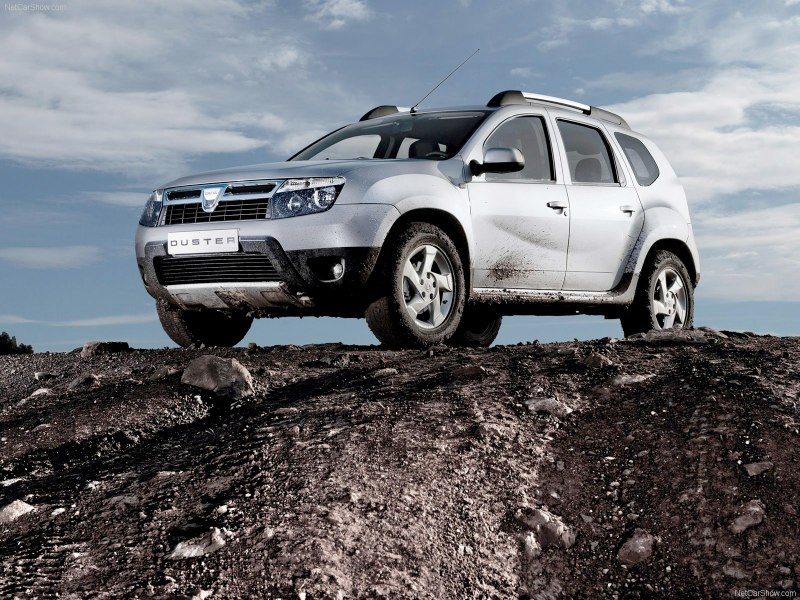
Road Test: Dacia Duuster 1.5 dCi 4x2 Alternative
Price as tested: €14,990
+ Almost stupidly affordable, surprisingly refined, spacious, comfy
– Feels a generation back, dynamically, lack of standard safety kit
= Refreshing and refreshingly affordable
Yup. €14,990. For a brand new car, that’s not a supermini (as most if not all cars priced around the €14k mark are) but a big(ish) compact SUV with space in the back for the kids (for the adults, come to that) and a big boot. It looks nice (I think so at any rate), drives tolerably well (see below) and, thanks to Dacia Ireland’s headline-grabbing introductory finance offer, will cost you buttons on the monthly repayments. At a stroke, it will bring many hundreds of cash-strapped car buyers back into the new car market, buyers who need the space and the size but, because of tightened finances, would otherwise be shopping in the second hand car market.
It’s called Duster, and it’s not the first car to wear that badge. Back in the eighties and early nineties, when Dacia was still just emerging from Communist overlordship, there was another Duster, a car so bad that the legendary Car magazine pithily summed it up with the phrase “Duster to dust, ashes to ashes, please someone, pass us the matches.” Presumably, things could not be so bad this time around...
Needless to say, as with all deals that look too good to be true, it is, in some ways. But the essential fact of the price, and of Dacia Ireland’s introductory offer that will allow you to finance one for €149 a month (including a €4k deposit and a €6k final ‘bubble’ payment), is undoubtedly true.
So, how is Dacia able to do it for the money? A little history first off. Dacia was for many years the Romanian national car company, producing vehicles under the rule of the much-reviled Communist leader Nicolae CeauČ™escu. In that period, Dacia struck up a relationship with Renault, building a version of the old 12 saloon under licence – many of which can still be seen circulating the streets of Bucharest – a relationship that would eventually lead to Renault buying a majority stake in Dacia. The idea was, and is, that Dacia uses older Renault components whose investment has already been paid for, builds cars out of them in a low-cost environment behind the former Iron Curtain and flogs them to you and I at bargain prices, giving Renault a bulwark against the ever-encroaching Korean brands and the constant danger of the massed ranks of Chinese cheap car makers.
It’s a recipe that has worked rather wonderfully. Dacia and its various models have been well received in Europe and it’s currently the fourth best-selling brand in France. Its launch here has been somewhat delayed (the Duster itself has been on sale in Europe for two years already) but with that price tag, it could prove to be a canny move for Renault Ireland, catching buyers whose car purchasing power has been eroded by recession and cutbacks. Next year, once the Duster is properly on sale (you can test drive and order one right now but Irish-build right-hand-drive cars don’t arrive until January), there will be other Dacias, including the already-beloved Sandero hatchback (thank Top Gear’s James May for that one) and the Lodgy mini MPV. Presumably all at genre-defying prices too but that’s getting ahead of ourselves somewhat. We have the just the Duster to deal with for now.
For your supermini money, you do genuinely get a large family car. Not so tall and wide as to be intimidating in tight car parks and urban manouvres, but large enough to allow one six-footer to sit comfortably behind another and with a spacious 475-litre boot (as long as you stick to the front wheel drive models).
Those expecting a poverty spec cabin will be surprised. The left-hand-drive version we tried had a perfectly pleasant interior, and the good news is that by the time Irish right-hand-drive production reaches these shores in January, the cabin will have been given an upgrade to make its touchy-feely quality even more appealing. You still get electric front windows, fingertip stereo controls (familiar for anyone who’s ever driven a mid-nineties Clio) and Bluetooth connection for your phone, with an aux-in socket for your iPod. All surprisingly sybaritic.
What you don’t get are electric side mirrors (you need to upgrade to the €16,990 Signature model for those, which will set you back roughly an extra €20 a month on the finance plan), alloy wheels, seatbelt pretensioners, air conditioning, a trip computer, rear electric windows or map lights (ditto). More worryingly, Electronic stability control doesn’t even appear as an option, and is only fitted to the range-topping €18,990 Signature 4WD model. Irish buyers tend to be pretty immune to a lack of safety options. Back when ABS brakes were still considered an option, we tended to spend the same cash on sunroofs or nicer alloys. Presumably so, few will notice or miss the inclusion of ESP, at least until they get into difficulties on a wet road, but such has always been the spec-blindness of the Irish car buyer. Quite what we should make of Dacia being happy to chuck in Bluetooth, electric windows and fingertip stereo controls, while leaving such vital safety kit on the pricey shelf is not clear yet. Buyers of course have the choice and the option to upgrade is there, but what price safety?
That range-topping 4WD model comes with, obviously all-wheel-drive, switchable from a simple rotary controller on the dash, and which gives the Duster a decent bit of rough ground, dirt track and ploughed field ability, and it this form it starts to feel a touch like a Land Rover Defender. Not in terms of ultimate off-road capability, of course, but the plain, unadorned cabin, upright driving position and sense of ruggedness are similar. The Duster’s a damn sight more refined on the road though...
Behind the bluff nose of the Duster sits Renault’s tried and tested 1.5 dCi diesel engine in 110bhp form. Fitted to a 2WD Duster, it returns a claimed 5.0-litres per 100km on the combined fuel economy cycle (better than 55mpg, which we got nowhere near on our brief test drive, but then it was in a car with barely-run-in mileage) and emits 130g/km, so will cost you just €225 to tax for the moment. Impressively, the 4WD model’s figures are only slightly poorer, and it’s still in Band B. It comes as standard with a three-year warranty, but you can upgrade to five-year cover.
Surprisingly, it won’t rattle your ears off. The first casualty of cheap car design is usually refinement, but the Duster idles quietly, is only mildly noisy on the motorway and shouts excessively only if you give it the beans in the rather short-geared first or second ratios. On other than main roads, the Duster does its best work shunting between third and fourth in the six-speed gearbox, although its rubbery shift mechanism will discourage you from getting too enthusiastic.
Dynamically, the Duster is hardly what you’d call sharp, but neither does it display the dreadful manners that its bargain bucket price would have you suspect. The steering is light, over-assisted and entirely fake feeling, but the nose does follow its instructions with reasonable faithfulness. There’s lots of body roll, but the trade off for that is a pleasingly pliant ride, and the Duster is quite happy being hustled along country roads, as long as you don’t get too optimistic with the cornering speeds. Mind you, overcook things and the reassuringly firm brakes mean you pull up smart and straight in an emergency stop. Basically, the Duster is happiest when loping along, and it feels entirely pleasant in that role.
So, the ultimate question beckons. Should you buy one? Well, given the fact that it’s around €10,000 less than its direct competitors, you’d be a bit mad not to at least consider it, and it certainly doesn’t feel like it’s packing €10k less when it comes to quality, dynamics or practicality. Yes, the likes of the Skoda Yeti and Nissan Qashqai have a much deeper varnish of sophistication, and come with things like air conditioning and electronic stability control as standard. If you’re happy doing without such things (or you’re equally happy to upgrade to a more expensive Duster that has them, which is still significantly cheaper than its rivals) then it’s a car well worthy of your consideration. It feels not cheap and cheerless but rather rugged and utilitarian, a significant distinction. It’s a simple, practical device, a car ideally suited to the rigours of family use and abuse (that lack of standard ESP notwithstanding) and you certainly won’t care if the kids spill, the dog sheds or the ice cream leaks.
Introducing the Duster at such a startling price is a remarkable calling card for Dacia’s debut. If the Duster proves popular, then Dacia’s more established rivals will have to do some serious pruning of their price lists.
Dacia Duster 1.5 dCI 4x2 Alternative
Price as tested: €14,990
Price range: €14,990 to €18,990
Capacity: 1,461cc
Power: 107bhp
Torque: 240Nm
Top speed: 171kmh
0-100kmh: 11.8sec
Economy: 5.0l-100km (56mpg)
CO2 emissions: 130g/km
Road Tax Band: B €225
Euro NCAP rating: 3-star; 74% adult, 78% child, 28% pedestrian, 29% safety assist
Labels:
1.5,
4x4,
affordable,
cheap,
crossover,
Dacia,
diesel,
Duster,
eDrive,
family,
Ireland,
low emissions,
new car,
reliable,
repayments,
road tax,
Road Test,
rugged,
spacious,
SUV
Sunday, 23 September 2012
Road Test: Toyota GT86
Prices as tested: €39,895
Steering, chassis, engine, styling
– Some cheap trim, high emissions will put off all but the dedicated
= Best four-wheeled fun of the year so far
It was worth the wait. In 2006, Toyota retreated, seemingly permanently, from the world of sports cars. The firm that had made an early name for itself with the gorgeous 2000GT, and which had Le Mans, rally and F1 works teams in its back catalogue, seemed intent on a concentration on hybrid and frugal petrol and diesel cars. Sensible? Certainly. Socially responsible? Doubtless. Fun? No.
The Celica, so long a mainstay of Toyota's range (and a cracking coupe in its final, sharp-edged form) was gone, the little MR2 roadster given the bullet and the big Supra long abandoned and with no sign of a successor on the horizon.
And then a significant thing happened. Akio Toyoda, grandson of the company's founder, became CEO and suddenly, the largest, most successful car company in the world had a true car nut in charge. Toyoda-San is a keen racer (with regular appearances at the Nurburgring 24hrs) and a fan of fun cars. And under his tutelage a programme was begun that would return a Toyota sports car to the price lists, a programme that not even the recent recall upset nor the Tsunami nor the global recession could derail.
Three years ago, Toyota showed us a first concept car; the FT86. A year later, in an odd move, it showed a refined, updated version, the FT86-II. Anticipation was palpable, but still the wait was agonising. Would the new coupe become a long-gestating white elephant, much as Lexus' bigger LFA had done?
Thankfully no. The wait is over. The GT86 (named in homage to the ruggedly sideways AE86 Corolla of the eighties) is now here, on sale, driveable.
It will cost €39,895 when it goes on sale in late June, and cost between €481 and €677 to tax for a year depending in whether you choose six-speed manual or (more fuel efficient) six-speed automatic gearboxes. None of those figures seem outrageously high, and indeed seem to pit the GT86 as a possible alternative to the likes of a well-specced Golf GTi or a Peugeot RCZ. In fact, it is very, very different to both.
For a start, it is small and light, just 4.2 metres from nose to tail and 1,200kg at the kerb. It's powered not by a turbo engine, as is de rigeur these days, but by a high-revving Subaru-developed flat-four with a power output of 197bhp and an unfashionably small (and peaky) torque output of 205Nm developed at a lofty 6,600rpm. From the start, Toyota decreed that the car would not have a turbo, so that its naturally aspirated throttle response would be crisp and immediate and that heavy items like four wheel drive or big wheels and tyres would be eschewed. Thus decided, Toyota took responsibility for the design and the product plan while Subaru (in which Toyota bought a stake in 2005 and which will build its own version of the GT86, the BRZ) took the lead on mechanical development and engineering. The connection to the old AE86 Corolla is reinforced everywhere from the obvious (86 badging in the cockpit and on the front wings) to the hilariously nerdy (the bore and stroke of each cylinder is exactly 86x86mm while the twin exhausts are 86mm in diameter).
The result is a tightly dimensioned 2+2 coupe that looks like a larger GT got shrunk in the wash. It's not outrageously beautiful but it's near perfectly proportioned and with a pleasing simplicity and lack of pointless flourishes.
Inside you'll find a plain black cockpit, enlivened slightly by red contrast stitching and optional red leather inserts. It feels like a tight fit as you lower yourself in, but once in, there is adequate head and legroom as long as you're not much over 6-foot. The rear seats will possibly manage a couple of small kids, but long spells in the back look best avoided for now.
Directly in front of you is a simple, upright fascia, with a small instrument panel containing a prominent white-background rev-counter placed, Porsche-style, directly in front of the driver. To the left is a small speedo that is pretty much superfluous as you'll almost always use the digital one inset into the rev counter. The three-spoke steering wheel is tiny, at just 360mm across, has a large round boss with the slightly abstract 86 logo and feels deliciously good in your hands. The stubby gear lever is a slight reach away if you have long legs, but close enough to be able to stir rapidly, which is just as well as you’ll have to. On the centre console are the HVAC controls and the GT86’s single spec level includes split zone climate, cruise control and the Toyota Touch colour infotainment screen. You could criticise it for all being a bit black and a bit too plain, but once you're driving, you won't care and the quality, as always on a Toyota, is palpably good.
Fire up the 2.0-litre flat four and you're met with an intriguing sound. Based on Subaru's existing engine, but with new Toyota-developed injection, induction and lubricating systems, the power plant is impressively small and light and mounted as far back in the chassis as possible. The noises it makes vary from an almost V8-like woofle to a flat, hard bark like a seventies F1 engine to a curious noise that sounds like a small chainsaw is loose in the glovebox, all of which is aided by an extra bit of plumbing that directs noise from the induction chambers back into the cockpit. The GT86 is thusly actually louder inside than out. Officially, Toyota claims a combined average fuel consumption figure of 7.8-litres per 100km and given as we averaged 9.0l/100km on a briskly tackled mountain route, I'd say that's believable.
Given its peaky nature and the fact that we are all so used to the low-down grunt if diesels these days, I had feared that the GT86 would feel flaccid at low rpm and difficult to extract the best from at anything less than maximum attack. More than a few early reviews of the car had spoken of the need for more power or more torque, or preferably both. Would the GT86 prove to be the kind of high-rpm screamer that only comes alive when you're deep into illegal speeds?
No. It is in fact the exact opposite. I'd go so far as to say that those calling for more power are being utterly foolish because the GT86 is one of the most balanced, enjoyable cars I have ever driven.
The secret to that enjoyment is in fact the lack of power and torque, and the fact that, as has been much publicised, the GT runs on the same relatively narrow 215/45 R17 Michelin Primacy tyre as a Prius hybrid. Thus equipped, third gear is the key. Third lets you exploit the engine to its fullest, from tight, almost hairpin, corners to fast sweepers, running the engine right out to its 7,500rpm redline, listening to the whoops, whistles and roars as it does so, catapulting from apex to apex and then glancing down and realising that you have at no point been traveling faster than 100kmh. It is that ability to be fabulously entertaining at entirely legal speeds that is the true genius of the GT86. Extra power would push you over that hairline limit and would, as a further downside, doubtless require the presence of extra weight in the form of bigger wheels and tyres, extra cooling and bigger brakes. The GT86 is near perfectly balanced as it is.
And somehow, that’s because it seems to be less than absolutely perfectly balanced, a fact that Toyota's engineers are revelling in. In fact, the GT86 is relatively softly sprung, so that the roll angle of the body warns you of the approach of the limits of grip. The steering is electrically assisted but I'm going to go out on a limb here and describe it as the best such system currently on sale. It feels like a good old hydraulic setup in terms of weight and feel and it allows you to guide the GT86’s stubby nose with unerring precision, feeling your way along the road surface. A combination of softer springs at the front than at the rear actually encourages understeer, which gives you something to lean against as you enter an unfamiliar corner. Thus entered, you can then choose to flick on a touch more lock to push through the understeer or modulate the car’s attitude with the throttle, which thanks again to that perceived lack of torque and power, you can do without fear of hoicking yourself off through the next hedge. It feels very much like a slightly larger, faster, even better-sorted Mazda MX-5. You can drift and slide it, once the cornering forces have built up to a point where the rear tyres’ surprisingly tenacious grip can be overcome, a pleasure encouraged by the three-stage VDC stability control which lets you have a little slidey fun before stepping in to help you gather everything up. Electronics off, you can hang the tail out as much as you like, but that is perhaps best reserved for the race track. The GT86 would in fact make an ideal arrive and drive trackway car, not least because when you fold the back seats, there is precisely enough space to store a spare set of rims and tyres. A lengthy session on track showed that the GT looks after its tyres and brakes well, so with a modicum of care a day's trackway entertainment shouldn’t prove mechanically harmful.
If you really want to, you could crib that the GT86’s limit has been set artificially low, that any number of high-end hot hatches would have its number on any given road. But that's the point. Toyota itself admits that it simply doesn't care whether or not the GT86 is faster or slower from point to point than any rival, doesn't give a toss about lap times or lateral grip figures, it simply wants to put a bigger smile on the face of its drivers than rivals can manage. In fact, Robert Tickner, Toyota’s European product communications manager, made the most joyous claim for a new car that I have ever heard in a press conference when he said that Toyota wants the GT86 to ”encourage skilled and sporting driving.” Brave words in these days of lowest common denominator motoring.
Punting the GT86 along a twisting, sinuous route in the mountains above Barcelona is one of the most enjoyable motoring experiences I have ever had. It has a sense of fun and enjoyment that I had thought lacking from almost any modern car, especially one from the once-grey corporate monolith that is Toyota. It is a car that is almost impossible to drive without a grin on your face, yet it's just about refined, spacious and practical enough to consider using as a daily hack. In fact, those compact dimensions will be a boon in any crowded city centre car park, as will its tight 5-metre turning circle.
I had expected the GT86 to be some lairy drifting machine, exposed by its lack of torque on the road and only coming alive on the unrestricted spaces of a race track. But having tried it in both environments, there is no doubt in my mind that the GT86’s natural home is on the road. On a track, it is precise, benign and enjoyable. On the road it is just fun, and that is what it should be.
There are two ways in which I can give the GT86 final praise. One is to say that it is the first Toyota in at least a generation that you instantly fall in love with, and which stays lodged firmly in your memory when you have walked away from it. The other is to say that it has taken up immediate residence in my Lotto garage.
Facts & Figures
Toyota GT86
Price as tested: €39,895
Range price: €39,895
Capacity: 1,998cc
Power: 197bhp
Torque: 205Nm
Top speed: 226kmh
0-100kmh: 7.6secs
Economy: 7.8l/100km (36.2mpg)
CO2 emissions: 181g/km
Tax Band: E. €677 road tax
Euro NCAP rating: 5-star; 95% adult, 87% child, 54% pedestrian, 93% safety assist
Labels:
2.0-litre,
2+2,
affordable,
agile,
boxer engine,
coupe,
dynamic,
eDrive,
flat-four,
fun,
GT86,
Ireland,
Japanese,
new car,
rear-drive,
reliable,
Road Test,
sexy,
Toyota
Subscribe to:
Posts (Atom)


4.jpg)