Showing posts with label Japanese. Show all posts

Wednesday, 23 January 2013

Road Test: Honda Civic 1.6 I-DTEC SE


Price as tested: €23,795

+ Terrific engine, quality, space, practicality
- Dynamically not as sharp as it should be
= Lovely engine but doubters will still need convincing


Just over a decade ago, Honda didn't make Diesel engines. In spite of the great advances that, even that long ago, had been made in making diesels smoother, gruntier and more refined, Honda regarded them as anathema. Too noisy, too smelly and just not us, old boy. We'll stick to high-revving, lightweight VTEC petrol screamers, thanks.

Given that, it was a pleasant surprise that the original 2.2-litre i-DTCi engine was, and remains, so good. And if it has taken this long to get a second, more compact, Honda diesel to the market then at least, as with John Mills' pint at the conclusion of Ice Cold In Alex, it was worth waiting for.

Honda's new 1.6-litre i-DTEC engine makes its debut in the Civic, a car which pushed Honda Ireland's sales up by a healthy 12% last year, against the background of a stagnant market. And given that the Civic's lonely 2.2-litre diesel, even with its Band A emissions, excluded Honda from the bulk of the c-segment market, its expectations for the new engine are commensurately high. It's expected not just to expand overall Civic sales, but to do so while simultaneously taking over most of the 2.2-litre's sales.

Just as well then that Honda's engineers haven't simply sleeved-down the old 2.2 to make a 1.6. The engine is new from the sump up and Honda claims that it's the lightest engine in its class. So sylph like is its weight that Honda has retuned the Civic's front suspension and steering to take advantage, with claims for improved feel and agility being made.

Honda makes great claims for its refinement, even fitting an active acoustic damping system in the cabin, and the result is indeed hushed; you only get a distinct diesel clatter when you venture beyond 2,500rpm. Better again is the performance. The 120bhp Honda gets from its 1.6 makes mincemeat of the similarly sized engines in the rival Ford Focus and VW Golf (95 or 115bhp and 105bhp respectively) and the i-DTEC engine makes a decent fist of convincing you that it's much larger in capacity,thanks to largely lag-free delivery and solid mid-range punch.

We doubt you'll ever match the claimed fuel consumption of 3.6-litres per 100km (78mpg) in real world driving, but on our brief test drive, we got 4.6l/100km (61mpg) so it's not what you'd call thirsty. 94g/km bests the standard Golf (albeit not the BlueMotion model) and Focus and means you can tax your Civic for €180 a year.

So, with the engine now bang-on the par for the class in terms of size, and potentially even class-leading in terms of its overall performance, can the Civic now meet the mighty Golf and Focus head-on?

Well, not quite but it's closer than it was before. The current Civic, when launched, seemed too detached in its driving style and too crude in its ride quality. Honda's decision to continue with a simple torsion bar rear suspension brings boons in weight, affordability and space efficiency, but it's simply not at the races when compared to Ford and VW's more complex multi-link rear ends.

So what happens is; you barrel happily into a corner in your shiny new Civic, enjoying the recalibrated steering which, while still a touch too light, feeds back a little better than before. You also notice, and enjoy, the fact that the lightweight engine means the front end is more eager to sniff out the apex. The Civic lacks the outright driver involvement of some rivals, but it's still a fun drive.

And then you hit a mid corner bump and feel the rear end bang, hop and skip. It's not as bad as the reaction you'd get from the VW Beetle (which we tested this week also and which has a similar rear suspension arrangement) but it still feels unacceptably crude compared to the best of the competition.

Which is a shame, as the rest of the Civic feels so sophisticated. I've heard some colleagues complain that the cabin feels 'too Japanese', and I can kind of see the point. The multi-level displays, a mix of analogue and digital, won't be to all tastes and yes, the surfaces and materials don't have that final Volkswagen-esque sheen of touchy-feely niceness. But the sense of sheer quality in the assembly is easily noticed. Honda has better chops when it comes to bolting together cars that last than most (even the vaunted Germans, and notwithstanding the 2.2 diesel's habit of having an expensive flywheel-related off-day) and you can feel that sense of quality in the cabin. It's very much a love/hate thing (as is the exterior styling) but for what it's worth, I like both. It's more distinctive by far than either a Toyota Auris or Mazda 3 and feels more special than a Focus or Golf. It's also more versatile, with a big cabin and those clever back seats that either fold flat horizontally or flip up vertically, like cinema seats. The payload options are almost infinite and it's the only mid-size hatch with which you'll feel truly smug in the IKEA car park...

Prices start from €23,975 for the SE model; a touch more than a Focus or Golf but it is better equipped, including climate control, stop-start and alloys as standard. If you buy into its quirkiness, or Honda's engineering-led image, then it's a more interesting alternative to the mainstream masses, and one with a deeply impressive new engine. John Mills was right, all those years ago...

Facts & Figures
Honda Civic 1.6 i-DTEC SE

Price as tested: €23,975
Range price: €21,895 to €30,395
Capacity: 1,598cc


Power: 120bhp


Torque: 300Nm


Top speed: 207kmh


0-100kmh: 10.5sec


Economy: 3.6l-100km (78mpg)


CO2 emissions: 94g/km

VRT Band: A2. €180 road tax


Euro NCAP rating: 5-star; 94% adult, 83% child, 69% pedestrian, 86% safety assist


Wednesday, 16 January 2013

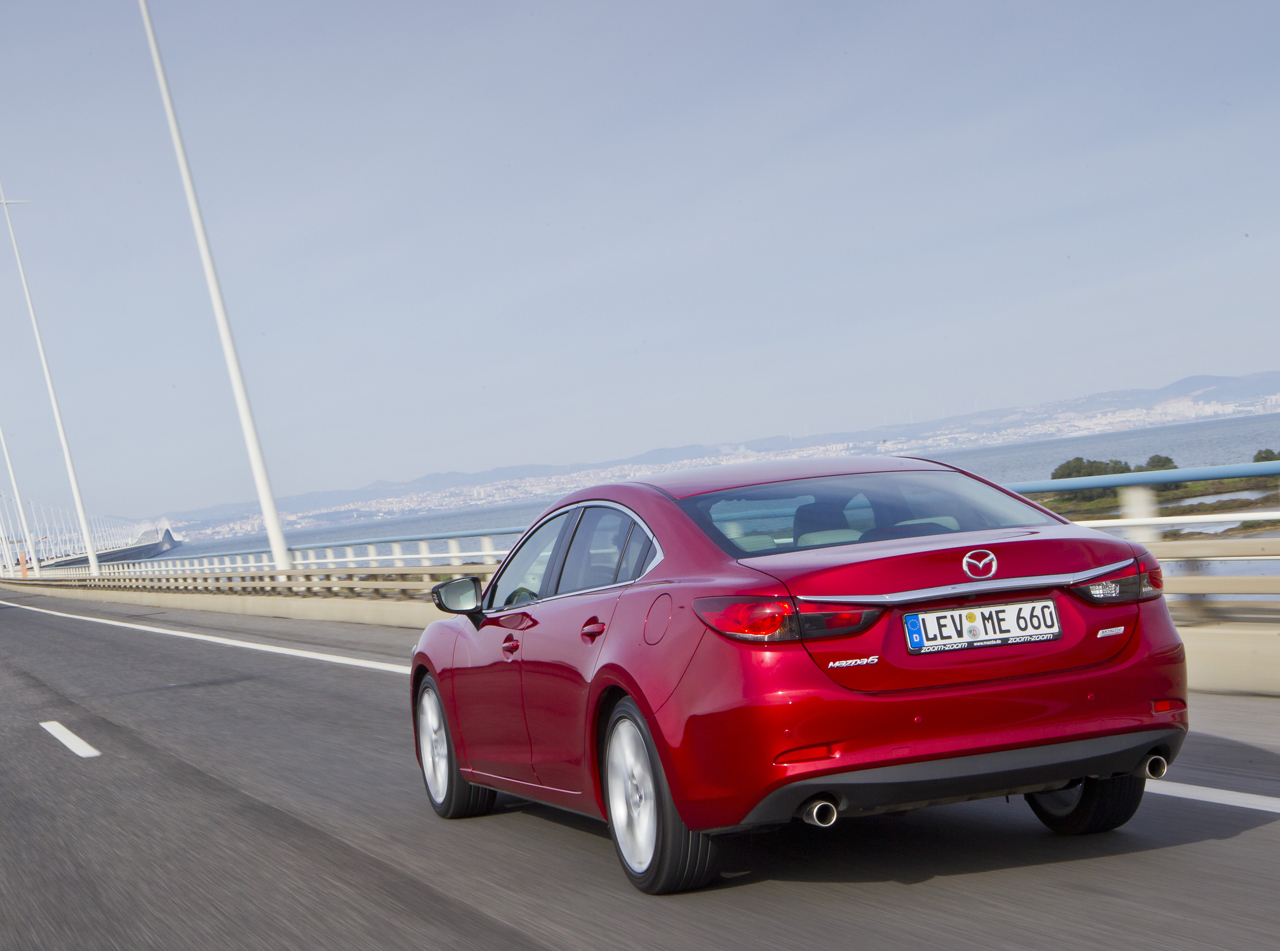
Road Test: Mazda 6 2.2 SkyActiv-D 150 Sport


Price as tested: €31,795

+ Handsome, frugal, fab to drive, solid
– Pretty much nothing
= As good a mid-size saloon as you'll find

An expensive Swiss watch has become a deep desire for so many of us. The thought of the expensive weight of all that carefully assembled stainless steel and titanium, our wrists tingling at the very thought of being topped by the logo of Omega, Rolex or Tag Heuer (delete according to taste), it's a status symbol we'd all love to have. But sadly, few of us will ever afford such a timepiece. Shame.

But what if I told you that you could have something just as good, possibly even better, for a lower cost, simply by trading in your timepiece's Swiss postcode for one from Japan? It's well known in high-end watch circles that, proud though the Swiss boys are of their products and movements, they collectively weep with jealously at the carefully crafted work of Seiko. The famed Japanese watch maker can produce wrist-wear of staggering reliability and accuracy, and no small amount of beauty, for a fraction of the cost of a Rolex.

There's something similar going on in the motoring world, too. Many of us desire a slick German sports saloon; we want our driveway to be adorned with the star of Mercedes, the four rings of Audi or the Munich colours of BMW, but their prices are just out of reach. So what if I told you that you could have a car as good to drive as a 3 Series, better looking than an A4 and more reliable than a C-Class, and all you have to do is pop into your Mazda dealer?

Most of the new 6's rivals come with 1.6 or 2.0-litre Diesel engines with outputs of around 115 to 120bhp, Band A emissions and a price tag circling the €26,000 mark. The Mazda, by contrast, has a price tag of €31,795 (for the diesel Sport model, which Mazda Ireland reckons will be its strongest seller), has a 2.2-litre engine with a muscular 150bhp and 380Nm of torque (an even more powerful 175bhp, 420Nm version is also available) and yet still hits that Band A emissions target, with 108g/km costing you just €180 a year to tax.

How has Mazda done this? Carefully, is the short answer. Its SkyActiv programme, which debuted on last year's very impressive CX-5 SUV, isn't one big whizz-bang fuel saving system but rather, like BMW's EfficientDynamics, a series of incremental improvements in every area. A little less friction here. A saving of a kilogram there. A touch less wind resistance somewhere else. It all adds up and the final sum of these parts is that low Co2 figure and a commensurately low fuel consumption of, claims Mazda, better than 65mpg on average. Part of that efficiency comes from a combination of i-Stop that kills the engine when you're waiting at the lights and a new system called i-ELOOP which uses a capacitor (like a battery; it reacts faster than a conventional battery but won't hold a charge for very long) that can power the electrical systems for up to a minute, independent of the engine, and recharges in just seconds from leftover braking energy. Clever stuff and the re-start time of the i-Stop is impressively fast.

Even so, I doubt you'll be able to match that fuel figure in real world driving, partially because almost no car ever does match its claimed figure, but partly because it's very hard to resist driving the new 6 in a somewhat brisk fashion. The last generation of 6 felt solid, planted and even a touch hefty to drive. This new one continues that tradition in part, but there's also a new-found litheness, a sense of fluidity and a truly engaging driving experience. The steering is the outright star here, feeling almost Jaguar-like in its combination of weight (except at parking speeds when it can occasionally get oddly heavy) and with great levels of feedback. It's a very confidence inspiring car, the 6, and even at very high continental motorway speeds, feels safe, secure and reactive. The ride quality, as long as you don't go for the optional 19" wheels, is also exceptionally supple.

Refined too. There's a rustle of wind noise around the mirrors at 120kmh and a touch of road and tyre noise on coarser surfaces, but the SkyActiv diesel 2.2 is impressively quiet and even manages to sound a little bit entertaining at higher rpm, with a gruff warbling noise rather than the usual bland diesel blare.

The cabin marks a particularly high point for the 6. It's very similar to the CX-5's to look at, but the quality of the materials has kicked up a notch and while it's a touch dark at times, it's also a terrifically comfy and pleasing space in which to spend time, helped in no small part by a well-located driving position and expensive-looking, clear instruments. There's good space in the back too although the boot is a touch smaller than much of the competition. Family buyers will be pleased to see that Mazda is emphasising the safety levels of the 6, with a host of new electronic aids including a city braking system that slams on the anchors if it senses you're going to run up the back of the car in front, a lane keeping warning and a blind spot monitor, as well as radar guided cruise control.

It's also a very good looking car, much more obviously so in the flesh (so to speak) than in photos, where the sweeping lines are more obvious and the muscular stance more noticeable.

That €31,000 price tag may hurt the 6's chances though. Its rivals all have significantly lower price points, even if they are for lesser engines with less equipment. Mazda is effectively competing with bottom-end versions of the BMW 3 Series and Audi A4 at that price too, and while it's a lovely car, that's a tough battle for any mainstream car maker, and Mazda has as yet no plans to try and match or beat the Koreans in the warranty war; three-year unlimited mileage is your lot.

But just as a Seiko will have true watch afficionados nodding in quiet respect, so I reckon this new Mazda 6 will have true car fans doing the same. Gorgeous, lithe to drive and solidly built, and with astonishing fuel efficiency, it's an early nod for one of the best cars of 2013.

Facts & Figures
Mazda 6 2.2 SkyActiv-D Sport 150

Price as tested: €31,795

Range price: €28,745 to €38,895

Capacity: 2,191cc

Power: 148bhp

Torque: 380Nm

Top speed: 211kmh

0-100kmh: 9.1sec

Economy: 4.2l-100km (67mpg)

CO2 emissions: 108g/km
VRT Band: A3. €190 road tax

Euro NCAP rating: Not yet tested


Wednesday, 9 January 2013

News: Lexus strikes at 3 Series with dramatic new IS


You're looking at the first pics of the ultra-aggressive face of the new Lexus IS, the compact sports saloon that Lexus is hoping will, at long last, really take the fight to the heartland of the BMW 3 Series and Audi A4.

Depending on how you feel about the styling of the current Lexus GS, you may or may not love the new IS' styling, with that outrageous sucked-in grille (vampire fangs, anyone) but while we're sitting slightly on the fence at the moment, we're loving the way the grille design makes it look as if the Lexus badge is being sucked into a black hole. Cool.

Of more practical concern, the new IS is going to be longer, more spacious (good – the current one is way too small inside) and lighter. The driving position is going to be lower and more overtly sporting too, and just have a gander at those gorgeous all-digital instruments. They've been lifted more or less straight from the fantabulous V10 LF-A supercar. 

There is a concern that Lexus is going to hobble itself with regard to engine choice though. Once again, only two powerplants will be available but this time around there's no diesel option, or at least none has been officially announced. For now, you'll have to choose between a 2.5-litre petrol V6 IS250 (which no-one in Ireland is going to buy) or a new IS300 Hybrid. Now, we're not 100% sure what the petrol engine component of the IS300 will be just yet, but it is already rumoured to have Co2 emissions in the region of 99g/km. Now, seeing as Toyota can get around 85g/km out of the Prius; 1.8-litre petrol hybrid, we're going to go out on a limb here and suggest that the Lexus' unit will be rather more muscular. 

Will being a hybrid hold the IS back, in sales terms, against the more conventional, but very engaging to drive, BMW 320d and Audi A4 2.0 TDI? Yes, it very well could, although it should be noted that the hybrid-only GS450h is at least as engaging and enjoyable to drive as any diesel 5 Series, so if the same engineers are working on the IS300 then perhaps, at last, we'll have a compact hybrid that's as good to drive as a diesel, but just as (if not more) economical and efficient.

We'll find out more when the IS gets its official public unveiling at next week's Detroit Motor Show.


Tuesday, 8 January 2013

News: Lexus shows off new safety tech at CES


It may not be the prettiest Lexus you've ever seen, but this LS-based contraption is almost certainly the safest Lexus, possibly the safest car, of all time.

It's called the Safety Research Vehicle and Lexus is showing it off at the vast (and vastly important) Consumer Electronics Show in Las Vegas.

The car has been built to demonstrate ongoing efforts around autonomous vehicle safety technologies and explain Toyota's approach to reducing global traffic fatalities and injuries. The vehicle, based on a Lexus LS, advances the industry toward a new era of integrated safety management technologies.
The vehicle systems are capable of tasks such as scanning movement of objects around it, identifying a green light from a red light and measuring the trajectory of the vehicle on the road by using a 360-degree LIDAR laser on the roof of the vehicle which detects objects around the car up to about 70 meters; three high definition colour cameras to detect objects about 150 meters away, including traffic light detection using the front camera and approaching vehicles using the side cameras.
Radars on the front and sides of the vehicle measure the location and speed of objects to create a
comprehensive field of vision at intersections. There's also a distance measurement indicator located on a rear wheel measures travel distance and speed of the vehicle and an inertial measurements unit on the roof measures acceleration and angle changes to determine vehicle behaviour.


GPS antennas on the roof estimate angle and orientation even before the vehicle is in motion and the research vehicle is a testing platform aimed at the development of systems capable of enhancing the driver’s perception of their environment, assisting in the decision-making process and improving overall driving skills.


“In our pursuit of developing more advanced automated technologies, we believe the driver must be fully engaged,” said Mark Templin, Toyota group vice president and general manger of the Lexus Division. “For Toyota and Lexus, an autonomous vehicle does not translate to a driverless vehicle, but rather a car equipped with an intelligent, always-attentive co-pilot whose skills contribute to safer driving.”

Toyota has committed to new research toward an Intelligent Transportation System (ITS), integrating the car with the driving environment. To accelerate development of vehicle-to-vehicle and vehicle-to-roadside infrastructure communications, Toyota began full-scale operations in November at new 8.6 acre ITS proving grounds, located within the Higashi-Fuji Technical Center in Toyota City, Japan. Modelled after urban roads, the driving environment replicates roads and traffic signals and simulates real-life traffic situations using other vehicles, pedestrians and control devices.

The system is designed to help prevent accidents involving pedestrians and other vehicles using information continuously collected by the vehicle from other vehicles, infrastructure and pedestrians. Connecting people, vehicles, traffic environments and infrastructure with state-of-the-art electronic and telecommunications technologies will help move toward safer and more efficient traffic environments. The Toyota ITS Proving Grounds will assist the company work toward the early practical adoption of evermore reliable systems by repeatedly conducting testing that can be difficult to perform on public roads, with changing environments.

“The real value of research projects like this is reinforcing our focus on what a few years ago seemed an impossible dream and is now becoming more plausible,” Templin said. “We, at TMC and Lexus, consider the elimination of traffic fatalities and injuries the ultimate goal of a society that values mobility.”


Tuesday, 6 November 2012

News: Honda's new Civic diesel to hit 78mpg


Honda is at last starting to reveal technical details of its upcoming Civic 1.6 iDTEC diesel and the first figures to emerge are somewhat startling. How does 94g/km and 78mpg grab you?

Honda's official figures are 3.5-litres per 100km (which translates as 78mpg) and 94/km, putting it well ahead of the current Ford Focus 1.6 TDCI in emissions and consumption terms too. It's ahead on power too, with 118bhp, against the Ford's 115bhp and the Volkswagen Golf BlueMotion's 105bhp. Mind you, the new MkVII Golf will beat the Civic's Co2 figure, with an 88g/km average, but the Civic's rating is still a massive step forwards for Honda.

You can currently buy a Civic only with a 2.2-litre diesel engine, which is frugal enough to emit just 110g/km of Co2 and set a 4.2-litres per 100km average (64mpg).

Sales of the new 1.6 diesel Civic will start in the new year, and they'll be followed by a version of the new CR-V SUV using the same engine, which is expected to record equally startling emissions figures of just 99g/km.

Friday, 26 October 2012

Road Test: Honda CR-V 2.2 iDTEC SE


Price as tested: €37,785

+ Space, quality, comfort, steering, off-road ability, styling
– Cabin too plain for this price level, some refinement issues
= A solid SUV from Honda, but will find life tough against sharp competition

It seems almost crazy to think of it now, but back when the original Honda CR-V was launched, the Japanese brand controlled one quarter of the Irish SUV market. Back in 1998, it seemed, we just couldn't get enough of one of the original soft-roaders.

Spool forward to 2012 and things have changed rather a lot, not least of which, the CR-V itself. The outgoing generation was larger than before, and centered around a Diesel engine rather than the petrol-focused original. High in quality and comfort, it was a rival to the likes of the BMW X3 and Audi Q5 as much as its more obvious sparring partners, the Toyota RAV 4 and Ford Kuga. But good car though it was, the outgoing CR-V had to content itself with a much smaller slice of the market, not least because instead of the mere handful of rivals the 1998 original had to contend with, now there is an army of them.

With this new generation model of CR-V, Honda will be trying to claw back some of that original sales dominance and it's going about that in three distinct ways.

For a start, the new CR-V carries over the previous models' two most successful features; its cabin space and its 2.2-litre 148bhp diesel engine. The spacious interior and cavernous boot mark the new CR-V out as one of the few SUVs that can actually boast proper Utility; you can really cram it full of people and cargo, not something you can say for all  of its rivals.

Meanwhile, the still-excellent 2.2-litre iDTEC engine, while it lacks outright power compared to such rivals, is still smooth, punchy and impressively economical. It has even managed to drop a tax band, from Band D to Band C, saving owners a significant amount in annual motor tax.

The second strand to the CR-V's strategy is its styling, which looks much bluffer and more striking than it did before. The old CR-V always looked a touch apologetic. This new one is much more assertive, and all the better for it.

Finally, Honda has realised that it must compete on price, and the most affordable version of the new CR-V clocks in with a €37,795 price tag – within €1,000 of its most significant new rival, the new Hyundai Santa Fe.

The CR-V can even trade equipment and specification blows with the Hyundai, for while it lacks some toys as standard (such as Bluetooth phone connection, and it also lacks the Hyundai's seven seat layout) the CR-V comes with four wheel drive as standard.

And that all-wheel-drive is not just there for show. Honda was quite happy for us to take our test car off into the muddy outback, slipping and sliding over surprisingly tough terrain. Few owners, if any, will put it to the test, but the CR-V can certainly tackle the rough stuff.

On the smooth, it's as good as ever, retaining the old CR-V's combination of tidy handling, a comfortable ride quality and sharp, alert steering. Again, it's very close to the Hyundai in dynamic terms, and that's a good ball park to be in.

There are two let-downs to the CR-V though, and both of them are inside. We've already mentioned the excellent space, and the seats, both front and rear, are comfy and supportive. But there's a lack of flair to the cabin design and layout, a sense of plain-ness that disappoints, especially given Honda's premium-status aspirations.

That's not helped by a distinct, bassy boom that comes up from under the boot floor, and makes its presence known throughout the cabin from speeds as low as 70kmh. It's a black mark against the CR-V's refinement, which is a shame.

Those two issues apart, though, it's hard not to like the CR-V. The new styling is pleasingly distinctive, the engine and chassis as good as ever and the cabin and boot as spacious as you could hope. We can't think of a good reason why it wouldn't be close to the top of your SUV shopping list.

Well, actually, there is one good reason. It's that this 2.2-litre, 4WD CR-V might not be the best CR-V to buy. Later in 2013, there will be a front-wheel-drive CR-V, using Honda's all-new 1.6-litre Diesel engine, that will be more affordable again and will, apparently, boast astonishingly low 99g/km Co2 emissions, putting this large, spacious SUV on a tax band par with the likes of a Volkswagen Golf and Ford Focus. So while we like this new generation of CR-V, it might be worth holding off on buying one for a while yet...


Honda CR-V 2.2 iDTEC SE

Price as tested: €37,795
Price range: €37,795 to €50,095
Capacity: 2,199cc
Power: 148bhp
Torque: 350Nm
Top speed: 190kmh
0-100kmh: 9.7sec
Economy: 5.6l-100km (51mpg)
CO2 emissions: 149g/km
Road Tax Band: C. €330
Euro NCAP rating: Not yet tested


Friday, 19 October 2012

News: Is this the all-new Mazda 3?


A mysterious mole seems to have uncovered the first secret images of next year's all-new Mazda 3 hatchback and saloon.


Sent in an envelope to the offices of Auto Express magazine in London, these first images of Mazda's crucial new hatch, if they are the real thing, show a car with a dramatic interpretation of the company's new Kodo design language, with a gaping front grille, heavily contoured rear end and a distinctly aggressive mien. The saloon version, especially, looks good in profile, with more than a hint of mini-Maserati about it.


According to Auto Express, when Mazda UK was quizzed about the pictures, they claimed they were a digital image designed to show what a new 3 could look like. Which sounds to our ears rather like "yes, it's the new 3, but we're not allowed to say so yet."

Whether or not this is the new 3, it will get an all-new, lighter SkyActiv platform derived from the same chassis that underpins the CX-5 and the new 6 saloon and estate. Expect ultra-low Co2 figures and impressive fuel consumption, along with a distinctly sporty setup.


Tuesday, 16 October 2012

News: New Subaru Forester caught undisguised


Subaru's all-new Forester has been caught by spy photographers undisguised and out in the open.

Featured on US site Carscoop, the new Forester looks largely familiar, but gains a new front end with a bolder, more chrome-filled grille and lights that wrap further around the corners than the current model, taking clear inspiration from the new XV crossover, launched earlier this year.

The new Forester grows a little, being 35mm longer and 20mm wider, while the boot expands to a whopping 505-litres. It's expected that the existing 2.0-litre flat-four Boxer Diesel with 150bhp will be carried over more or less unchanged. It's unclear yet though whether or not Subaru will offer a fornt-drive Forester to gain a lower Co2 rating. All-wheel-drive and serious off-road ability have always been a central part of the Forester's DNA, but with a front-drive version of the XV available, Subaru may well consider the lower Co2 rating and tax band a worthwhile trade-off.

The new Forester goes on sale in November in Japan and will arrive in Europe in the middle of next year.

Thursday, 4 October 2012

News: Suzuki refreshes Jimny 4x4, but not for us. :-(


It's not on sale in Ireland any more (shame) but Suzuki is not only keeping the little Jimny off-roader in production, it's actually updating it.


It was the high emissions of the standard 1.3 petrol engine that killed off Irish sales (still no diesel after all these years) but elsewhere in Europe and the world, buyers will now be able to get a Jimny with a new bonnet, grille and bumper, some new cabin trim, new colours and the option of heated seats for the first time.

The Jimny may have been a bit crude on the road but it was a properly good off-roader with astonishing mud-plugging ability. We kinda miss it...

Wednesday, 3 October 2012

News: Honda teases new Civic estate


Honda has teased us with a sketch image of an upcoming Civic estate. The picture, flashed up on the screen at Honda's stand at the Paris motor show, seems to show a tightly-contoured compact estate with a distinctive wraparound rear-end.


Honda is keeping tech details close to its chest for the moment, but when a pre-production version gets an airing at the Geneva show next March, expect it to have a slightly stretched version of the current Civic hatch's platform and Honda's all-new 1.6 diesel engine which should push emissions well below the 100g/km mark.

Tuesday, 2 October 2012

News: Toyota is world's most valuable automotve brand


Toyota was again named the world’s most valuable automotive brand in the recently published Best Global Brands 2012 by Interbrand. This year’s report sees Toyota’s brand valuation by Interbrand surge 9% and securing an overall Top 10 spot across all industries.

According to Interbrand, Toyota’s success is due largely to the continued customer loyalty, an impressive line-up of environmentally friendly products such as the Toyota Prius, and a strengthening appeal with younger customers.

In June this year, Toyota also emerged on top for the second year running as the Best Global Green Brand. Interbrand highlighted Toyota’s continued determination to maintain environmental sustainability as a top management priority as a key part to the company’s success story.

Interbrand looks at the on-going investment and management of the brand as a business asset when compiling the Best Global Brands report. The methodology of the report takes into account a multitude of ways in which a brand connects and adds value to the organisation.

The 2012 edition of the Toyota European Sustainability Report is now available online: http://toyota.eu/sustainability/

Friday, 28 September 2012

Road Test: Subaru XV 2.0 TDS SE Premium


Price as tested: €34,995

+ Cracking engine, chunky good looks, good to drive, solid build, foul-weather ability, space
– Too-firm ride, pricey, some cheap cabin fittings
= Best new Subaru in ages, but price means it’ll struggle against rivals

You could have forgiven the average car buyer if Subaru had fallen off their radar in the past couple of years. Ever since its rally team, once equally feared and fearless, was pensioned off at the end of 2008, a little of the magic that once haloed the iconoclastic Japanese company had disappeared. Without those iconic blue-and-gold Imprezas bursting through forests with a McRae, a Burns or a Solberg at the wheel, Subaru’s sense of purpose seemed to be gone.

Sequential launches of two rather underwhelming cars didn’t help. The current Impreza hatch and Legacy saloon and estate are fine, or at least fine enough, but too obviously tilted towards Subaru’s largest market in the USA to be of particular interest over here. A shame; the previous generation Legacy had one of the most sympathetically-set-up chassis for Irish conditions that we’d ever experienced.

All that being the case though, Subaru us still capable of turning out a fine car. The Forester SUV is still providing rugged, practical transport to those who have discovered its charms and much of the Toyota GT86 coupe’s dynamic brilliance is down to Subaru, now part-owned by Toyota, being responsible for much of the engineering, being as the GT86 is paired with its own BRZ coupe.

Now, there’s this, the XV; a car that seeks to distill Subaru’s traditional combinations of rugged build, four wheel drive and driver appeal into a package designed to appeal to the Qashqai and yeti buying set.

Right off the bat, it’s off to a better start than either the Impreza (with which it shares most of its underpinnings) or the Legacy because it actually looks good. In fact, it’s the first truly handsome Subaru for a generation or more; chunky, appealing and distinctive, even in the rather washy baby blue paintwork of our test car.

Inside, things are not quite so good. The cabin can best be described as functional, and it lacks many of the soft-touch surfaces or design flourished of its rivals. A Yeti instantly leaves it in the shade for interior ambience, although it’s about on a par with the equally dour Qashqai, and at least both quality of assembly and space are there in abundance. There are also plenty of toys on this range-topping version, with a reversing camera, rain sensing wipers and Blutetooth wireless connection for both phone and music.

Twist the slightly-old-fashioned looking key and the familiar flat-four Boxer Diesel fires into life with a throaty whirr. Its 147bhp and 350Nm of torque seem fine, rather than exceptional figures these days, and its 146g/km Co2 emissions actually beats the Yeti when fitted with four wheel drive, but is trounced by the larger Mazda CX-5. Still, the Boxer is one of the few diesel engines with a true sense of character. It soon shrugs off a low-rpm diesel clatter for a more traditional Subaru woofle, underlaid with all manner of chirps, whistles and cheeps. Different, for sure, if not necessarily to all tastes. It’s easy, accessible performance should please though, as will a decent 6.4-litre per 100km fuel consumption.

Subaru does seem to have forgotten its old magic touch when setting up a car for Irish tarmac, though. The steering is the high point, dynamically speaking. A little numb around the straight-ahead, but becoming ever more garrulous as you apply lock. The XV certainly feels more up-and-at-’em than most of its rivals, and it’s a reasonably entertaining  car to drive. Combine that with Subaru’s traditional all-wheel-drive that gives you a smug feeling of security even as rain-mageddon breaks out all around you, and you have a car seemingly ideal for Ireland and Irish drivers. A pity then that the ride is just too stiff, too ready to jiggle and bobble over rough surfaces. Surely with all that extra ride height a little more suppleness could have been found?

But the XV faces one final, possibly insurmountable, hurdle. Its price. OK, so our test car was the range-topping version and perhaps its €34,995 price tag can be explained purely from that point of view. But to place it just €1,000 cheaper than the entry-level (larger, more practical) Forester seems silly and the fact that an entry-level XV costs €28,495, and with a petrol engine at that, seems closer to daft. In fairness to Subaru Ireland, it’s struggling with an unfavourable exchange rate with the Yen, but the unpalatable truth is that the Yeti or Qashqai beat it for value, as do larger rivals like the Mazda CX-5 and Ford Kuga.

Which is a shame. The XV is engaging to drive and has a personality that’s both distinct and charming. Given Subaru’s reputation for reliability and shrugging off even the very worst weather that the winter (or spring, or summer) can through at you, it would be a tempting prospect. But at that price level, it’s giving itself an uphill struggle for even committed Subaru fans, never mind more casual buyers.


Subaru XV 2.0 TDS Premium
Price: €34,995
Range price: €28,495 to €34,995
Capacity: 1,998cc
Power: 147bhp
Torque: 350Nm
Top speed: 198kmh
0-100kmh: 9.3sec
Economy: 5.6-100km (50.4mpg)
CO2 emissions: 146g/km
Tax Band: C. €330 road tax
Euro NCAP rating: 5-star; 86% adult, 90% child, 64% pedestrian, 86% safety assist


Thursday, 27 September 2012

Road Test: Lexus GS450h F-Sport


Price as tested: €72,950

+ Drivetrain, refinement, comfort, chassis balance, quality
– Silly grille, numb steering
= The best hybrid we’ve yet driven


Here’s a funny thing. Lexus can’t tell me how much torque the new GS450h has. Nerdy fact that it is, a healthy torque figure is deeply significant for driving both relaxed and invigorating. A lack of torque is inimical to fun and lots of it gives you that lovely, deep-down thumpy feeling as you accelerate hard out of a tight corner. It’s what makes American V8s so addictive and its absence is what makes small petrol engines such hard work. Normally you just look up the figure, either in Newton-Metres (Nm) or foot-pounds (lb-ft) in a car’s technical data list. And it’s not that the GS has no torque; quite the opposite. You can feel its presence every time you tap the throttle.

The thing is that the GS450h, a hybrid as was its predecessor and almost every other Lexus, draws its torque from two sources. A 3.5-litre V6 petrol with 352Nm and an electric motor with 275Nm. Add the two together and you get a fairly tyre-shredding 627Nm or about what you’d get from a 1970s Can Am racer...

It’s not that simple though, says Lexus and I seriously doubt that the GS ever gets the full combined 627Nm or the rear Bridgestones wouldn’t be long for this world. Instead, the fearsomely clever computer management system (which can presumably calculate lunar orbit trajectories and file your tax returns) juggles and apportions the power and torque outputs of the two motors until you have an essentially seamless whole.

Now, hybrids have been criticised in the past, and frequently on these pages, for not being up to snuff. The idea of backing up a downsized petrol engine with an electric motor seems entirely sensible and effective, but never in the past have we driven a hybrid that either lived up to its fuel economy claims or gave us much in the way of driving pleasure. (The Honda CR-Z gets a by here because it’s fun in spite of being a hybrid.) The old GS450h was fun enough in a straight-line, drags-strip kind of way, its combination of petrol and electric grunt sufficient to hurl it up the road in a most uneconomical fashion, but it felt a bit lead-footed in handling terms and its economy and emissions were soon out-classed by the new hordes of hyper-efficient diesels.

This GS then, has rather a lot to prove, both as a hybrid and as a car. Can a hybrid ever match or beat the latest diesels in economy and emissions terms? Can Lexus produce a truly convincing challenger to the likes of the BMW 5 Series?

Well, you certainly can’t accuse Lexus of keeping its light under a bushel this time around. The new GS, when seen from the back and side is crisply handsome and subtly muscular. And that new grille, with its chrome fangs? Well, I can certainly see what Lexus was trying to do – to inject both distinctiveness and aggression, but for my money it just doesn’t work. It look inelegant and a bit OTT. A shame.

There’s better news on the inside though, where the previous GS’s slight sense of clunkiness is banished by a very slick and stylish cabin, with beautifully simple, clear instruments, a big central screen for controlling the infotainment and HVAC systems and a distinctly inviting sense of comfort and style. The seats a big, comfy and supportive. The space in the rear seats is excellent. I love the way that, when you push the Sport button, the instruments switch from a charging metre to a red-lit rev counter.

Way out back, boot space has dramatically improved. In the last GS, the hybrid system’s batteries ate so deeply into the luggage room that you were left with a narrow slot that wouldn’t hold very much at all. Now, thanks to better packaging, there’s a decent (if not class leading) 482-litres. That’s better.

Slip behind the wheel and push the starter button and there’s the usual hybrid car silence as the batteries take the strain for the initial few metres. When the 3.5-litre 292bhp petrol V6 engine comes to life, you’ll struggle to notice it. The usual Lexus superlatives of refinement and noise suppression apply.

Where that V6 really makes itself felt and heard is when you accelerate hard. We’ve become so used, over the past few years, to big executive cars being exclusively diesel-powered, so the crisp, sharp-edged snarl of the GS’s engine as it passes 4,000rpm (the point at which most diesels just give up and go home) is as refreshing as lemon zest and just as tasty. Combined with the batteries and electric bits, it makes for a very satisfying drivetrain to use, probably the best hybrid we’ve ever tried. There never seems to be a gap in the power, or a step when one system or the other dominates. The CVT gearbox doesn’t seem to suffer from the same problems that afflict over continously variable ‘boxes, such as letting the engine needlessy blare its head off at high rpm when accelerating. And it’s decently economical too. Lexus claims 6.0-litres per 100km on the combined cycle, which you probably won’t get near, but we averaged mid-sevens and that’s about what you’d get out of a comparable 3.0-litre diesel. Impressive.

Impressive too that emissions have been kept down to a Band B-friendly 139g/km, so you can match a BMW 520d buyer for tax smugness while matching a 535d for performance. That’s quite a combination, and it’s nice to notice how often the car automatically kicks into EV mode, not just when cruising around town, but also on the open road. It makes you feel like it was worth going down the hybrid route, even if in reality, a constantly-running diesel is little less efficient.

Our F-Sport spec test car came with option four-wheel-steering, and eighties Japanese obsession that seems to be making something of a comeback. I can honestly say that, in spite of trying, I could never actually feel the rear wheels doing anything much, but there’s no doubting that the GS felt unusually agile and chuckable for such a big car. A shame that the steering is too remote and distant for you to truly enjoy punting it along, but there’s no doubt that a pretty terrific chassis dwells beneath; an achievement made even more impressive when you remember that the GS’s is still packing the extra weight of all those batteries. Impressive too that the ride quality is generally excellent, only occasionally feeling too firm and mostly just cosseting nicely.

At €72,950, the F-Sport’s rear-steer and sporty bodykit and wheels may seem a bit of an extravagance over the cost of a €59,950 Executive model, but there’s no doubt that for the first time, Lexus has really hit the 5 Series market dead-on. It won’t be to the tastes of the me-too hordes who will only ever buy German at this price level, but here at least is a hybrid that’s a frugal as it should be and as invigorating to drive as you’d hope. Here is a Lexus of true character and enjoyment, as well as the expected quality and refinement.

Lexus GS450h F-Sport
Price: €72,950
Range price: €59,950 to €76,250
Capacity: 3,456cc
Power: 345bhp
Torque: See text
Top speed: 250kmh
0-100kmh: 5.9sec
Economy: 6.0-100km (47.0mpg)
CO2 emissions: 139g/km
Tax Band: B. €225 road tax
Euro NCAP rating: Not yet tested