Showing posts with label Hyundai. Show all posts

Tuesday, 5 February 2013

News: Car sales off to sluggish start in January


It hasn't been a good start to the year for car sales in 2013, as figures released by the Society Of The Irish Motor Industry show. Volkswagen sit atop the sales pile, following on from its best-selling performance last year, while Ford occupies second place in the charts with Toyota in third. 

Thursday, 17 January 2013

News: Detroit Show roundup... in 5 words or fewer...


Look, we're all leading such busy lives now and, frankly, the Detroit Motor Show (or North American Interational Auto Show, to give it its full and correct name) is massive. If we were to give you the full low-down on every car there, we'd be here a month. We've all got better things to do. So, to keep things brief, here's our run down of the Detroit highlights. In five words or fewer...


Jeep Grand Cherokee facelift:

Our favourite Jeep, now better.


Kia Cadenza.

Kia makes a Camry. Nice.

Lexus IS.

No diesel, just hybrid. Shame?


Honda NSX concept.

Closer to reality now. Awesome.


BMW M6 Gran Coupe.

So much want, it hurts.


Chrysler 300C Motown edition.

Chrome wheels kick-ass, right?


Cadillac ELR.

Electric Caddy, basically a Volt.


Chevrolet Corvette Stingray C7

Essentially, show-stopping. 'Nuff said.


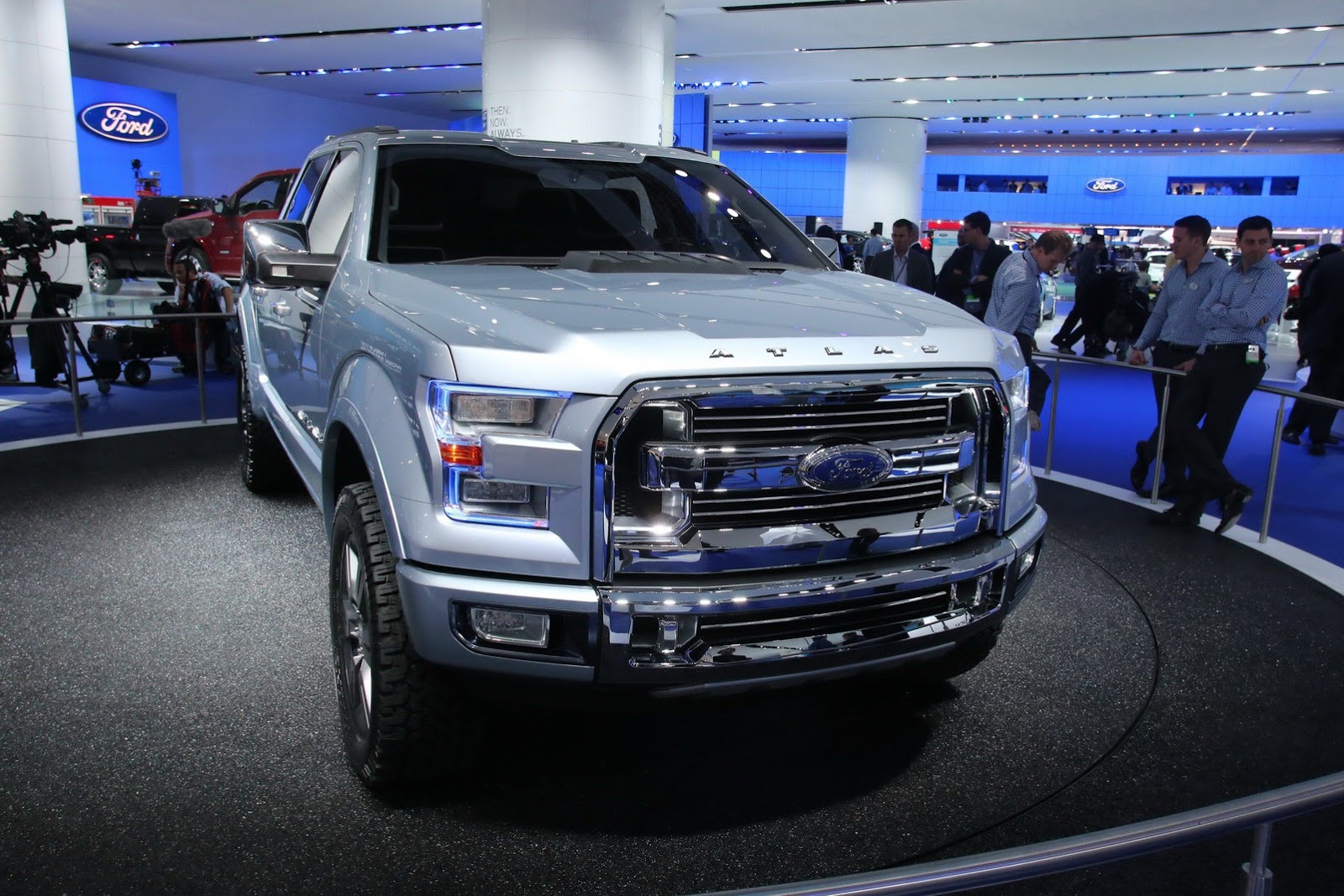
Ford Atlas concept.

Utterly massive. Not coming here.


Honda Urban SUV concept.

Jazz-based Yeti rival. Slick.


Hyundai HCD-14 Concept.

Korean limo in desirability shock.


Mercedes-Benz CLA.

Still want that C-Class, pal?


Nissan Resonance Concept.

Basically, it's the next Murano.


Ford Focus ST Shelby.

No extra power, bit vulgar.


Tesla Model X

Electric, gullwing doors, simply stunning.

Toyota Corolla Furia concept.

New Corolla. Had you guessed?


Volkswagen CrossBlue SUV concept.

Underneath, it's a Golf. Honestly.

Don't forget to check back with us in a few week's time when we'll be summing up the Geneva Motor Show entirely in mime...


Wednesday, 9 January 2013

Road Test: Hyundai i30 Tourer Deluxe 1.6 Diesel


Price as tested: €24,295

+ Spacious, practical, comfy, well made, economical, handsome
– Cabin could do with a touch more flair
= As sensible as it gets


Sensible gets a bit of a bad rap. It’s never the sensible guy who gets the girl in the movies. It’s always the maverick hero, swinging in on a bullwhip, with his hard-drinking, hard-living ways who walks off with the heroine at the end. The sensible guy is left behind, with nothing but his nice suit and steady job to keep him happy. C’mon Hollywood, can’t we do a movie where, just once, sensible comes out on top?

Certainly when it comes to buying a car, sensible is what should (and largely does) take priority. We Irish tend to buy our cars on the basis of longevity and practicality, not style and sex appeal. It’s why Toyota was a top-selling brand in Ireland long before it was a big hit in the rest of Europe.

And it explains, partly anwyay, the meteoric rise of Hyundai. Solid, Korean-built reliability, backed up by a five-year, unlimited mileage warranty and usually with a sensible, practical body shape. What’s not to love? OK, not love, perhaps, but certainly sensibly appreciate.

The good thing is that, on top of that solid layer of sensible engineering and reliability, Hyundai has of late been adding just a touch more visual and tactile appeal to its cars and the i30 Tourer we’re testing here is a good example of that.

For a start, it’s better looking than the hatchback on which it’s based, with those flowing, sharply defined lines given a little more real estate on which to strut their stuff. And yes, I know, many of you still think of estates as commercial traveller’s cars, but come on; it’s time to wake up to the appeal of an estate, and this i30 is more appealing than most.

Out back, where it counts, there’s a 528-litre boot, which is more than big enough for most growing families’ needs, and easily the equal or better of most of the more fashionable compact SUVs on the market. We’d avoid the option aluminium boot divider though. It has its uses, but it eats us a crucial inch or two of loading space, which could cause some fraught scenes in the IKEA car park...

Up front, the cabin is identical to that of the i30 hatchback, so you get cleanly designed, clear instruments, comfy seats and plenty of space. Rear seat space is good too, certainly enough for any lanky teenage offspring and, as ever with Hyundai, the build quality is exceptionally good. Just one criticism; the layout and style could do with a touch more visual flair, if it’s to match the appeal of the exterior.

No arguing with the engine though, which is the latest version of Hyundai’s 1.6 diesel. With 110bhp, it’s right on the money for the class, and a combination of 109 g/km of Co2 and claimed average fuel economy of 4.1-litres per 100km (we managed around 5.5 overall) means that it’s suitably efficient for 2013 Ireland. A little more torque would be nice, as it never feels quite so fleet of foot as, say, a Focus or a Golf, but you’ll pay just €180 a year to tax it, which isn’t bad for a car this versatile.

Versatile? In a world of MPVs and SUVs? Yes, really. The trouble with SUVs and MPVs is that they’re all great ideas and very little substance. The great thing about estates is that what they lack in whizz-bang concepts, they make up for in genuine usefulness. Fold down the back seats in the i30 and you have yourself a well-upholstered van, complete with 500kg payload. Get it up on the motorway and set the cruise control and you have as refined and comfortable a car as you could wish for. Head out on a favourite back road and you have a chassis that’s both capable and entertaining, but also one which is sadly held back by Hyundai’s three-mode steering set-up. Being able to choose between Sport, Comfort and Normal steering settings looks good in the showroom, but we’d have preferred it if Hyundai just went for one setting that satisfies, rather than three that don’t.

Still, when the €24,295 price tag for our Deluxe model test car includes air conditioning, cruise control, Bluetooth phone connection, iPod connection and every safety system you could think of, it might be rather churlish to complain about the steering setup.

What the i30 is, in the final reckoning, is a really solid and fine family car. Spacious, comfortable, reliable and useful, it pushes all the right buttons for an all-rounder that can please both kids and parents. Sensible? Yup, and this time, sensible wins.

Facts & Figures
Hyundai i30 Tourer 1.6 Diesel Deluxe
Price as tested: €24,295
Range price: €21,995 to €27,745
Capacity: 1,582cc
Power: 110bhp
Torque: 260Nm
Top speed: 185kmh
0-100kmh: 11.8sec
Economy: 4.1l-100km (68.8mpg)
CO2 emissions: 100g/km
VRT Band: A2. €180 road tax
Euro NCAP rating: 5-star; 90% adult, 90% child, 67% pedestrian, 86% safety assist


Tuesday, 8 January 2013

News: Hyundai's going for BMW's throat (in the US only for now...)

 
It's the Detroit Motor Show next week, and you can expect to be seeing all sorts of gorgeous machinery that we just can't have on this side of the Atlantic over the next few days. 
Chief amongst them will be this; the Hyundai HCD-14 concept car, which Hyundai is teasing us with this blacked-out image of. It's a preview of the replacement for Hyundai's Genesis saloon, a US-only model that combines a rear-drive chassis with a 4.6-litre V8 engine and BMW-rivalling interior and dynamics. What a shame we don't get them here...

No word yet on drivetrains or anything else, but the Not Wanted Here sticker could be peeled off at some stage. Hyundai in Europe is keen to grab some of the US's premium halo models for itself and there's a faint chance that this big, sexy saloon could make it to this side of the water at some stage in its lifetime. Here's hoping.

Meanwhile, Hyundai's growth in the UK market looks to be stalling, not because of any problems with the cars or the sales network, but because the UK head office can't get enough cars to meet demand. According to Autocar magazine this morning, extra demand from the US, China and Asia has Hyundai's Korean and European factories working flat out and there's just not enough capacity in the system to make cars to expand sales in the UK. There are more than a few European car makers who'd love to have that problem... 

Wednesday, 24 October 2012

New issue of eDrive Magazine out now!


The latest issue of eDrive Magazine is online now, and it's still free for everyone to read. No paywalls around here...


This month, we've been testing the brilliant Mazda CX-5 and previewing the arrival of the all-important, all-new Mazda 6 saloon and estate, and looking behind the scenes at the clever, frugal SkyActiv technology that underpins both cars.

Plus, we've got an exclusive drive in Citroen's one-off Survolt electric race car and we've test driven two new cars from former budget brands that are good enough to have the premium players looking to their laurels; the new Skoda Rapid and the new Hyundai Santa Fe.

Plus, we've been speaking to McLaren Automotive MD Anthony Sheriff about the future of carbon fibre and finding out why the Road Safety Authority reckons that each driver needs an NCT as well as their cars.

All that and more in the new issue of eDrive Magazine, online now.

eDrive Magazine. No paper, no ink, no carbon and free, online, to all.

Tuesday, 16 October 2012

Road Test: Hyundai Santa Fe 2.2 CRDI 2WD Comfort


Price as tested: €36,995
+  Style, comfort, dynamics, engine, quality, price, equipment
–  Some cheap cabin bits, 3rd row seats very small
=  Could genuinely take the game to the premium brands


The first thing that strikes you when you climb aboard the new Hyundai Santa Fe is that you’d be very happy to do a very long journey in one. The seats are comfy, the quality of the cabin excellent and the steering wheel, in spite of some oddly slippery leather wrapping (was someone a bit too enthusiastic with the old Son-Of-A-Gun?) feels good in your hand. As a driving environment, it’s a hard one to beat.

That’s a confirmation confirmed when you twist the key and fire up the upgraded 2.2-litre diesel engine. Aside from a brief burst of diesely-clatter on a cold start, it’s a remarkably refined engine, something that becomes even more remarkable when you realise that our test car had just 94km on its odometer. If it’s this good now, it could potentially be even better with a few loosening-up miles on the clock.

Select first and nudge out of the gate and do all those positive first impressions survive a meeting with the road?

Well, we’ll get to that in a minute, but for a moment, let’s consider the Santa Fe’s place in Hyundai’s firmament. I have to confess that I despised the original 2000 Santa Fe. Rugged and reliable it may have been, but it was lumpy to look at, lumpy to drive and had some of the most uncomfortable seats I’ve ever sat on. The 2007 replacement then, was as much relief as revelation, and a precursor to the recent product revolution at Hyundai, arriving as it did just ahead of the first generation of Hyundai’s i-models. Now, the Santa Fe could boast pleasant styling, a useful seven-seat cabin (even if the third row of seats was suitable only for small children) and competent on-road dynamics. And decent seats, thank the lords of motoring.

Since when, Hyundai has been on a major roll, with cars like the i30, i10, ix35, i40 and Veloster coupe proving that it can now make cars that are not only good, but good enough that the company can effectively abandon its old pricing policy. Whereas Hyundais of old would always be priced around €1,000 or so cheaper than the likes of a rival Ford or Toyota, now the prices are comparable, even if Hyundai continues to offer better value for money in terms of equipment and its impressive five-year warranty.

Certainly, you would have to say that the new Santa Fe requires no financial incentive if you were to judge it on looks alone. The photos simply don’t do it justice, as it looks classier, chunkier and more substantial by far in the ‘flesh’ than it does on the screen. There is a genuine sense of style to the Santa Fe now; the slightly upright, plain and simple look of the old one gone  and replaced by a thrusting look, quite American (not surprising considering Hyundai’s stateside success) and verging on the brash, but in a nice way. Love the big, chrome-y grille.

Inside, the seven seat layout is retained (and once again, it’s kids, and small ones at that, only in the third row) and the cabin is spacious and comfortable in the third row. A genuine surprise was to find that our test car was the most basic Comfort specification (albeit with optional leather seats) because quite frankly, it was rather hard to find any equipment lacking. Standard toys include a multifunction steering wheel, electric lumbar support, Bluetooth and USB connections for phones and media players, air conditioning, a built-in music hard-drive, a bevvy of airbags, ESP, a Land-Rover-style hill descent control (even though our car was front-wheel-drive) and more. One pleasant, practical touch; the bottom of the doors now wraps under the sill, meaning that you can get in and out without dragging the backs of your trousers or tights on muddy door bottoms. Nice.

Under the bonnet, the 2.2-litre diesel engine is familiar in size but its performance and economy have both been improved. With 197bhp and 420Nm of torque, it’s certainly sprightly, and while the Santa Fe clocks in with a kerb weight of 1,961kg, it can still spin its front wheels up pretty easily, and there’s never a sense that you don’t have more than enough power to get about. Best of all though is the already-mentioned refinement. It’s genuinely quiet and relaxed in the cabin. It’ll make a great long-haul cruiser. Co2 emissions are pretty impressive too, at 147g/km for the 2WD version (149g/km for the 4wd) and Hyundai claims you’ll burn just 5.6-litres for every 100km traveled. That’s well into 50mpg territory, which sounds like a bit of a stretch to us. On the basis of our (admittedly brief) first test drive, we’d say mid-sixes, around 40-45mpg would be more realistic, and still pretty impressive.

The driving experience is pretty good too. Now, we’ve criticised Hyundai’s three-setting Flex Steer system before. It allows you to toggle between Comfort, Normal and Sport modes for the steering, and theoretically offers you lighter or heftier settings depending on your mood or need. In reality, there’s not much difference between the three modes and you can’t help but feel that the development budget would have been better spent on one setting that did everything well. Aside from that, the Santa Fe is very pleasant to drive, well balanced and rides with a BMW-esque firm pliancy, only being upset by truly viscious, sharp-edged potholes.

In fact, the BMW comparison is apt, as Hyundai is reckoning on tempting premium German SUV buyers with the new Santa Fe, and there’s a range-topping automatic Premium version that costs the guts of €50k. Ambitious, overly so for a Hyundai? Possibly, but you know what? This is a very impressive car, handsome to look at, pleasant to drive, with an excellent engine and terrific build quality. I personally can’t see why someone considering a BMW or Audi wouldn’t, if they put aside badge snobbery for a moment, seriously consider a Santa Fe now. It really is that good.

Hyundai Santa Fe 2.2 CRDI 2WD Comfort
Price as tested: €36,995
Price range: €36,995 to €48,995
Capacity: 2,199cc
Power: 197bhp
Torque: 420Nm
Top speed: 190kmh
0-100kmh: 9.8sec
Economy: 5.6l-100km (50.4mpg)
CO2 emissions: 147g/km
Road Tax Band: C €330
Euro NCAP rating: Not yet tested


News: Cosworth-tweaked Hyundais on the way?


Cosworth was once synonymous with road-and-rallying Fords, and gave us such iconic high performance cars as the Sierra and Escort Cosworth. More recently, newly independent Cosworth has given us a tweaked Subaru Impreza, but the legendary tuner could be making a road-going return with Hyundai.

Hyundai has already upgraded the performance of its cute and clever Veloster coupe, adding a turbo to take the output of the standard 1.6-litre 140bhp GDI petrol engine up to 200bhp for the Turbo model. But Cosworth's tweaked Veloster, seen in sketch form above and appearing at the Speciality Equipment Manufacturers Association (SEMA, a major American tuning and accessories show) goes quite a bit further.

Like 400bhp further, and that's backed up by Bilstein monotube dampers, massive Brembo brakes and custom-built 19" wheels with almost-slick Khumo tyres. Inside, the cabin gets a half-rollcage (911 GT3-style) and a specially made suede interior finish. Nice.

Of course, this one's just for show not for road, but with Hyundai making noises about a high-performance version of the new 3-door i30 hatchback, and wanting to seriously challenge the premium German players at their own game, there could well be room now in the Hyundai lineup for a road-going Cosworth-tuned performance range.


Friday, 28 September 2012

Road Test: Hyundai i30 1.6 Diesel Elite Plus


Price as tested: €22,295

+ Sharp styling, exceptional quality, refinement, comfort, equipment
– Not the cheap option anymore, engine needs more oomph
= Right up with the Focus and Golf at the top of the class

You know it’s been an interesting week, road-test-wise, when you hop straight from a €170,000 Mercedes SL and into a €22k Hyundai hatchback. Even more so, you know you are living in interesting times when the Hyundai doesn’t feel like a disappointment after the Merc...

It’s become such a cliché to point out “just how far Hyundai has come in a few short years” that I think we can officially stop doing so. The simple fact is that now, there is not a single model Hyundai builds that is not entirely competitive with its rivals from Europe and Japan. So I think we can dispense with the derisory “haven’t they done well, for Koreans?”

The first-gen Hyundai i30, which was only launched in 2007, was a very decent car that rather hid its light under a bushel of very quiet, even bland, styling. Well, the new one does away with that, taking the striking grille and lights more or less straight from the handsome i40 saloon and plonking them on the front of a neat, crisp five-door hatchback design. It looks good, very good in fact and certainly more distinctive than its main potential rival, the Toyota Auris.

Inside, the niceness continues with a chunky and good-to-hold four-spoke steering wheel, handsome, clear instruments and a level of touchy-feely quality that outstrips the likes of the Focus and Mazda 3 and only falls very slightly short of the benchmark VW Golf. The seats are comfy, the driving position sound and the space in the back on the money for the class.

Standard equipment is very good, including Bluetooth phone and media player, aircon, ESP, adjustable steering, cruise control with speed limiter, voice control for the audio system and LED daytime running lights. Mind you, equipment would want to be good, as Hyundai has taken the decision that it’s no longer going to offer its cars at bargain bucket prices. True, you can get a 1.4 petrol i30 for just €17,995 but this diesel model is right on the class average for price; a signal that Hyundai is selling on its own merits, not just price anymore.

To drive, it’s also right on the class average, which is to say that it lacks the outright sharpness of a Focus, or the beautiful fluidity of a Golf, but feels more positive to drive than an Auris, Citroen C4 or Renault Megane. It’s not really a drivers’ car, but there is a very pleasing sense of decorum in the way it rides, the way it controls its body during cornering and the obvious levels of inherent grip and stability. The adjustable steering, which lets you toggle the weight of the steering between Sport, Comfort and Normal modes is a bit of a gimmick, and doesn’t turn the i30 into a GTI when you hit Sport, but the essentials of the steering’s accuracy and feel are pretty good to begin with.

A shame that the 1.6 diesel engine never quite feels like it’s giving of its all. The on-paper figures of 110bhp, 260Nm and 0-100kmh in 11.5secs are all par for the class, but on the road, it just never feels like it’s puffing quite as hard as it should be. It’s not actively slow, but neither is there a nice, low-down hit of torque. Still, 109g/km Co2 emissions and combined fuel consumption of 4.1-litres per 100km (we managed a creditable 5.9l/100km average) are some compensation for that, as are the very good refinement levels. Not to mention the five-year warranty.

We’ve become accustomed now to Hyundai making cars that are at least class competitive and usually better again than that. That the i30 proves to be at least as good, overall, as the class leaders should therefore come as no surprise, but it’s pleasing all the same.


Facts & Figures

Hyundai i30 1.6 Diesel Elite Plus
Price: €22,295
Range price: €17,995 to €25,495
Capacity: 1,582cc
Power: 110bhp
Torque: 260Nm
Top speed: 185kmh
0-100kmh: 11.5sec
Economy: 4.1-100km (64mpg)
CO2 emissions: 109g/km
Tax Band: A. €160 road tax
Euro NCAP rating: Not yet tested


Friday, 21 September 2012

Road Test: Hyundai i40 Tourer 1.7 CRDI BlueDrive Executive


Price as tested: €26,495

+ Handsome, spacious, economical, high quality, comfy
– Still some cheap cabin bits, dynamically not quite up to Mondeo standard
= Cracking family wagon


62 miles per gallon. That’s 4.4-litres per 100km in new money. That kind of fuel economy figure would be impressive enough if we were talking about a family hatchback or even a small city car. But we’re not. We’re talking about a big, handsome, spacious, comfortable, useful even luxurious family estate. One that gets 62mpg.

Hyundai has been on a steady roll for some time now. Ever since the current Santa Fe came out, the Korean brand once upon a time best known for producing cheap, but otherwise unremarkable, cars has since then given us the i20 (decent), the i10 (very good), the i30 (properly excellent) and the ix35 (really good). So when lined up against all that, the fact that we reckon that the i40 is a serious breakthrough car for Hyundai should speak volumes.

It’s the first proper stab by Hyundai at the Mondeo-Avensis-Passat axis (the old Sonata had its charms but it was never a serious contender) and as such it lands Hyundai smack dab in the midst of one of the most viciously competitive sectors of the market. Cars in this class have to be only slightly more expensive than a family hatch but as comfy as a limo, as good to drive as a sports saloon and as well built as a solicitor’s safe. And the i40 scores highly in pretty much each of those areas.

Let’s get back to that economy figure. OK, so the 4.4-litre per 100km figure was scored on only one journey we took in the i40, but in fairness, that was a four hour schlep from Galway to West Cork, so it’s pretty representative. Our overall week-long average of 5.0-litres per 100km (56.5mpg) is still very impressive. And at 113g/km of Co2 it’ll cost you just €104 a year to tax.

And it’s from a remarkably refined engine. Hyundai’s 1.7 CRDI diesel has always been impressive, but in the i40 it’s genuinely whisper quiet, only giving up some diesel-y rattle and gargle at low rpm on a cold start.

More good news; the rear seats are impressively spacious and, at 553-litres, the boot is simply massive. Up front, the seats are comfy, space is good and quality is mostly excellent. For our money, those blue-striped dials still look a little low-rent, as do the very cheap feeling column stalks, and why is the rear demister all the way on the opposite side of the dashboard from the driver? Small quibbles, but they do detract from the otherwise almost-premium feeling.

And the i40 does trip up in one other area; the way it drives. To call it bad would be simply wrong. To call it good would be right, but this is a class where excellence is the norm and the maddening thing is, we know that Hyundai can do it better. The suspension is quite soft, the steering a little distant and there’s a slightly wobbly feeling of the whole car being under-damped. It’s not, you might think, something that anyone other than a keen driver would notice, but the Mondeo, Passat, Avensis, Insignia and 508 all feel much better and more confidence-inspiring to drive. And having driven an early prototype i40 earlier this year that had noticeably sharper chassis settings, we know that Hyundai have a sharper-driving i40 tucked away in a cupboard somewhere.

Still, when a car looks this good, is this comfortable and refined, this economical and, for the €26,495 Hyundai is asking for this Executive model (Bluetooth, electronic parking brake, iPod connection, 5-Star EuroNCAP safety rating, stop-start, climate control, reversing camera and a 5-year unlimited mileage warranty) is exceptional value for money... well, would you quibble about some chassis shortcomings and some cheap windscreen wiper stalks?

Facts & Figures

Hyundai i40 Tourer 1.7 CRDI BlueDrive Executive
Price as tested: €26,495
Price range: €24,995 to €26,495
Capacity: 1,685cc
Power: 115bhp
Torque: 260Nm
Top speed: na kmh
0-100kmh: na sec
Economy: 4.3l-100km (65.6mpg)
CO2 emissions: 113g/km
Road Tax Band: A €104
Euro NCAP rating: 5-star: 92% adult, 86% child, 42% pedestrian, 86% safety assist