Showing posts with label Road Test. Show all posts

Monday, 11 February 2013

Road Test: Volkswagen Golf 1.4 TSI ACT Highline


Price as tested: €33,642

+ Solidity, comfort, technology, refinement, styling, desirable
– Not as economical as a diesel, not sporty to drive
= Golf cements its position as the best family hatch around


Thursday, 7 February 2013

Road Test: Mini Cooper S John Cooper Works GP


Price as tested: €47,640

+ Handling, performance, styling, seats, noise, fun
– Hard ride, impractical
= Small car, massive fun

Road Test: Opel Mokka 1.7 CDTI SE


Price as tested: €26,495

+ Styling, handling, quality
– Noisy & outdated engine, tight rear seats and boot
= Firmly underscores Opel's premium ambitions

Tuesday, 5 February 2013

Road Test: Ford B-Max 1.0 EcoBoost Titanium


Price as tested: €23,170

+ Doors, comfort, engine, chassis, quality
– 1.0 not economical enough, needs more space in the back
= Better than the diesel version but still flawed

Tuesday, 29 January 2013

Road Test: Skoda Rapid 1.6 TDI Elegance


Price as tested: €24,265

+ Simplicity, quality, reliability, space, practicality, price, styling, comfort
– A few rough edges showing through to go with that price tag, indifferent handling
= As practical and sensible as they come but we'd save up the extra for the new Octavia

If I were to say that the new Skoda Rapid is both and at once a return to classic form for Skoda and something of an unfortunate step backwards, would that be too confusing? Possibly, so let me explain.

Pre-1998, Skoda was to most people a joke and not an especially funny one. Decades of decrepitude under communist rule meant that Skoda had been starved of development funding and any reason to produce competitive, interesting cars. That changed, dramatically, with the launch of the original Octavia, funded and developed by Skoda's new owner, Volkswagen. At once, the yoke of communism was thrown off, and Skoda marched happily forwards into a new capitalist reality. Successive models, from the Fabia to the second generation Octavia to the Superb to the utterly brilliant Yeti underpinned that reality with success, both critical and financial. And with sophistication. In fact, sit into a Yeti or a Superb today and you'd be hard-pressed to tell the difference between affordable Skoda and aspirational Audi. They are that good.

But there is now an increasing trend in the motor industry towards making cheaper cars, something that the car buying public is lapping up, as the success of Dacia shows. Make something simple and affordable, and you will capture the wallets, if not the hearts, of many. So it is with the Rapid. Skoda has taken a step back from its shiny, sophisticated recent past and looked further back, to the eighties and beyond, when it made simple, affordable, useful cars. (Never mind the inept comedians of the eighties who castigated Skoda – its cars even then were better by far than their reputation would have you believe.)

The Rapid is a family-sized hatchback that occupies an unusual middle ground between the likes of the Polo and Fiesta on one side and the Golf and Focus on the other. It's narrower by far than a Focus, but also much longer, the upside of which is a cabin that, while not very broad, has lots of leg and head-room for tall passengers in both front and rear, and a massive 550-litre boot that makes the trunks of even cars like a Mondeo or Passat look underfed.

So, it pushes all the practical buttons and it's not short of sophistication either. The engine in our test car was the cutting-edge VW Group 1.6 TDI diesel, and with 105bhp and 250Nm of torque, it's both swift and economical. Skoda claims 4.4-litres per 100km fuel consumption (64mpg) and if we didn't quite manage that, we easily broke the 50mpg barrier. 114g/km Co2 emissions is a touch high though, especially when you consider that a VW Golf with essentially the same engine gets closer to 100g/km, and that means your annual tax bill will be €200. It's here that you'll find the first chink in the Rapid's armour though. The engine (or possibly its installation) is fine, but nothing more. Acceleration feels noticeably slow-witted unless you push the oddly-weighted throttle pedal all the way to its stop, and refinement isn't terrific until you settle down at a chosen cruising speed.

Inside, Skoda has made great efforts to make the cabin look and feel as sophisticated as its bigger brothers, while still costing less. It's a neat trick, and Skoda almost pulls it off. The dials are clear and look like expensive watch faces. The steering wheel feels pleasant to hold and the driving position is both comfortable and well sited. But you'll notice that there's no switches in the front to control the rear windows, the grab handles in the roof clang back into position without a nice, soft motion and the plastics on the doors and dash-top, while still of good quality, don't have that nice touchy-softy-squishy feeling.

Because of all that, the Rapid feels a distinct degree less sophisticated than its Skoda cousins. Now, that's fine in the sense that it's also much cheaper. Prices start at just €16,515 (for the 1.2 MPI petrol; an engine best avoided if you want to (a) accelerate or (b) save fuel) and the pick of the range, the 1.2 TSI turbo petrol in Ambition spec, is just €19,550, with almost identical Co2 emissions to the diesel. All well and good, and those prices include standard electronic stability control – a significant benefit.

But it just doesn't feel as good to drive as it either should or could have. The rear suspension has been done on the cheap, relatively speaking, and uses simple torsion bars instead of the more modern multi-link setup as found on most Octavias. That means the boot is massive, but the Rapid does tend to clatter over bumps, and it never feels very well sorted at the front, either. Cornering is a somewhat lazy, imprecise process with vague steering and a sense of detachment. It's a good motorway cruiser, mind, with well suppressed engine noise and only a small amount of road and tyre noise.

I guess it depends what you want from a car. The Rapid is keenly priced, practical, spacious, ruggedly built, should prove reliable and hits its marks in terms of economy and emissions. It even looks quite nice. But I reckon Skoda buyers, by and large, have moved on recently and are enjoying the sheen of quiet luxury on recent models. So, perhaps it would be best to hold off buying, save up a little more, and get your hands on the impressive new Octavia that arrives in March. The Rapid's backward glance to a simpler, more practical time is appealing in many ways, but we all want to feel a little more sophisticated these days, don't we?


Facts & Figures
Skoda Octavia 1.6 TDI 105bhp Elegance
Price as tested: €24,265
Range price: €16,515 to €24,265
Capacity: 1,598cc


Power: 105bhp


Torque: 250Nm 


Top speed: 190kmh 


0-100kmh: 10.4sec


Economy: 4.4l-100km (64mpg) 


CO2 emissions: 114g/km
 VRT Band: A4. €200 road tax


Euro NCAP rating: 5-star; 94% adult, 80% child, 69% pedestrian, 71% safety assist


Road Test: Citroen DS3 Cabrio 1.6 THP 155 DSport


Price as tested:

+ Cute styling, eager chassis, neat roof, refinement, engine
– Very little really
= Small, fun, affordable. Lovely.

There is not enough fun in our lives anymore. We sit at home, commute to work or shop at the weekend surrounded by the worst kinds of depression. A constant barrage of promissory notes, of legal or political controversy. Joe Duffy, 6-1 and Vincent Browne have sucked the very laughter from our lungs, and when we peek out onto our driveways, there's usually little enough joy to be had there, either. A succession of grey, sliver, black and dark blue hatchbacks and saloons, all purchased with an overriding obsession for low Co2 emissions and frugality. Of fun, there is little or none.

It doesn't have to be like this. It was once the case that fun cars were either too expensive, too impractical or too unreliable to be bought by the majority of us but that has long since changed.

Take, as an exemplar, this new Citroen DS3 cabrio. Citroen's revival of the DS badge has been a huge success for the French firm, a rare glimmer of such at a time of retrenchment and falling sales for the big three French car makers. In 30 months, 300,000 DS models have been sold globally, 200,000 of them the perky little DS3 hatch.

In Ireland, the success is rather more muted, if it's there at all. Citroen's sales have been nibbled away by the German premium boys at the top end and by the Korean warranty-wonders at the cheap end. The DS brand and the DS3 have failed to capture Irish hearts much, hardly a surprise when you remember both were introduced in the middle of 2009, when no-one was buying cars much at all, and few enough of them would even consider a quasi-premium sports hatch from a French manufacturer.

Let's get the Frenchy-ness, if that's what bothers you, out of the way with first. The DS3 feels distinctly Germanic inside thanks to high levels of quality and big, comfy seats. There's more space inside than its main Anglo-German rival, the Mini and outside, it's little short of gorgeous. Those chunky looks, that shark-fin b-pillar and the new 3D-effect tail lights all live up to the promise of the DS brand being the motoring answer to France's great luxury brands like Louis Vuitton or Hermés.

And it really is fun. OK, so we've been testing the 150bhp 1.6 petrol turbo engine (a unit actually co-developed with BMW) which will only be available to special order in Ireland, but the DS3 cabrio brims over with fun. It's light on its toes and agile, and if it gives in too easily to lurching understeer (especially in the wet) when pushed, then at lower efforts it's bubbling and fizzing with enthusiasm for the drive.

The convertible roof is a neat installation, and given that it's really a glorified sunroof (the pillars and side rails of the roof remain in place) then it's rather well suited to Irish conditions. A 16-sec retract or replace time and the fact that you can lower or raise the roof at speeds of up to 120kmh means that you can take advantage of the scattered bright spells.

The boot, at 245-litres, is more practically sized than that of the Mini cabrio or the Fiat 500C, and the boot lid opens with a delightfully quirky motion, cantilevering up almost flush with the body. A shame that the actual boot opening is so small, meaning larger items won't go through to the space beyond, but it is an inevitable compromise for an open-top car.

Top down, and there's plenty of wind and fresh air to enjoy, but even at motorway pace, buffeting is kept to a minimum. Top up and refinement and insulation are excellent, aside from a tendency for road noise to echo up through the rear wheel arches. The optional roof colours include a deep indigo blue and a version woven with the DS logo, that stands millimetrically proud of the cloth and can be traced with your fingers.

You can't even use the excuse of purchase price or running costs to count yourself out of the fun fest. The basic 1.2 VTi petrol model will cost from around €21,500 and the main-selling 90bhp 1.4 HDI diesel, with its Band A 94g/km Co2 output, will be around €24,500. So if you're in the market for one of those dingy diesel hatchbacks (and don't strictly need the cabin or boot space) you can afford one of these.

The launch of the DS3 was a new beginning for the DS name, resurrected from its legendary 1955 origins. The follow-on launches of the DS4 and DS5 haven't captured the same critical acclaim of the DS3, but perhaps can be best described as the end of the new beginning. The DS brand's future will snap more firmly into focus at this April's Shanghai motor show when a Mercedes CLA-sized three-box saloon, a compact SUV and a large executive model will all be shown off.

Will any of these new DS cars make more of an impact in the Irish market? It is, possibly, doubtful but that would be a crying shame. We can continue to buy the same grey, silver, blue and black hatches, we can continue to listen endlessly to Cooper, Hook, McWilliams, Kenny and Duffy. We can keep firm on our slide into national apathy.

Or we, some of us at least, could buy a cute French convertible, possibly painted in a bright, happy shade of yellow. We could open the roof on a rare sunny day and get some vitamin D. We could listen, on a rainy day, to the evocative sound of raindrops on the canvas roof. We could do all that safe in the knowledge that our motor tax and fuel bills will remain low and sensible. We could, in a vehicular sense, if nothing else, cheer up.


Facts & FiguresCitroen DS3 Cabrio 1.6 THP 155 DSport
Price as tested: €26,545Range price: €21,195 to €26,545Capacity: 1,598cc

Power: 154bhp

Torque: 240Nm

Top speed: 212kmh

0-100kmh: 7.4sec

Economy: 7.4l-100km (37.8mpg)

CO2 emissions: 137g/km
VRT Band: B2. €280 road tax

Euro NCAP rating: 5-star; 87% adult, 71% child, 35% pedestrian, 83% safety assist


Wednesday, 23 January 2013

Road Test: Ford Focus ST


Price as tested: €36,800

+ Massive grunt, lairy soundtrack, chassis, solid build, practicality
- Styling doesn't look premium enough inside or out, not well enough equipped
= Ford's working class hero for the 21st Century rekindles old Cosworth romance


Like so many of my age group, I grew up on fast Fords. My first motoring memory is of standing on a ditch, somewhere near the village of Ballydehob, where my dad had taken me to see a stage of the West Cork Rally. Now, my dad's a football nut, not a car nut but he still seemed excited to be there, and as a curious six year old, I wondered why. Then I saw, for the first time ever, Billy Coleman gunning, slipping and opposite-locking a MkII Escort between the hedges, BDA engine burping, farting and snorting away like a cage of warthogs with IBS. I wondered no more.

If by then the MkII was already something of a dinosaur, then I didn't have to wait long for more iconic hot Fords to come along and trawl for my desire. First came the XR3i, then the short-lived RS200, then the mighty first generation Sierra Cosworth. By the time I came to driving age, I was fully convinced that a Sierra Sapphire Cosworth 4x4 was the ideal and perfect car for me. Sadly, in lieu of a Lotto win, I was relying on my dad's generosity of spirit and he duly let me learn how to drive in his Sierra. A hatchback LX with the 1.6-litre engine. I think it had about 12bhp...

Still, by the time I passed my test there was the Escort Cosworth to lust over and then... And then there wasn't much at all. The Escort Cossie was the apogee of the hot hatch, a car which cost more to insure than it did to buy and for a time, Ford more or less entirely retreated from the affordable hot car market. A few trickles came along, such a the Mk1 Focus ST (sweet chassis but not actually much more fun than a diesel 1.8 TDCI) and a few ST Mondeos, but it too until 2003 and the arrival of the Mk1 Focus RS to really kick-start the fast Ford revival. Since then, we've had an even more extreme (properly Porsche-quick) Mk2 Focus RS and a warbling, five-pot ST (lovely but too thirsty by half). And now this, the Mk3 Focus in ST spec, with a new 2.0-litre 250bhp four-cylinder turbo EcoBoost engine. It's a five-door only model (in direct contrast to most previous Ford hot hatches, although there is a rather anti-cool estate version) and seeks to finally bridge the gap between previous lairy and uncouth performance Ford models and the more sophisticated likes of the Volkswagen Golf GTI.

First off, the ST's looks are a little odd. In spite of big wheels and a chunky bodykit, there is little to tell the unassuming bystander that this is a performance flagship. Yes, there's the gaping, Aston-Martin-esque grille, but you can now find something similar on a boggo Fiesta, so that's hardly a telling item. No, this Focus, for the first time in hot Ford history since that long-desired Sierra Sapphire Cossie, majors on subtle looks.

That's true of the interior where the overwhwelming impression is that of standard Focus. Yes, there's an extra bank of dials atop the dash, the steering wheel and seats have bold ST logos and there's a plaque on the centre console indicating your car's build number, but other than that it looks stock. Beware of the seats, incidentally. They look gorgeous but the bolsters and supports are so chunky that if you're built along similarly husky dimensions to myself, you may find them restrictively tight. Better lay off the cupcakes. (It also feels curiously bare. Not cruise control? No heated windscreen? On a €35k car? Really?)

And when you first fire up the powerful new engine and pull out onto the road, you may also feel a slight lack of being whelmed. Unlike previous fast Fords, there's little sense of urgency or hairy-chestedness, assuming that is that you tickle it along and upshift early, as we've all become accustomed to doing from driving tourquey, low-revving diesels. The ride is certainly firm and thumps hard over sharp obstacles, but mostly, it's just refined and easygoing, with a hint of muscularity underneath.

And then you drop a gear and venture beyond 3,000rpm and all hell breaks loose with a side order of demons. Then the engine shows is true colours and they are fully red (shade: tooth & claw). It emits a hard but tuneful bark that swiftly becomes addictive. It's not the musical roar of a big V12 or the grumble of a V8 but a blunt, business-like shout that speaks of racing heritage and serious intent. That seriousness is hammered home by the fact that the traction control light has by now more than likely become constantly lit and the steering is bucking in your hands as the front tyres try to choose between being traction devices or simply smoke emitters. It is, just a bit, exciting.

But curiously, not OTT. Yes, the torque steer is there, as mentioned, but a firm grip on the wheel easily quells it. And yes, there's wheelspin there for the taking, but the odd thing is that the Focus ST feels like a duck. You know that old adage about a duck swimming on a lake looking serene and effortless on the surface while underneath it's paddling like hell? That's what I mean. If it can be said that the Focus ST has a split personality, then it's split along the horizontal axis, all thunder and fury down below, while you sit calmly atop, deciding the precise degree of fury to unleash.

The handling is just excellent. Yes, it would be nice for Irish conditions if the ride had a touch more pliancy, but the way the meaty steering pulls you into corners and spits you, cannon-shell-like, out the far side is a truly terrific experience. In some ways, with that wheelspin never far away and the sledgehammer power output, you could see the Focus ST as a bit of a crude weapon, all point-and-squirt. But learn to hold back the throttle a touch to keep the wheelspin quelled, learn to lean on the grip of the front end and realise that the engine, far from being peaky or laggy, actually does a convincing impression of being a much larger, naturally-aspirated unit, and you will unlock the immense point-to-point ability of the ST.

And that, in a heartbeat, finally bridges the gap between a fast Ford and a supposedly more sophisticated Golf GTI. Yes, the VW badge will continue to carry more kudos and apparent classiness, and the Focus isn't helping its own cause by persisting with a cabin that still feels a salary band lower than that of the Golf (even if its actual quality is unimpeachable) but here at last is a Ford hot hatch that works equally well as a daily driver and a Sunday morning cobweb remover.

Any car that can sprint from standstill to 100kmh in 6.5secs and on to a top speed of almost 250kmh has to be considered as a serious performance player. But any car that can seat for in easy comfort, has a big boot and can manage 9.0-litres per 100km (31mpg) can also be safely considered for family use. Drive with a modicum of sense (and a low-carb diet to make sure you fit into the seats) and none of your passengers would guess that this Ford has the potential to smoke high-end German sports saloons on the right road. Equally, drive it the way it was designed to be driven and hear its aggressive bark, and you'd be hard-pressed to guess that it's a practical family hauler.

It hasn't quite supplanted the childish desire in my heart for a Sierra Cosworth, but as a more caring, sharing, efficient and (let's face it) faster modern alternative, I guess I can make space for an ST poster on my 12-year-old self's bedroom wall.

Facts & Figures
Ford Focus ST

Price as tested: €36,800
Range price: €20,315 to €39,100
Capacity: 1,997cc


Power: 250bhp


Torque: 360Nm


Top speed: 248kmh


0-100kmh: 6.5sec


Economy: 7.2l-100km (39mpg)


CO2 emissions: 169g/km

VRT Band: D. €570 road tax


Euro NCAP rating: 5-star; 92% adult, 82% child, 72% pedestrian, 71% safety assist


Road Test: Honda Civic 1.6 I-DTEC SE


Price as tested: €23,795

+ Terrific engine, quality, space, practicality
- Dynamically not as sharp as it should be
= Lovely engine but doubters will still need convincing


Just over a decade ago, Honda didn't make Diesel engines. In spite of the great advances that, even that long ago, had been made in making diesels smoother, gruntier and more refined, Honda regarded them as anathema. Too noisy, too smelly and just not us, old boy. We'll stick to high-revving, lightweight VTEC petrol screamers, thanks.

Given that, it was a pleasant surprise that the original 2.2-litre i-DTCi engine was, and remains, so good. And if it has taken this long to get a second, more compact, Honda diesel to the market then at least, as with John Mills' pint at the conclusion of Ice Cold In Alex, it was worth waiting for.

Honda's new 1.6-litre i-DTEC engine makes its debut in the Civic, a car which pushed Honda Ireland's sales up by a healthy 12% last year, against the background of a stagnant market. And given that the Civic's lonely 2.2-litre diesel, even with its Band A emissions, excluded Honda from the bulk of the c-segment market, its expectations for the new engine are commensurately high. It's expected not just to expand overall Civic sales, but to do so while simultaneously taking over most of the 2.2-litre's sales.

Just as well then that Honda's engineers haven't simply sleeved-down the old 2.2 to make a 1.6. The engine is new from the sump up and Honda claims that it's the lightest engine in its class. So sylph like is its weight that Honda has retuned the Civic's front suspension and steering to take advantage, with claims for improved feel and agility being made.

Honda makes great claims for its refinement, even fitting an active acoustic damping system in the cabin, and the result is indeed hushed; you only get a distinct diesel clatter when you venture beyond 2,500rpm. Better again is the performance. The 120bhp Honda gets from its 1.6 makes mincemeat of the similarly sized engines in the rival Ford Focus and VW Golf (95 or 115bhp and 105bhp respectively) and the i-DTEC engine makes a decent fist of convincing you that it's much larger in capacity,thanks to largely lag-free delivery and solid mid-range punch.

We doubt you'll ever match the claimed fuel consumption of 3.6-litres per 100km (78mpg) in real world driving, but on our brief test drive, we got 4.6l/100km (61mpg) so it's not what you'd call thirsty. 94g/km bests the standard Golf (albeit not the BlueMotion model) and Focus and means you can tax your Civic for €180 a year.

So, with the engine now bang-on the par for the class in terms of size, and potentially even class-leading in terms of its overall performance, can the Civic now meet the mighty Golf and Focus head-on?

Well, not quite but it's closer than it was before. The current Civic, when launched, seemed too detached in its driving style and too crude in its ride quality. Honda's decision to continue with a simple torsion bar rear suspension brings boons in weight, affordability and space efficiency, but it's simply not at the races when compared to Ford and VW's more complex multi-link rear ends.

So what happens is; you barrel happily into a corner in your shiny new Civic, enjoying the recalibrated steering which, while still a touch too light, feeds back a little better than before. You also notice, and enjoy, the fact that the lightweight engine means the front end is more eager to sniff out the apex. The Civic lacks the outright driver involvement of some rivals, but it's still a fun drive.

And then you hit a mid corner bump and feel the rear end bang, hop and skip. It's not as bad as the reaction you'd get from the VW Beetle (which we tested this week also and which has a similar rear suspension arrangement) but it still feels unacceptably crude compared to the best of the competition.

Which is a shame, as the rest of the Civic feels so sophisticated. I've heard some colleagues complain that the cabin feels 'too Japanese', and I can kind of see the point. The multi-level displays, a mix of analogue and digital, won't be to all tastes and yes, the surfaces and materials don't have that final Volkswagen-esque sheen of touchy-feely niceness. But the sense of sheer quality in the assembly is easily noticed. Honda has better chops when it comes to bolting together cars that last than most (even the vaunted Germans, and notwithstanding the 2.2 diesel's habit of having an expensive flywheel-related off-day) and you can feel that sense of quality in the cabin. It's very much a love/hate thing (as is the exterior styling) but for what it's worth, I like both. It's more distinctive by far than either a Toyota Auris or Mazda 3 and feels more special than a Focus or Golf. It's also more versatile, with a big cabin and those clever back seats that either fold flat horizontally or flip up vertically, like cinema seats. The payload options are almost infinite and it's the only mid-size hatch with which you'll feel truly smug in the IKEA car park...

Prices start from €23,975 for the SE model; a touch more than a Focus or Golf but it is better equipped, including climate control, stop-start and alloys as standard. If you buy into its quirkiness, or Honda's engineering-led image, then it's a more interesting alternative to the mainstream masses, and one with a deeply impressive new engine. John Mills was right, all those years ago...

Facts & Figures
Honda Civic 1.6 i-DTEC SE

Price as tested: €23,975
Range price: €21,895 to €30,395
Capacity: 1,598cc


Power: 120bhp


Torque: 300Nm


Top speed: 207kmh


0-100kmh: 10.5sec


Economy: 3.6l-100km (78mpg)


CO2 emissions: 94g/km

VRT Band: A2. €180 road tax


Euro NCAP rating: 5-star; 94% adult, 83% child, 69% pedestrian, 86% safety assist


Tuesday, 22 January 2013

Road Test: Volkswagen Beetle Sport 2.0 TDI 140

 
Price as tested: €28,695

+ Sexy looks, improved cabin quality and space, comfort, quality, engine
– Cheap rear suspension spoils the dynamic performance, expensive
= Grooviest looking car on the road today, but Golf is still superior
How do you review an icon? How do you pass judgement on something that's already a pillar of history? If you went on a date with Scarlett Johannson (or Brad Pitt, take your pick) would you spend dinner assessing their skin tone, their haircut, the cut of their clothes? Or would you just revel in simply being in their presence?

That's the problem facing this bitten, cynical car critic when it comes time to review the new Volkswagen Beetle. The original Beetle was the first car to break the Ford Model T's record as the best-seller of all time (a mantle since passed to the Toyota Corolla) and made a remarkable journey from being the apple of a cruel dictator's eye, to being the car of choice of the California counter-culture to its final resting place as a revered classic and a beacon of simple, rugged engineering.

Then Volkswagen attempted to have its cake and eat it. Based on a concept car, the second generation Beetle launched (with, shock, front engine and front wheel drive) in the late nineties to acclaim for its cute, cartoony styling but to criticisms for its poor interior packaging and a deeply lacklustre driving experience. Not to mention the fact that it was more expensive than the more practical Golf which replaced its ancestor, but which shared engines and chassis with the new Beetle.

Now, the record has come around again, and there's a third generation Beetle. Again, it's based on the same platform as the Golf (albeit the last-generation, MkVI Golf, not the current car) and again it's trading heavily on its iconic past.

It's very, very hard not to be sucked in by those retro lines. The overly-curved, cartoonish look of the second Beetle is gone, replaced by a car with a flatter, more aggressive roof and square, straight lines to add tension. Frankly, it's brilliant and I was instantly suckered. There are few, if any, other cars on the road right now as good looking as this and it draws a more obvious line between the original Beetle and the Porsche sports cars it inspired.

Inside too, things are better than before. Out goes the silly flower vase and in comes a neat instrument pack and a touch of the Fiat 500's cabin ambience. Obviously retro but still modernly functional. There's much better space in the back and the boot is far more practically sized and shaped than was the case on the last Beetle.

The engine's a belter too. VW's 2.0-litre 140bhp diesel engine has been around for a while, but in the Beetle it proves itself still a youthful performer. Theres's as much punch as you could wish for through the gears, yet it will still return a 50mpg average without too much effort. Stop-start would be nice for traffic duties, but hey, you can't have everything and it's refined enough to make you believe, just for a moment, that it might be petrol.

It's just a pity that the chassis isn't up to the standards of the engine, especially when the new Golf is able to provide such a classy driving environment. The Beetle's not bad, it's just not as good as it could be. The steering (which communicates with you through quite a big wheel) is nicely, even sportily weighted and the Beetle turns into corners with alacrity and precision. The problem comes from the rear suspension. The Beetle is, primarily, designed and built for the US market where price is king, so to keep costs down, VW has stuck with an old-fashioned torsion-bar rear axle. It's mechanically simple, compact (which helps with the boot space) but it cannot provide the sophistication of a more modern multi-link setup. Hit a mid-corner bump when rounding a fast corner and you'll see what I mean. The rear end thumps, kicks and even skips a little a times. It's never actually unstable, but it feels and sounds uncomfortable and discourages you from enjoying the drive.

Which is a shame, as the Beetle is a remarkably charming car. It's not just the styling this time around, as the cabin, engine and, for much of the time, the driving experience are up to snuff. The problem is, as ever, that the Golf is more capable, more spacious, more affordable and better to drive. There is a reason that the original Beetle was replaced by the original Golf and that reason hasn't really altered in the past forty years. Yes, it is a bit like taking Scarlett Johannson out and asking if there are any more at home like her, but that's the simple truth.


Facts & Figures

Volkswagen Beetle Sport 2.0 TDI 140


Price as tested: €28,695

Range price: €20,695 to €30,445

Capacity: 1,968cc


Power: 140bhp


Torque: 320Nm


Top speed: 198kmh


0-100kmh: 9.4sec


Economy: 4.9l-100km (57.6mpg)


CO2 emissions: 129g/km

VRT Band: B1. €270 road tax


Euro NCAP rating: 5-star; 92% adult, 90% child, 53% pedestrian, 86% safety assist 

Wednesday, 16 January 2013

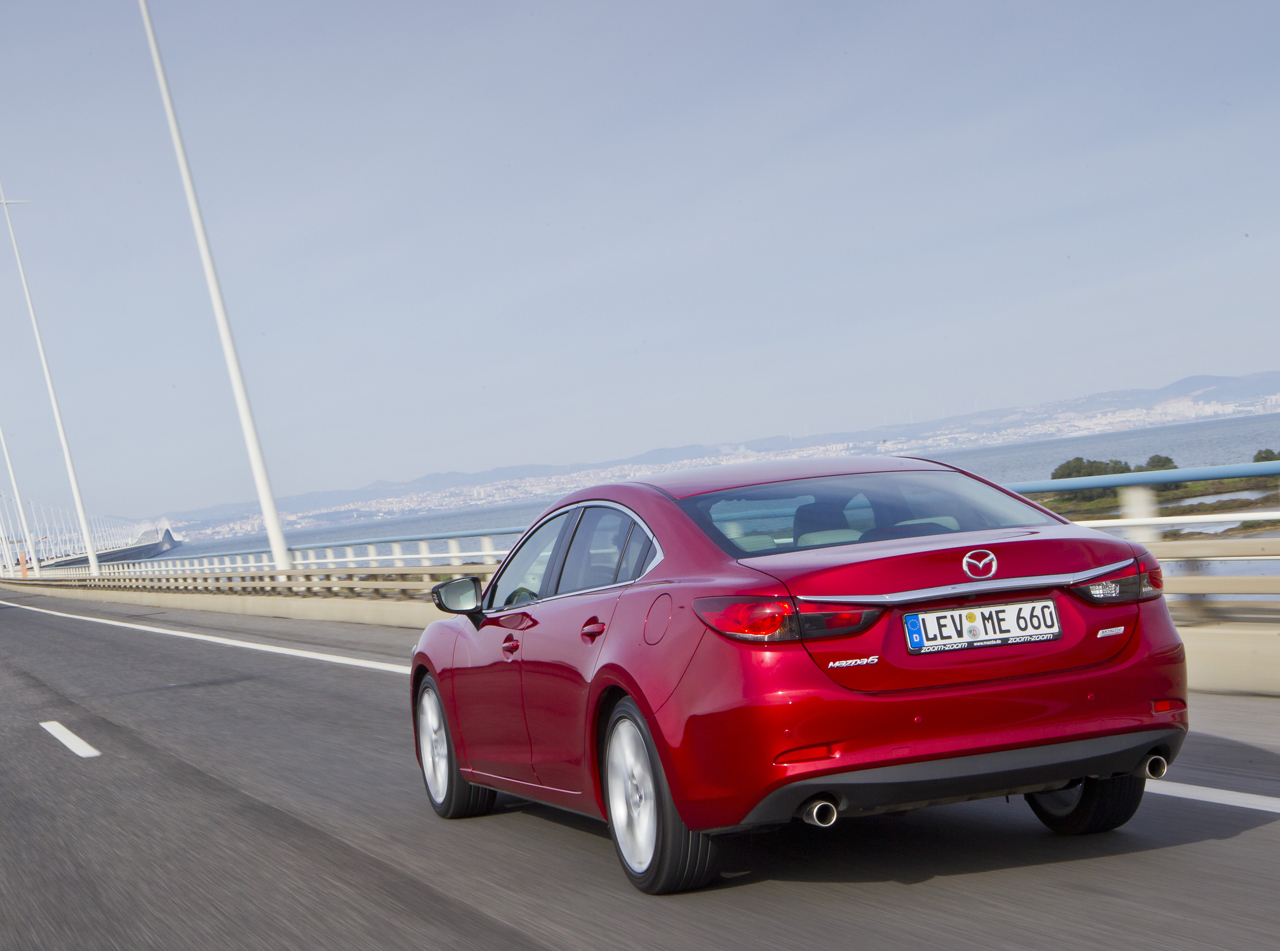
Road Test: Mazda 6 2.2 SkyActiv-D 150 Sport


Price as tested: €31,795

+ Handsome, frugal, fab to drive, solid
– Pretty much nothing
= As good a mid-size saloon as you'll find

An expensive Swiss watch has become a deep desire for so many of us. The thought of the expensive weight of all that carefully assembled stainless steel and titanium, our wrists tingling at the very thought of being topped by the logo of Omega, Rolex or Tag Heuer (delete according to taste), it's a status symbol we'd all love to have. But sadly, few of us will ever afford such a timepiece. Shame.

But what if I told you that you could have something just as good, possibly even better, for a lower cost, simply by trading in your timepiece's Swiss postcode for one from Japan? It's well known in high-end watch circles that, proud though the Swiss boys are of their products and movements, they collectively weep with jealously at the carefully crafted work of Seiko. The famed Japanese watch maker can produce wrist-wear of staggering reliability and accuracy, and no small amount of beauty, for a fraction of the cost of a Rolex.

There's something similar going on in the motoring world, too. Many of us desire a slick German sports saloon; we want our driveway to be adorned with the star of Mercedes, the four rings of Audi or the Munich colours of BMW, but their prices are just out of reach. So what if I told you that you could have a car as good to drive as a 3 Series, better looking than an A4 and more reliable than a C-Class, and all you have to do is pop into your Mazda dealer?

Most of the new 6's rivals come with 1.6 or 2.0-litre Diesel engines with outputs of around 115 to 120bhp, Band A emissions and a price tag circling the €26,000 mark. The Mazda, by contrast, has a price tag of €31,795 (for the diesel Sport model, which Mazda Ireland reckons will be its strongest seller), has a 2.2-litre engine with a muscular 150bhp and 380Nm of torque (an even more powerful 175bhp, 420Nm version is also available) and yet still hits that Band A emissions target, with 108g/km costing you just €180 a year to tax.

How has Mazda done this? Carefully, is the short answer. Its SkyActiv programme, which debuted on last year's very impressive CX-5 SUV, isn't one big whizz-bang fuel saving system but rather, like BMW's EfficientDynamics, a series of incremental improvements in every area. A little less friction here. A saving of a kilogram there. A touch less wind resistance somewhere else. It all adds up and the final sum of these parts is that low Co2 figure and a commensurately low fuel consumption of, claims Mazda, better than 65mpg on average. Part of that efficiency comes from a combination of i-Stop that kills the engine when you're waiting at the lights and a new system called i-ELOOP which uses a capacitor (like a battery; it reacts faster than a conventional battery but won't hold a charge for very long) that can power the electrical systems for up to a minute, independent of the engine, and recharges in just seconds from leftover braking energy. Clever stuff and the re-start time of the i-Stop is impressively fast.

Even so, I doubt you'll be able to match that fuel figure in real world driving, partially because almost no car ever does match its claimed figure, but partly because it's very hard to resist driving the new 6 in a somewhat brisk fashion. The last generation of 6 felt solid, planted and even a touch hefty to drive. This new one continues that tradition in part, but there's also a new-found litheness, a sense of fluidity and a truly engaging driving experience. The steering is the outright star here, feeling almost Jaguar-like in its combination of weight (except at parking speeds when it can occasionally get oddly heavy) and with great levels of feedback. It's a very confidence inspiring car, the 6, and even at very high continental motorway speeds, feels safe, secure and reactive. The ride quality, as long as you don't go for the optional 19" wheels, is also exceptionally supple.

Refined too. There's a rustle of wind noise around the mirrors at 120kmh and a touch of road and tyre noise on coarser surfaces, but the SkyActiv diesel 2.2 is impressively quiet and even manages to sound a little bit entertaining at higher rpm, with a gruff warbling noise rather than the usual bland diesel blare.

The cabin marks a particularly high point for the 6. It's very similar to the CX-5's to look at, but the quality of the materials has kicked up a notch and while it's a touch dark at times, it's also a terrifically comfy and pleasing space in which to spend time, helped in no small part by a well-located driving position and expensive-looking, clear instruments. There's good space in the back too although the boot is a touch smaller than much of the competition. Family buyers will be pleased to see that Mazda is emphasising the safety levels of the 6, with a host of new electronic aids including a city braking system that slams on the anchors if it senses you're going to run up the back of the car in front, a lane keeping warning and a blind spot monitor, as well as radar guided cruise control.

It's also a very good looking car, much more obviously so in the flesh (so to speak) than in photos, where the sweeping lines are more obvious and the muscular stance more noticeable.

That €31,000 price tag may hurt the 6's chances though. Its rivals all have significantly lower price points, even if they are for lesser engines with less equipment. Mazda is effectively competing with bottom-end versions of the BMW 3 Series and Audi A4 at that price too, and while it's a lovely car, that's a tough battle for any mainstream car maker, and Mazda has as yet no plans to try and match or beat the Koreans in the warranty war; three-year unlimited mileage is your lot.

But just as a Seiko will have true watch afficionados nodding in quiet respect, so I reckon this new Mazda 6 will have true car fans doing the same. Gorgeous, lithe to drive and solidly built, and with astonishing fuel efficiency, it's an early nod for one of the best cars of 2013.

Facts & Figures
Mazda 6 2.2 SkyActiv-D Sport 150

Price as tested: €31,795

Range price: €28,745 to €38,895

Capacity: 2,191cc

Power: 148bhp

Torque: 380Nm

Top speed: 211kmh

0-100kmh: 9.1sec

Economy: 4.2l-100km (67mpg)

CO2 emissions: 108g/km
VRT Band: A3. €190 road tax

Euro NCAP rating: Not yet tested


Sunday, 13 January 2013

Road Test: Volkswagen Caravelle 2.0 TDI 140 DSG Highline


Price as tested: €68,725

+ Huge space, versatility, classy, comfy, luxurious, quality
– Occasionally harsh ride, price tag, tax, not quick
= One of the world's great all-rounders

You know it’s going to be a good Saturday night when you get to the front of the taxi queue and there’s something nice waiting to whisk you home. Not just another sad, tired old Japanese or European family saloon with 100,00k on the clock and nasty aftermarket seat covers. No, it’s a good Saturday night when your chariot with a yellow roof bar is a nice squidgy old Merc E-Class, or maybe even a big old Lexus LS400 – mellowed by age but still full of creaky, comfy leather and with a ride quality from back before everyone got obsessed with the Nurburgring. Nice.

Well, if you want to have that feeling everyday, then you’ll be needing one of these. A Volkswagen Caravelle in full-on, leather and everything spec. It’s probably the ultimate taxi, the perfect airport run car and in many ways is the best family car you could possibly buy.

It is, of course, basically a mechanically identical VW Transporter T5, but one what’s been upgraded to full tart’s handbag specification. So, up front you get superbly comfy leather seats, a DSG dual-clutch automatic gearbox, a touch-screen stereo and split-zone climate. But, as with all great chauffeur’s cars, the best place to be in the Caravelle is in the back. There you will find five more seats – two individual, swiveling Captain’s chairs and a braod bench. All of these are upholstered in the same lovely leather you’ll find up front and the rear bench slides back and forth to allow you to choose between more luggage space or more comfort for your passengers. They also all fold flat and I can tell you from personal experience that you can then get a double divan bed and mattress in the back. And a few bedside lockers. Luxurious, it may be but it hasn’t forgotten its van roots entirely.

Under the bonnet is VW’s venerable 2.0-litre TDI diesel with 140bhp and 340Nm of torque, Which sounds like a lot, but unladen, the Caravelle weighs a not inconsiderable 2,153kg, so while it’s not what you’d call sluggish, neither will you be taking on and beating GTIs at the lights.

No matter, what the Caravelle is about is comfort, and the relaxed and relaxing performance encourages you to drop your hands down to the 8-and-4 driving position (as recommended to professional drivers by Rolls-Royce as it “significantly reduces any chance of perturbing your rear seat passengers”) and go about your business that much more slowly. It will still happily wind its way up to a cruise-controlled 120kmh on the motorway and when it does that, you can really relax (within the bounds of keeping an eye on things, of course). The front of the Caravelle is a wonderfully comfortable place to be, damn near as good as the back.

Obviously when you get to a corner, you’re going to be reminded in no uncertain terms that this is a tall, heavy commercial vehicle and not a sports saloon. It heels over onto the outside wheel, the steering is slow and if you’re asking too many questions of it the ride just gets ridiculously crashy and bumpy. Much better, once again, to slow down and take the relaxed path home.

You will be tempted to stop off though. With the folding centre table in the back, the Caravelle makes an absolutely ideal portable picnic spot, so requests from the back seats for more sandwiches and Taytos are frequent. Other stops can be kept to a reasonable minimum though – Volkswagen quotes 8.2-litres per 100km average fuel consumption and we managed to get mid-nines, so it’s believeable. The fact that it emits 216g/km of Co2 (slightly less than the six-speed manual manages, actually) and isn’t taxed as a commercial vehicle though means you’ll have to pay the full whack of €1,200 Band F tax and with a purchase price hovering around the €68,000 mark, this is not going to be a cheap way to haul your family around.

That said though, this is a truly multi purpose vehicle and in that sense it makes a mockery of other, lesser cars that claim the same mantle. What others mean when they say MPV is that they’ve basically got a lot of seats. What the Caravelle means is that it is truly multi-purpose. Clean it up and, especially in the black paint of our test car, it’s handsome and crisp looking enough to mix it effortlessly in the executive car park. We’ve already alluded to its abilities as a taxi, van, airport tender and picnic spot, but it’s equally adept at being a shopping trolley, school bus, work commuter, and, thanks to the built-in window blinds and my wife’s preference for swimming in the seat, a handy and modesty-preserving beach hut. Just don’t hit the electric side door ‘open’ button on the key fob when she’s half way through getting changed. That was a bit cruel, actually...

Classy, cool and astonishingly useful, it’s hard (price and ride quality apart) to pick many holes in the Caravelle’s performance. Being a Transporter means that it should prove robust and reliable and all the Caravelle trimmings make it feel genuinely luxurious. What more can I say other than that, alongside the Toyota GT86 and Jeep Grand Cherokee, it has found a place in my imaginary Lotto-win garage.

Facts & Figures
Volkswagen Caravelle 2.0 TDI 140bhp DSG Highline
Price as tested: €68,725
Range price: €52,850 to €81,165
Capacity: 1,968cc
Power: 140bhp
Torque: 340Nm
Top speed: 172kmh
0-100kmh: 14.7sec
Economy: 8.2l-100km (34.4mpg)
CO2 emissions: 216g/km
VRT Band: F. €1,200 road tax
Euro NCAP rating: 4-star adult, 4-star child, 1-star pedestrian (results for 2008 T5 test)

Wednesday, 9 January 2013

Road Test: Hyundai i30 Tourer Deluxe 1.6 Diesel


Price as tested: €24,295

+ Spacious, practical, comfy, well made, economical, handsome
– Cabin could do with a touch more flair
= As sensible as it gets


Sensible gets a bit of a bad rap. It’s never the sensible guy who gets the girl in the movies. It’s always the maverick hero, swinging in on a bullwhip, with his hard-drinking, hard-living ways who walks off with the heroine at the end. The sensible guy is left behind, with nothing but his nice suit and steady job to keep him happy. C’mon Hollywood, can’t we do a movie where, just once, sensible comes out on top?

Certainly when it comes to buying a car, sensible is what should (and largely does) take priority. We Irish tend to buy our cars on the basis of longevity and practicality, not style and sex appeal. It’s why Toyota was a top-selling brand in Ireland long before it was a big hit in the rest of Europe.

And it explains, partly anwyay, the meteoric rise of Hyundai. Solid, Korean-built reliability, backed up by a five-year, unlimited mileage warranty and usually with a sensible, practical body shape. What’s not to love? OK, not love, perhaps, but certainly sensibly appreciate.

The good thing is that, on top of that solid layer of sensible engineering and reliability, Hyundai has of late been adding just a touch more visual and tactile appeal to its cars and the i30 Tourer we’re testing here is a good example of that.

For a start, it’s better looking than the hatchback on which it’s based, with those flowing, sharply defined lines given a little more real estate on which to strut their stuff. And yes, I know, many of you still think of estates as commercial traveller’s cars, but come on; it’s time to wake up to the appeal of an estate, and this i30 is more appealing than most.

Out back, where it counts, there’s a 528-litre boot, which is more than big enough for most growing families’ needs, and easily the equal or better of most of the more fashionable compact SUVs on the market. We’d avoid the option aluminium boot divider though. It has its uses, but it eats us a crucial inch or two of loading space, which could cause some fraught scenes in the IKEA car park...

Up front, the cabin is identical to that of the i30 hatchback, so you get cleanly designed, clear instruments, comfy seats and plenty of space. Rear seat space is good too, certainly enough for any lanky teenage offspring and, as ever with Hyundai, the build quality is exceptionally good. Just one criticism; the layout and style could do with a touch more visual flair, if it’s to match the appeal of the exterior.

No arguing with the engine though, which is the latest version of Hyundai’s 1.6 diesel. With 110bhp, it’s right on the money for the class, and a combination of 109 g/km of Co2 and claimed average fuel economy of 4.1-litres per 100km (we managed around 5.5 overall) means that it’s suitably efficient for 2013 Ireland. A little more torque would be nice, as it never feels quite so fleet of foot as, say, a Focus or a Golf, but you’ll pay just €180 a year to tax it, which isn’t bad for a car this versatile.

Versatile? In a world of MPVs and SUVs? Yes, really. The trouble with SUVs and MPVs is that they’re all great ideas and very little substance. The great thing about estates is that what they lack in whizz-bang concepts, they make up for in genuine usefulness. Fold down the back seats in the i30 and you have yourself a well-upholstered van, complete with 500kg payload. Get it up on the motorway and set the cruise control and you have as refined and comfortable a car as you could wish for. Head out on a favourite back road and you have a chassis that’s both capable and entertaining, but also one which is sadly held back by Hyundai’s three-mode steering set-up. Being able to choose between Sport, Comfort and Normal steering settings looks good in the showroom, but we’d have preferred it if Hyundai just went for one setting that satisfies, rather than three that don’t.

Still, when the €24,295 price tag for our Deluxe model test car includes air conditioning, cruise control, Bluetooth phone connection, iPod connection and every safety system you could think of, it might be rather churlish to complain about the steering setup.

What the i30 is, in the final reckoning, is a really solid and fine family car. Spacious, comfortable, reliable and useful, it pushes all the right buttons for an all-rounder that can please both kids and parents. Sensible? Yup, and this time, sensible wins.

Facts & Figures
Hyundai i30 Tourer 1.6 Diesel Deluxe
Price as tested: €24,295
Range price: €21,995 to €27,745
Capacity: 1,582cc
Power: 110bhp
Torque: 260Nm
Top speed: 185kmh
0-100kmh: 11.8sec
Economy: 4.1l-100km (68.8mpg)
CO2 emissions: 100g/km
VRT Band: A2. €180 road tax
Euro NCAP rating: 5-star; 90% adult, 90% child, 67% pedestrian, 86% safety assist


Tuesday, 8 January 2013

Road Test: Dacia Sandero TCe 90 Alternative

 
Price as tested: €11,990

+ Cheap, cheerful, well equipped, ESP as standard
– Rear seat space could be better
= Solid, undemanding and affordable

When Renault’s budget brand, Dacia, launched itself into the Irish market last summer, it did so with just 10 dealers and a single model, the Duster SUV. Except it didn’t really even have a single model, as right-hand-drive production of the Duster didn’t begin until just last week, so all Dacia could do in Ireland was show potential customers some left-hand-drive demos, with an older design of cabin than would be arriving from the factory when Irish cars rolled off the line. Sounds like a recipe for disaster, but with that astonishingly low €15,995 price tag (around €10,000 less than most direct competitors) the Duster has already been a success; it’s sold out until April, with 500 orders just starting to be filled. Just goes to show what you can do with a headline-grabbing price.

Of course, price isn’t everything and Dacia has come in for much criticism since the Duster’s launch for its attitude to safety equipment. Many reviewers were upset to notice that the Duster (an obvious family car, don’t forget) doesn’t come with standard electronic stability control, and the Lodgy MPV (currently only available in Europe) was severely marked down by crash test experts EuroNCAP.

So with the arrival of this, the second-generation Sandero small car (the first gen was never built with right hand drive) Dacia has to prove that it can expand beyond the niche appeal of the Duster and take on the big (small) boys such as the Fiesta, Polo and Yaris.

Thankfully, a quick glance at the spec sheet reveals that the Sandero does indeed come with ESP as standard, as are ABS and brake assist. Why the standard ESP on a smaller car when the Duster continues to do without? According to Dacia, it’s because the Sandero sits on an all-new platform, so under EU regulations, has to have ESP as standard. The Duster, based on the original 2004 Dacia Logan, can get away for a while without it.

For a basic price of €9,990 (around €5-6,000 less than most of the competition) the Sandero comes with four airbags, Daytime Running Lights, height adjustable headrests, 60/40 split folding rear seat, electric front windows and Radio with CD, MP3, USB and Bluetooth phone connection alongside its standard safety toys, which seems pretty generous. Step up a level to the Signature trim and you get alloys, air conditioning, a trip computer and more.

That basic model comes with an old Renault 1.2-litre petrol engine developing 75bhp, which looks alluringly priced but whose Co2 emissions of 135g/km will set you back €280 a year in motor tax. You could go for the 90bhp 1.5 dCi diesel engine, but we reckon you’re much better to upgrade yourself to the 895cc turbo three cylinder TCe 90 engine. It’s not only cutting edge (a first for a Dacia, which usually just sticks with older Renault tech) which cuts your Co2 emissions to 116g/km and your tax bill to €200.

Quite apart from which, it’s a terrific engine, pulling cleanly from low rpm and proving both entertainingly muscular and really very refined. It would be an outstanding engine in any car, but in an €11,090 Dacia (€13,090 if you want it in the ritzier Signature grade), it’s close to amazing.

If you’ve ever owned a Renault in the past decade, you can amuse yourself for a few minutes by just sitting in the Sandero’s cabin and playing Spot The Switch. A little bit of old Clio here, some Laguna there and a smattering of Megane over there. Still, while it may be a ‘bitsa’ the Sandero feels well put together and Dacia’s reliability record is generally very good. Space in the front is fine and there’s a 320-litre boot (with a rather too high loading lip) but it would be good to see a touch more legroom in the back. It’s OK back there, but taller passengers, or those loading up bulky child seats, will feel the pinch. There are a few rough edges to the quality of the plastics, and the seats are a little too narrow and perched-up for taller drivers, but otherwise there’s nothing to complain about.

That goes equally for the dynamic performance. Certainly, the Sandero’s chassis case is helped by the performance of that TCe 90 engine, whose 90bhp and 135Nm of torque help to cover up any holes in the cornering deportment, but the plain fact is that the Sandero is perfectly fine, if totally unexceptional, to drive. It rides very well, especially around town where it’s particularly good at shrugging off speed bumps, and on the motorway it feels planted and secure. On a twisty road, well, you’re not going to get up early to drive it for fun, but it’s fine, although the mute, rubbery steering discourages any attempts at enthusiastic driving.

The Sandero is an avowedly simple car, and in an era when car makers are constantly trying to surprise and delight us with yet more gadgetry and gimmickry, that’s a rather refreshing take. It’s quietly handsome (Germanic, claims Dacia, as opposed to its cousin, the more Latin Renault Clio), practical and quite fine to drive. With those temptingly low prices, and now without the caveat of having to worry about trading up to get safety equipment, it’s a tough proposition to argue with.


Facts & Figures
Dacia Sandero TCe 90 Alternative
Price as tested: €11,990
Range price: €9,990 to €14,990
Capacity: 898cc
Power: 90bhp
Torque: 135Nm
Top speed: 169kmh
0-100kmh: 11.1sec
Economy: 4.9l-100km (56mpg)
CO2 emissions: 116g/km
VRT Band: A4. €200 road tax
Euro NCAP rating: Not yet tested