Showing posts with label saloon. Show all posts

Tuesday, 29 January 2013

Road Test: Skoda Rapid 1.6 TDI Elegance


Price as tested: €24,265

+ Simplicity, quality, reliability, space, practicality, price, styling, comfort
– A few rough edges showing through to go with that price tag, indifferent handling
= As practical and sensible as they come but we'd save up the extra for the new Octavia

If I were to say that the new Skoda Rapid is both and at once a return to classic form for Skoda and something of an unfortunate step backwards, would that be too confusing? Possibly, so let me explain.

Pre-1998, Skoda was to most people a joke and not an especially funny one. Decades of decrepitude under communist rule meant that Skoda had been starved of development funding and any reason to produce competitive, interesting cars. That changed, dramatically, with the launch of the original Octavia, funded and developed by Skoda's new owner, Volkswagen. At once, the yoke of communism was thrown off, and Skoda marched happily forwards into a new capitalist reality. Successive models, from the Fabia to the second generation Octavia to the Superb to the utterly brilliant Yeti underpinned that reality with success, both critical and financial. And with sophistication. In fact, sit into a Yeti or a Superb today and you'd be hard-pressed to tell the difference between affordable Skoda and aspirational Audi. They are that good.

But there is now an increasing trend in the motor industry towards making cheaper cars, something that the car buying public is lapping up, as the success of Dacia shows. Make something simple and affordable, and you will capture the wallets, if not the hearts, of many. So it is with the Rapid. Skoda has taken a step back from its shiny, sophisticated recent past and looked further back, to the eighties and beyond, when it made simple, affordable, useful cars. (Never mind the inept comedians of the eighties who castigated Skoda – its cars even then were better by far than their reputation would have you believe.)

The Rapid is a family-sized hatchback that occupies an unusual middle ground between the likes of the Polo and Fiesta on one side and the Golf and Focus on the other. It's narrower by far than a Focus, but also much longer, the upside of which is a cabin that, while not very broad, has lots of leg and head-room for tall passengers in both front and rear, and a massive 550-litre boot that makes the trunks of even cars like a Mondeo or Passat look underfed.

So, it pushes all the practical buttons and it's not short of sophistication either. The engine in our test car was the cutting-edge VW Group 1.6 TDI diesel, and with 105bhp and 250Nm of torque, it's both swift and economical. Skoda claims 4.4-litres per 100km fuel consumption (64mpg) and if we didn't quite manage that, we easily broke the 50mpg barrier. 114g/km Co2 emissions is a touch high though, especially when you consider that a VW Golf with essentially the same engine gets closer to 100g/km, and that means your annual tax bill will be €200. It's here that you'll find the first chink in the Rapid's armour though. The engine (or possibly its installation) is fine, but nothing more. Acceleration feels noticeably slow-witted unless you push the oddly-weighted throttle pedal all the way to its stop, and refinement isn't terrific until you settle down at a chosen cruising speed.

Inside, Skoda has made great efforts to make the cabin look and feel as sophisticated as its bigger brothers, while still costing less. It's a neat trick, and Skoda almost pulls it off. The dials are clear and look like expensive watch faces. The steering wheel feels pleasant to hold and the driving position is both comfortable and well sited. But you'll notice that there's no switches in the front to control the rear windows, the grab handles in the roof clang back into position without a nice, soft motion and the plastics on the doors and dash-top, while still of good quality, don't have that nice touchy-softy-squishy feeling.

Because of all that, the Rapid feels a distinct degree less sophisticated than its Skoda cousins. Now, that's fine in the sense that it's also much cheaper. Prices start at just €16,515 (for the 1.2 MPI petrol; an engine best avoided if you want to (a) accelerate or (b) save fuel) and the pick of the range, the 1.2 TSI turbo petrol in Ambition spec, is just €19,550, with almost identical Co2 emissions to the diesel. All well and good, and those prices include standard electronic stability control – a significant benefit.

But it just doesn't feel as good to drive as it either should or could have. The rear suspension has been done on the cheap, relatively speaking, and uses simple torsion bars instead of the more modern multi-link setup as found on most Octavias. That means the boot is massive, but the Rapid does tend to clatter over bumps, and it never feels very well sorted at the front, either. Cornering is a somewhat lazy, imprecise process with vague steering and a sense of detachment. It's a good motorway cruiser, mind, with well suppressed engine noise and only a small amount of road and tyre noise.

I guess it depends what you want from a car. The Rapid is keenly priced, practical, spacious, ruggedly built, should prove reliable and hits its marks in terms of economy and emissions. It even looks quite nice. But I reckon Skoda buyers, by and large, have moved on recently and are enjoying the sheen of quiet luxury on recent models. So, perhaps it would be best to hold off buying, save up a little more, and get your hands on the impressive new Octavia that arrives in March. The Rapid's backward glance to a simpler, more practical time is appealing in many ways, but we all want to feel a little more sophisticated these days, don't we?


Facts & Figures
Skoda Octavia 1.6 TDI 105bhp Elegance
Price as tested: €24,265
Range price: €16,515 to €24,265
Capacity: 1,598cc


Power: 105bhp


Torque: 250Nm 


Top speed: 190kmh 


0-100kmh: 10.4sec


Economy: 4.4l-100km (64mpg) 


CO2 emissions: 114g/km
 VRT Band: A4. €200 road tax


Euro NCAP rating: 5-star; 94% adult, 80% child, 69% pedestrian, 71% safety assist


News: Aston launches new Rapide saloon. Drool.


Bought a Lotto ticket this week? Good, then read on... The stunning new Aston Martin Rapide S is making its debut with yet more luxury and yet more power on offer in its quintessentially elegant four-door silhouette.


The iconic British car maker’s new luxury GT has been sympathetically redesigned andpainstakingly re-engineered to reassert its position as the world’s most beautiful, and beautifully balanced, four-seat sports car.

Aside from the extensive design and engineering improvements, the luxurious new Rapide S – which replaces the outgoing Rapide in markets worldwide – is now even more refined thanks to a range of additions to the four-seater’s sumptuous interior.

Still instantly recognisable as an Aston Martin, of course, the new Rapide S now boasts an imposing and assertive new ‘face’, created by virtue of the impressive and striking new full grille.

Imbuing the new car with an even more sporting, forceful demeanour, the revised front end design is matched at the back by a striking new rear deck profile which includes a more pronounced boot lid ‘flip’. The aerodynamic and aesthetic upgrades both reinforce the sporting nature of new Rapide S and work to counteract lift at higher speeds.

Aston Martin Chief Executive Officer, Dr Ulrich Bez said: “The Rapide S is to me, without doubt, the most beautiful four-door sports car on the market today. This is, very clearly, the power of luxury in action.

“The car’s stunning visual appeal is now matched by a much more powerful and yet more efficient engine – our exceptional new AM11 V12 – which increases massively both the excitement and performance potential of the Rapide S.

“It is a four-door sports car that uniquely combines luxury, style and sporting excitement in Aston Martin’s most flexible and accommodating silhouette. Purity of proportion and exceptional elegance are mixed with truly sensational dynamic performance – this is the four-door sports car in its most versatile form and I am sure our customers around the world are going to love it!”


News: Skoda to car buyers: Don't buy! At least not yet...


It's not often that you hear a car company exhorting buyers not to go out and put their hands into their wallets, but that's exactly what Skoda is asking Irish car buyers to do. At least, for the moment...


You see, Skoda has this week announced specification and pricing details for their third new model in just six months with the imminent arrival of the new Octavia to Ireland. Unveiled internationally  late last year the new Octavia will be available in Ireland from March with three different specification variants, both manual and automatic transmission options and five engine alternatives the new Octavia offers the Irish motorist considerable choice with prices starting from €18,995.
 

Originally launched in Ireland back in 1998, the Octavia has become a firm favourite with Irish motorists with more than 40,600 sold to the end of 2012. Now as Skoda enters its 20thAnniversary in Ireland, the third generation of the Octavia will see Skoda challenge not only direct competitors in the medium family segment but, thanks to its increase in size, challenge vehicles in the Mondeo-Passat-Avensis class.
 
The new Octavia has grown significantly in length and width, the new model is 90mm longer and 45mm wider than the outgoing Octavia. The wheelbase has grown by 108mm enabling the Octavia break the mould for spaciousness in its model segment with interior length (1,782mm), more knee room (73mm) and more headroom at the back (980mm) as well as best in class boot volume of 590 litres.


The new Octavia is powered by the latest low emission TSI petrol engines as well as common rail diesel engines with Stop Start technology for excellent fuel economy.

Speaking on the price reveal for the new Octavia in Ireland, Raymond Leddy Head of Marketing, Skoda Irelandsaid: “We have increased specification levels for all versions of the new Octavia.  Additional airbags, Electronic Stability Control for increased safety and Stop Start Technology for reduced emissions and improved fuel economy are now standard features across the range.  Stylish alloy wheels are now offered on all models with the exception of the entry Active model. In dimension terms the new Octavia is wider and has grown in length by 9cm allowing for increased cabin space and luggage capacity. Despite this growth the new Octavia has in fact shed up to 100kg in weight compared to its predecessor. Less weight equates to better fuel economy and the new Octavia in its 1.6 TDI version consumes only 3.8 litres for every 100km travelled.


Leddy continued, “The new Octavia will be offered with attractive finance terms from €239 per month inclusive of servicing form Skoda Finance. The new Octavia goes on sale at Skoda Authorised retailers from 16thMarch.  We would encourage anyone thinking of purchasing a new car for 2013 to consider the next generation Octavia before making that all important purchase.”


Sunday, 27 January 2013

News: Citroen's DS range to double


We've already seen the DS3, DS4 and DS5 but now Citroen is about to embark on a doubling of the semi-premium DS range, and we'll see the first fruits at the Shanghai Motor Show in April.

That's when Citroen will debut concepts of three new DS models; a compact four-door saloon in the mould of the new Mercedes CLA, an SUV crossover to take on the likes of the BMW X1 and Audi Q3 and a large luxury car, a true successor to the original DS, drawing heavily on the well-received Numbero 9 concept (above).

The fact that the cars are being shown in Shanghai is no coincidence; the DS brand is seen as crucial to Citroen's success in the Chinese market, where the brand carries none of the baggage that it does in Europe.

DS has been a massive success for Citroen so far, with 300,000 models sold in just over two years, 200,000 of them the dinky little DS3 hatchback. Sales in Ireland have been pretty unspectacular so far though. In the UK, DS models account for 30% of Citroen's overall sales. Here, it's just 4% and the total sales figures barely break the 100 car barrier.  Citroen Ireland is planning a nationwide series of events for the DS range later this year though, with the newly-launched DS3 Cabrio as the centrepiece, not so much to try and flog DS models en masse as to re-introduce Irish car buyers to the mainstream Citroen range.

Wednesday, 16 January 2013

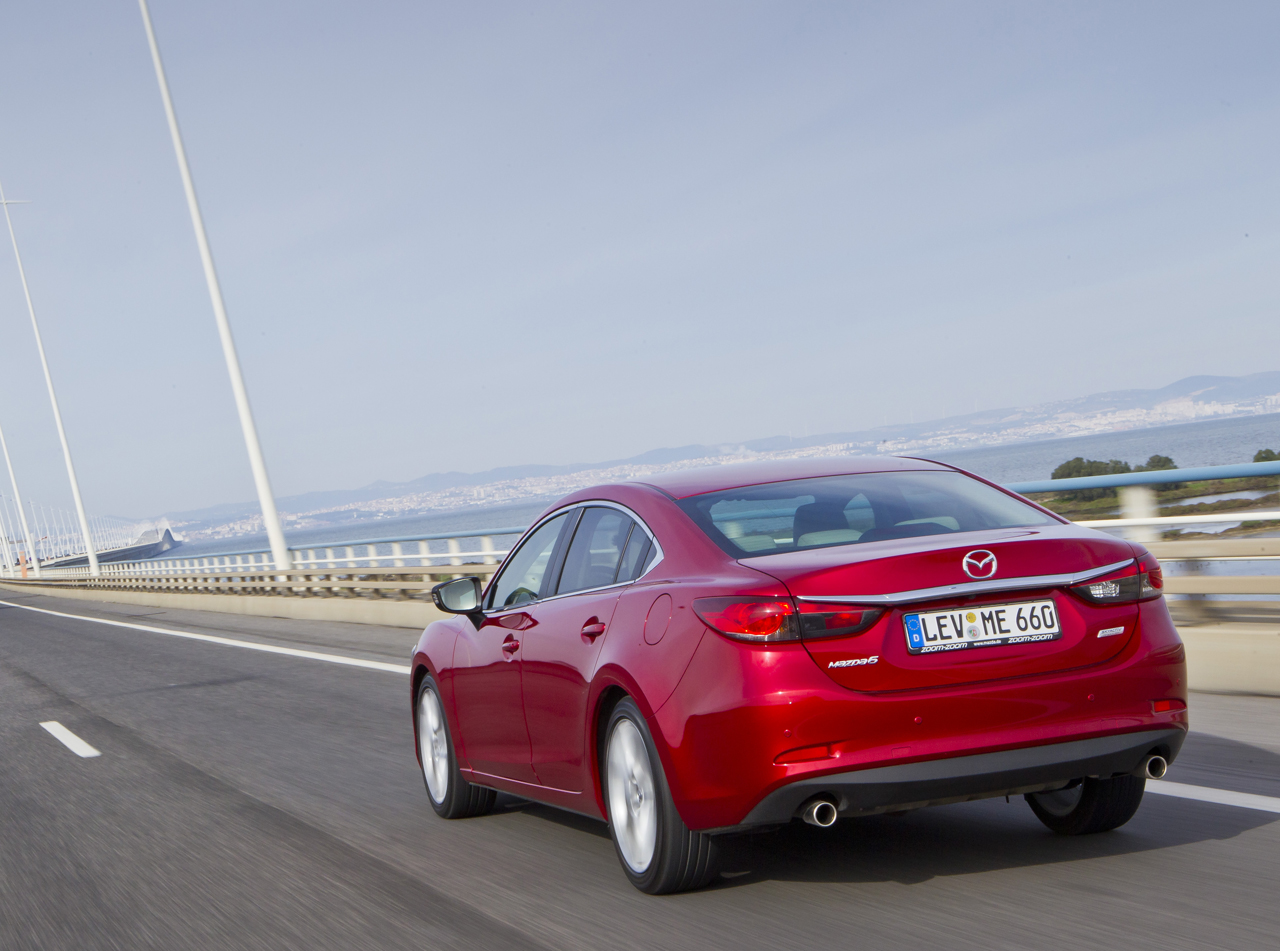
Road Test: Mazda 6 2.2 SkyActiv-D 150 Sport


Price as tested: €31,795

+ Handsome, frugal, fab to drive, solid
– Pretty much nothing
= As good a mid-size saloon as you'll find

An expensive Swiss watch has become a deep desire for so many of us. The thought of the expensive weight of all that carefully assembled stainless steel and titanium, our wrists tingling at the very thought of being topped by the logo of Omega, Rolex or Tag Heuer (delete according to taste), it's a status symbol we'd all love to have. But sadly, few of us will ever afford such a timepiece. Shame.

But what if I told you that you could have something just as good, possibly even better, for a lower cost, simply by trading in your timepiece's Swiss postcode for one from Japan? It's well known in high-end watch circles that, proud though the Swiss boys are of their products and movements, they collectively weep with jealously at the carefully crafted work of Seiko. The famed Japanese watch maker can produce wrist-wear of staggering reliability and accuracy, and no small amount of beauty, for a fraction of the cost of a Rolex.

There's something similar going on in the motoring world, too. Many of us desire a slick German sports saloon; we want our driveway to be adorned with the star of Mercedes, the four rings of Audi or the Munich colours of BMW, but their prices are just out of reach. So what if I told you that you could have a car as good to drive as a 3 Series, better looking than an A4 and more reliable than a C-Class, and all you have to do is pop into your Mazda dealer?

Most of the new 6's rivals come with 1.6 or 2.0-litre Diesel engines with outputs of around 115 to 120bhp, Band A emissions and a price tag circling the €26,000 mark. The Mazda, by contrast, has a price tag of €31,795 (for the diesel Sport model, which Mazda Ireland reckons will be its strongest seller), has a 2.2-litre engine with a muscular 150bhp and 380Nm of torque (an even more powerful 175bhp, 420Nm version is also available) and yet still hits that Band A emissions target, with 108g/km costing you just €180 a year to tax.

How has Mazda done this? Carefully, is the short answer. Its SkyActiv programme, which debuted on last year's very impressive CX-5 SUV, isn't one big whizz-bang fuel saving system but rather, like BMW's EfficientDynamics, a series of incremental improvements in every area. A little less friction here. A saving of a kilogram there. A touch less wind resistance somewhere else. It all adds up and the final sum of these parts is that low Co2 figure and a commensurately low fuel consumption of, claims Mazda, better than 65mpg on average. Part of that efficiency comes from a combination of i-Stop that kills the engine when you're waiting at the lights and a new system called i-ELOOP which uses a capacitor (like a battery; it reacts faster than a conventional battery but won't hold a charge for very long) that can power the electrical systems for up to a minute, independent of the engine, and recharges in just seconds from leftover braking energy. Clever stuff and the re-start time of the i-Stop is impressively fast.

Even so, I doubt you'll be able to match that fuel figure in real world driving, partially because almost no car ever does match its claimed figure, but partly because it's very hard to resist driving the new 6 in a somewhat brisk fashion. The last generation of 6 felt solid, planted and even a touch hefty to drive. This new one continues that tradition in part, but there's also a new-found litheness, a sense of fluidity and a truly engaging driving experience. The steering is the outright star here, feeling almost Jaguar-like in its combination of weight (except at parking speeds when it can occasionally get oddly heavy) and with great levels of feedback. It's a very confidence inspiring car, the 6, and even at very high continental motorway speeds, feels safe, secure and reactive. The ride quality, as long as you don't go for the optional 19" wheels, is also exceptionally supple.

Refined too. There's a rustle of wind noise around the mirrors at 120kmh and a touch of road and tyre noise on coarser surfaces, but the SkyActiv diesel 2.2 is impressively quiet and even manages to sound a little bit entertaining at higher rpm, with a gruff warbling noise rather than the usual bland diesel blare.

The cabin marks a particularly high point for the 6. It's very similar to the CX-5's to look at, but the quality of the materials has kicked up a notch and while it's a touch dark at times, it's also a terrifically comfy and pleasing space in which to spend time, helped in no small part by a well-located driving position and expensive-looking, clear instruments. There's good space in the back too although the boot is a touch smaller than much of the competition. Family buyers will be pleased to see that Mazda is emphasising the safety levels of the 6, with a host of new electronic aids including a city braking system that slams on the anchors if it senses you're going to run up the back of the car in front, a lane keeping warning and a blind spot monitor, as well as radar guided cruise control.

It's also a very good looking car, much more obviously so in the flesh (so to speak) than in photos, where the sweeping lines are more obvious and the muscular stance more noticeable.

That €31,000 price tag may hurt the 6's chances though. Its rivals all have significantly lower price points, even if they are for lesser engines with less equipment. Mazda is effectively competing with bottom-end versions of the BMW 3 Series and Audi A4 at that price too, and while it's a lovely car, that's a tough battle for any mainstream car maker, and Mazda has as yet no plans to try and match or beat the Koreans in the warranty war; three-year unlimited mileage is your lot.

But just as a Seiko will have true watch afficionados nodding in quiet respect, so I reckon this new Mazda 6 will have true car fans doing the same. Gorgeous, lithe to drive and solidly built, and with astonishing fuel efficiency, it's an early nod for one of the best cars of 2013.

Facts & Figures
Mazda 6 2.2 SkyActiv-D Sport 150

Price as tested: €31,795

Range price: €28,745 to €38,895

Capacity: 2,191cc

Power: 148bhp

Torque: 380Nm

Top speed: 211kmh

0-100kmh: 9.1sec

Economy: 4.2l-100km (67mpg)

CO2 emissions: 108g/km
VRT Band: A3. €190 road tax

Euro NCAP rating: Not yet tested


Tuesday, 6 November 2012

News: All-new Maserati Quattroporte revealed


Maserati's new Quattroporte isn't just a (gorgeous) new luxury saloon, to take on the likes of the Mercedes S-Class and BMW 7 Series; it's also the kicking off of a massive renewal for the Maserati brand with three all-new models and a plan for 50,000 sales a year.

That's a massive increase on current Maserati sales, but Fiat bosses have big plans for its premium performance brand, and to leave clear air between it and in-house rival Ferrari, the three new models (including this new Quattroporte) are going to be as far from mid-engined supercars as is possible.

The Quattroporte, seen here, will make its official debut at the Detroit motor show in January, and will continue with Ferrari-based V8 power; most likely an updated version of the 4.7-litre engine currently found in Maserati's GranTurismo coupe.

The new Quattroporte is longer and more spacious than before, but with more light weight aluminium in its structure in an attempt to keep its bulk under control.

“Maserati stands today at the edge of an unparalleled strategic and industrial growth that will see our presence in the world rise to 50,000 units a year by 2015" Harald Wester, Maserati's CEO told us. This growth is a challenge for which Maserati has carefully prepared itself and that we all welcome with anticipation.

“It is a growth based on those values of style, elegance, quality and performance for which Maserati has always been recognised and praised in almost 100 years of history. This exciting progression will make the new Maserati a true global player with two new production sites in two different continents and a heart solidly planted in Modena, Italy, where our roots are.

“It is a growth that will be based on three new models entering two new segments of the automobile market – and it starts with the all-new 2013 Maserati Quattroporte.”

The two other models? Well, this is where the mouth really starts to water. First up, probably late next year, will be a new Ghibli; but unlike the sixties original, this Ghibli will be a four-door saloon, smaller than the Quattroporte, that will take on the likes of the BMW 5 Series and Audi A6. There may even be a high-po diesel version using a twin-turbo derivative of the VM Motori V6 diesel found in the Ghibli's distant cousin, the Chrysler 300C.

After that will be the Levante, Maserati's first foray into the SUV world and a rival to the Porsche Panamera. Expect a swoopy body atop a much-modified Jeep Grand Cherokee platform with, again, likely diesel as well as petrol, powerplants.

Wednesday, 3 October 2012

News: Volvo plans S60, S80 update next year, all new XC90 for 2014


Volvo has confirmed plans to give both the S60 and S80 saloons a major update next year, and to follow those up with an all-new XC90 SUV in 2014.

Doug Speck, head of global marketing for Volvo, confirmed the news at the Paris motor show, although it's something of a surprise that the S60 is in for a facelift so soon after its launch. The S80, though, is long overdue for an update, with its plain front styling well and truly out of step with the rest of the current Volvo range.

Of possibly greater significance is the date set for the new XC90. The current model has been a massive sales success for Volvo since its launch in 2003, and will be a crucial cornerstone of Volvo's plans to massively expand its sales to 800,000 units globally. It's still on track to do this, despite having to slow down production in Sweden by about 10% because of the fall-off in European sales.

Even more crucially, the XC90 will be the debut vehicle for Volvo's new scaleable vehicle architecture, which will give it a Volkswagen-like ability to produce the next-generations of XC90, XC60, S60, V60, S80 and V70 all from the same basic set of components. The platform will apparently not shrink down to V40 hatchback size though (the new V40 owes a lot to the previous-generation Ford Focus) so Volvo is still seeking a partner to co-develop its next-generation of compact car.

Tuesday, 25 September 2012

Road Test: Mazda 3 1.6 Diesel Sport SE


Price as tested: €23,645

+ Handsome, quality, handling, space
– Still too noisy, poor economy
= Decent family hatch that will likely outlive you. And your grandkids.


Spotting the changes on the new Mazda 3 takes the anorak-y knowledge of a true car nut, and possibly a magnifying glass or two. Let me give you the briefest of run-throughs to save you the bother, and then we can get on with what the car is actually like.

So, the new 3 gets new bumpers and grille, new wheels and an updated cabin that’s supposed to be better in terms of both quality and noise suppression. The bigger changes have gone on underneath, where the suspension and steering have been tweaked to improve both ride and handling, and steering feel. A car company actually listing improved steering feel as an update feature? Sounds like my kind of thing...

And while you would be hard pressed to tell a 2012 3 from a 2011 3 on the outside, there’s no denying that it’s a good looking car. That gaping grille and those staring lights make it look more agressive than the family hatch norm and even in the plain metallic grey of our test car, it looked distinctive and handsome.

A shame then that the update to the cabin doesn’t seem to have made much of a difference. Yes, it’s all very well built and will doubtless be in perfect working order when you pass it on to your kids, or even their kids, but the changes have been too subtle and the 3 still feels behind the curve compared to the VW Golf when it comes to touchy-feely surfaces. There is compensation in the form of lots and lots of cabin space and a bucket of equipment on our reasonably priced Sport SE version that included auto aircon, Bluetooth phone and audio streaming, heated seats, trip computer, cruise control and very comfy sports seats. Essential items like a spot-on driving position and clear, simple ergonomics are also high points.

Under that striking bonnet is the familiar 1.6-litre 115bhp turbo diesel that Mazda shares with Ford, Peugeot, Citroen and Volvo. It’s not an exceptional unit, by any means, but it has refinement and a solid 270Nm of torque which can kick you neatly from 0-100kmh in a reasonably brisk 11.0secs. With the slick, MX-5-like six speed gearshift on the stir, the 3 feels nicely quick, if hardly a hot hatch. There is a question mark over fuel economy though. Mazda claims combined consumption of 4.3-litres per 100km, which would be good enough to give the mighty Golf Bluemotion a headache. But the best I could get out of it was an average of 6.5-l/100km. Now, our test car was brand new and barely run-in, which could account for some of the discrepancy, but clearly, Mazda has come catching up to do in the economy stakes. At least the 115g/km Co2 emissions figure means you’ll only have to shell out €160 a year in road tax.

But if the economy isn’t what you expect, then the ride and handling certainly are. Mazda is pretty much unique in being able to combine that traditional Japanese fluid and light feel to its controls with a sensation of still being connected to the road surface by something more than just luck. The steering, despite feeling light and almost delicate, does feed back to you, tells you whats going on underneath and generally feels lovely. The suspension is supple and flexible at pretty much all times and only seems to thump or crash when presented with an especially vicious speed ramp. It is, in other words, a delight to drive. It is not, sadly, up to the mark in terms of refinement. Whatever Mazda has tried to do to improve noise suppression, it hasn’t worked and a Focus or Golf remain much quieter companions on long runs.

The 3 does have one final trump card to play, though. In the 2011 survey of vehicle reliability by the influential JD Power group, three brands came out on top. Acura, which is of course Honda’s expensive luxury car unit. Lexus, which is of course Toyota’s expensive luxury car unit. And Mazda, which makes this affordable, useable €23k hatchback. In an Ireland where spending money mending or fixing your car simply isn’t an option for many hard-pressed motorists, it’s that kind of reliability and longevity that could make the difference come purchase time.


Facts & Figures

Mazda 3 1.6 Diesel Sport SE
Price: €23,645
Range price: €19,795 to €23,895
Capacity: 1,560cc
Power: 115bhp
Torque: 270Nm
Top speed: 188kmh
0-100kmh: 11.0sec
Economy: 4.3-100km (64mpg)
CO2 emissions: 115g/km
Tax Band: A. €160 road tax
Euro NCAP rating: 5-star: 86% adult, 84% child, 51% pedestrian, 71% safety assist


Road Test: Toyota Avensis 2.0 D4D Luna


Price as tested: €30,595

+ Quality, space, comfort, reliability
– Mushy steering, plain cabin
= Better than most motoring writers will admit


The Toyota Avensis gets a bit of a kicking in the popular press, with the word beige, dull and bland generally being hung around its neck like a bunch of grey garlands. And yet, hundreds, thousands of you go out every year and buy one, making it one of the best selling cars in class and country. Where’s the disconnect? Are motoring journalists just priggish snobs who refuse to like a car unless it can be teased into a tyre smoking drift (probably) or are Irish car buyers just blindfolded sheep who decide they like something and won’t be swerved no matter the evidence presented before them (possibly)?

Actually, the answer is a bit of both plus a major dose of an easy temptation to label cars with simplistic tags. Thus, the Ford Mondeo is the handling champ, the VW Passat is the classy one, the Opel Insigina the pretty one and the Peugeot 508 the French one. Which leaves the Avensis very little other to be than the dull one.

But just as Bill Gates rose from being a maths nerd to Richest Nerd Of Them All, so the Avensis has more than a few talents, which are not exactly hidden but certainly obscured a bit.

So, to hammer home the point, Toyota has just updated the Avensis, with new or at least revised styling inside and out, and for the first time a diesel engine that’s in Band A for tax.

The styling job is actually pretty good. The Avensis was always one of the better and more distinctive looking cars in the class (yes, I just said that) and the facelift makes it look similar to before, but just a touch sharper.

Inside, the work has been less successful. One of the very valid criticisms of the Avensis in its current incarnation has been its interior, which has always looked and felt at least a generation behind the opposition. Old-fashioned dials, coal-black colour schemes and a feeling that, while the actual quality of construction was very good, the touchy-feely stuff had been left out. Things are a little better now. The surfaces are more soft touch and our highly specced test car came with gorgeous and very comfortable biscuit leather-and-suede seats, which lifted the interior ambience no end. The full screen colour sat nav (a snip at €655 as an option) didn’t do any harm either, but seeing as few if any actual bought-and-paid for Avensis’ are going to be specced like this, we’ll reserve judgement on the cabin update until we’ve had a chance to sample one with a more basic spec. The basics of comfort and space are and always have been spot on though.

Behind the beaky new nose likes an updated 2.0-litre 125bhp D4D diesel four cylinder engine which, at last, now qualifies for Band A tax thanks to Co2 emissions of 120g/km. Its claimed consumption of 4.6-litres per 100km should keep you away from the pumps too, but sadly, we could only get it to do low-sixes in fuel economy terms, giving a touring range of just under the magic 1,000km on a full tank.

It’s a reasonably refined engine too, once it’s warmed up and pulls strongly in each of the gears in the sweet-shifting six-speed manual gearbox.

Dynamically, the Avensis has always been a mixed bag and sadly, that hasn’t changed. You get the sensation that there is a really good, sharp chassis in there, trying to get out, but mushy, oddly-weighted steering just leaves you groping in the dark for messages about what’s happening at the contact patch. We know that Toyota can do near-perfect steering; the old Celica and the new GT86 are proof, but the Avensis needs to go to the same finishing school as its coupe sisters.

That should mean that it’s biased towards comfort and by and large, that’s true. But our car (and this may have been down to the specific wheel and tyre combination) exhibited an odd trick of bouncing and bucking when confronted with a bump that affected one side of the car. The rest of the time, the ride felt nicely firm and well damped, but this odd little sensation kept re-occurring. Not sure why. There’s also the issue of arriving at a corner and not being able to accurately judge the correct entry speed and line because the steering is so mushy. That sounds like the complaint of an uber-enthusiast, and it is, but the fact is that the Avensis’ competitors do it better and it’s a shame that the essentially sure-footed chassis has lost its main line of communication to the driver.

Still, there is excellent quality to be had here. For a basic €24,495, you get aircon, remote stereo controls, an electronic parking brake, lots of safety gizmos including active anti-whiplash headrests and a drivers’ knee bag (the Avensis has one of the highest-ever safety ratings from EuroNCAP), daytime running lights, iPod connectivity and more. And at last, Toyota has ditched the cheap-looking old fixed ignition key and given us a proper modern folding one. In fact, our test Luna spec car actually had a nice keyless entry and ignition system.

So, while things aren’t perfect, there is still much to admire about the updated Avensis. It’s still spacious, comfortable and quiet, still looks good (especially the very handsome estate version) and of course still has that benchmark Toyota quality and reliability. If only they’d let the chassis guys who did the GT86 get their hands on it for a day or two, we might have an out and out class champ. Until then, it’s better than most of us car critics allow it to be, but just not as good as we know it could be.

Facts & Figures

Toyota Avensis 2.0 D4D 125 Luna Saloon
Price: €30,595
Range price: €24,995 to €38,165
Capacity: 1,998cc
Power: 124bhp
Torque: 310Nm
Top speed: n/a
0-100kmh: 9.7sec
Economy: 4.6l-100km (61.4mpg)
CO2 emissions: 120g/km
Tax Band: A. €160 road tax
Euro NCAP rating: 5-star: 90% adult, 86% child, 53% pedestrian, 86% safety assist


Road Test: Opel Insignia 2.0 CDTI EcoFlex


Price as tested: €29,680

+ Cracking diesel, looks, sharp chassis, quality
– High price, noisy, stiff ride
= Opel finally makes the diesel grade

OK, can we just start here with an oft-heard complaint? GM in general (pardon the pun) and Opel especially, really needs to work on its diesel engines. With the Detroit-based bosses still thinking that diesel is something you put in a Kenworth or Peterbuilt, Opel has always lagged behind its rivals in DERV development.

Er hang on, we may just have to revise that old cliché as the updated engine in the Insignia EcoFlex is one of the best you’ll come across.

On paper, it’s very impressive, with 160bhp yet 115g/km of Co2 emissions, one of the best power-to-emissions figures you can find, and a match for the 1.6 diesels that you’ll find in most of the competition, none of which can match the Insignia EcoFlex’s punch. How does 0-100kmh in 9.5secs grab you?

It is surprisingly noisy though, grumbling and rumbling away to itself almost constantly, a fact which could damage its prospects were it not for one facet of its performance; its fuel consumption. Opel claims 4.3-litres per 100km (about 65mpg) on average and, amazingly, we reckon with a bit of  care, you could actually manage that. Leave off the aircon, turn down the heated seats and make full use of the stop-start system and you might be able to crack a 60mpg average on a long-ish journey. That is massively impressive for such as big car, and the Monopoly card in its back pocket that keeps the Insignia EcoFlex out of noisy diesel jail.

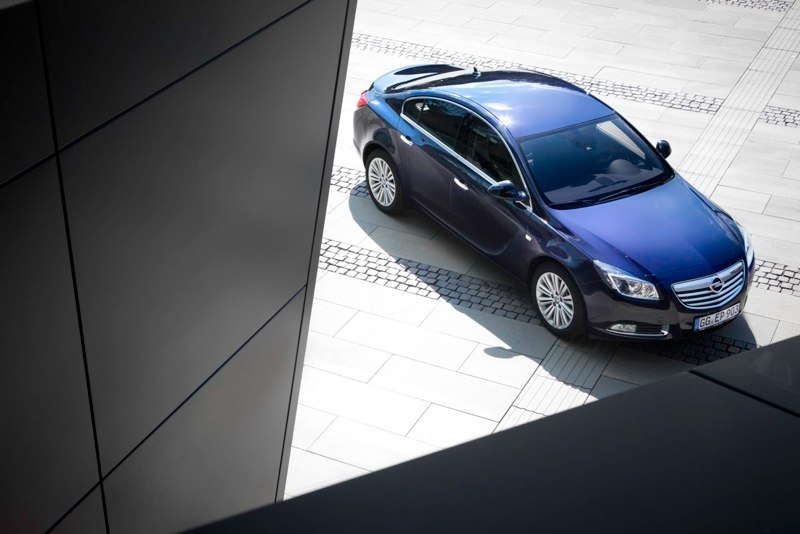
Elsewhere, updated as it is the for new year that’s in it, the Insignia feels and looks just as impressive as it did when launched in late 2008. It’s still a seriously handsome car, looking very Secret Service-y if you get it in a dark metallic, or very Garda-y if it comes in the same shade of bright white as our test car did. Still, with Brendan Gleeson making Guards iconic these days, maybe it’s a look that could catch on.

Inside, there are some minor trim updates that keep things feeling fresh and it has to be said that the Insignia is, along with the Skoda Superb, one of very few ‘mainstream’ cars that can seriously challenge the premium brands for cabin fit and finish. The seats are a bit narrow and perched-up though, which is a shame, but space in the back is good (in legroom terms if not in headroom; that swoopy roofline eats into space for taller passengers) and the 500-litre boot os generous. Mind you, we’d go for the five-door liftback over our four-door saloon test car. You get an extra 30-litres in the boot, plus the added versatility of a liftback and from the outside, only the most finely trained car anorak could tell the difference.

To drive, the Insignia has actually benefited from the fitting of a new electric power steering system. Now, normally we moan about electric steering as it tends to rob you of road feel and feedback, and that’s once again the case here. But it’s actually better weighted and quicker to respond off-centre than the old hydraulic steering set up, so on balance, it’s an improvement. And it helps the Insignia retain its fluid, flowing chassis feel; not quite a match for the mighty Ford Mondeo in driver entertainment terms, but the gap is fag paper thin these days. A shame that the ride quality hasn’t been improved. It’s not terrible, but it bucks and bangs a bit too much on poor surfaces, and that does rather spoil the Insignia’s quasi-premium pretension.

It is a bit pricey though, indicative of Opel’s intention to become a semi-premium brand. €29,680 is a lot for a car that’s supposed to be the economy model, and that’s on top of a range that starts a good €1k above the level of most of the competition. And even with a diesel engine as good as this one, that might just be too much for the Insignia to carry.

Facts & Figures

Opel Insignia 2.0 CDTI EcoFlex SC
Price as tested: €29,680
Range price: €27,380 to €54,280
Capacity: 1,956cc
Power: 160bhp
Torque: 380Nm
Top speed: 221kmh
0-100kmh: 9.5sec
Economy: 4.3-100km (65mpg)
CO2 emissions: 115g/km
VRT Band: A. €160 road tax
Euro NCAP rating: 5-star; 94% adult, 79% child, 40% pedestrian, 71% safety assist


Road Test: Ford Mondeo 1.6 TDCI Titanium


Price as tested: €32,311

+ Handsome looks, gorgeous cabin, brilliant chassis, frugal engine
– S-Max more versatile, C-Max more affordable, soon to be replaced
= It may be plain wrapper, but the Mondeo is still solid gold all the way through


I seem to have been driving a gaggle of Fords lately, all of them slightly different, at different stages of their commercial and technical lives and yet all anchored around a familiar focal point; the Mondeo.

The Mondeo, a name that first came to us aboard Ford's epochal 1993 Sierra replacement, has become an Acme in so many ways. For a time, before the inexorable rise of the premium brands, it was the vehicular encapsulation of the motoring middle class. So much so, that in his 1997 run for the British premiership, Tony Blair actively courted and wooed 'Mondeo Man.'

That stands true for Irish motorists too, for the Mondeo has always been a strong seller here in its two and a bit decades, usually loitering near the top end of the top ten and pleasing, in its unassuming way, both business and family customers.

Its ubiquity has been under threat over the past decade though by the likes of the Volkswagen Passat and Toyota Avensis (an intra-class struggle) and, when cheap financing became available, the BMW 3 Series ( a classically Marxist class war). After all, if the monthly repayments were much the same, wouldn't you rather have a Munich badge on your keyring?

That competition stirred Ford to great lengths though. The 2000-2006 Mondeo was always a fine car to drive, well made and spacious, but it lacked the stylistic or qualitative appeal of the German car. The 2007 Mondeo, the one that is still with us, changed that utterly, granting the Mondeo genuinely handsome looks and a cabin that was close to equalling the BMW in terms of sheer class, and besting it for space.

Now, the current Mondeo is coming to the end of its life, and faces not just competition from the hordes of similar saloons and premium brands but also some internecine rivalry from the other three Fords I've been driving lately; the C-Max, the S-Max and the Kuga.

Let's take the Mondeo first. While many of us now deride the conventional four-box family saloon as moribund, there is a compelling reason for its becoming the archetype of the everyday car; it works. And as a Mondeo, it must be said, it works a damn sight better than most. Our test car came in black, which not only served to highlight its snazzy new LED daytime running lights but also brought with it a brooding sense of being Government Issue; a men-in-black appeal that is alien to many but seductive to a certain type of unreconstructed comic book fan. Ahem.

Inside, while the pleasant silvery surfaces of the centre console have been replaced with a plain-jane black finish, the levels of quality on offer are genuinely second to none. Our (pricey) Titanium spec car came with part-Alcantara seats that cosseted and lovely soft-touch surfaces and expensive looking dials and digital displays that pleased. Only a malfunctioning Bluetooth connection blotted the copybook. There remains proper lounging space in the back for six footers, and the boot is ever cavernous.

A 1.6-litre engine in such a large car (easily matching a nineties Scorpio against the measuring tape) would once have seemed a bad joke but the 110bhp 1.6 TDCI diesel acquits itself well. It will never qualify for the Indy 500, but it pulls with reasonable strength, cruises with a hushed rumble and returned, in our hands, a 6.0-litres per 100km fuel average; not as good as advertised but not bad, and 114g/km means you benefit from the lowest tax band.

As ever, it is the Mondeo's chassis that leaves the strongest impression. Ford, since 1993, has believed strongly that a car which pleases enthusiasts is equally (if subconsciously) pleasing to dunder-heads and that's a tough argument to quibble with. I've always felt that a car that feeds information back to the driver with proper clarity, even if that information isn't properly understood, is a safer car than some light-to-the-touch car which seeks to distance the driver from the action. A majority of drivers may not understand the nuances of steering feel or dynamic balance, but if the car is telling them what it's up to, at least they have that information to work with, whatever they may choose to do with it.

Whatever, the Mondeo retains the best dynamic repertoire in the class, matching engagement with comfort in a near-perfect balance, and that’c combined with impressive safety levels, especially given our car’s optional (€811) Driver Assistance pack, which includes a blind spot monitor, lande departure warning and self-dipping high-beam lights, amongst other useful safety and convenience toys.

So what can the likes of the C-Max or S-Max offer against this? Well, both can offer a similar feel of quiet sophistication (the S-Max sharing many of the Mondeo's cabin fittings and much of its chassis deportment) and both have the same, gorgeously liquid feel to drive. The C-Max's Focus-derived cabin can't match the Mondeo or the S for class, but it feels rigorously well built and both cars are above the class average for refinement. Both make compelling alternatives to the Mondeo's mainstream, and the C-Max’s sharp pricing can make the Titanium spec Mondeo look dangerously overpriced.

The runt of the litter here is the Kuga. It's up for replacement very shortly, which explains many of its shortcomings, but one must remember that the current Mondeo was launched at much the same time and that was worn its years with a deal more grace. The Kuga still looks fresh and pleasing from the outside, but once inside its case quickly dissolves. The cabin is lifted more or less directly from the previous generation Focus and looks and feels appalling cheap. The driving position is too perched up. The 2.0 TDCI engine is noisy in this application and unnecessarily thirsty. Even dynamically, the Kuga falls flat, lurching around on a too-high centre of gravity and exhibiting none of the liquid assurance of any of the other three.

So which one to go for? Well, the Kuga's out straight away and I'll give the C-Max the next bullet, not because of any particular shortcoming (aside from an comically slow-moving powered tailgate, an utterly pointless option) but simply because it lacks the final sheen of quality and sophistication of the other two. Then again, it is significantly more affordable, spec-for-spec, so perhaps that is only right and proper.

While my family man instincts should draw me to the S-Max, and while I do find its style and dynamic abilities (it remains the only MPV that's truly satisfying to drive) appealing, it's the supposedly humble Mondeo I'm going to plump for. It remains a remarkably talented car, one that can be affordably purchased (new or secondhand) by a vast swathe of the motoring populace who probably don't even realise the Wilsonian levels of never having had it so good that they're getting in to. Like the Kuga, the Mondeo is up for replacement in the next six months, but unlike the SUV, you'd never know it; it's going out at the absolute peak of its talents. It's supposedly humble Ford that's as good to drive, to sit in and to live with as any of the more expensive premium badge rivals and one that, five years on, remains the benchmark vehicle for all of its class competitors. Conventional? Yes. Predictable? Certainly? Satisfying? Very. Being different isn't all it's cracked up to be.


Facts & Figures

Ford Mondeo 1.6 TDCI Titanium
Price as tested:€32,311
Range price: €26,295 to €40,851
Cubic capacity: 1,560
Power: 115bhp
Torque: 270Nm
Maximum speed: 190kmh
0-100kmh: 11.9secs
Fuel consumption: 4.3l/100km (65.6mpg)
Co2 emissions: 114g/km
Tax band: A (€160)
EuroNCAP rating: 5-star adult, 4-star child, 2-star pedestrian