Showing posts with label Opel. Show all posts

Thursday, 7 February 2013

Road Test: Opel Mokka 1.7 CDTI SE


Price as tested: €26,495

+ Styling, handling, quality
– Noisy & outdated engine, tight rear seats and boot
= Firmly underscores Opel's premium ambitions

Thursday, 31 January 2013

News: Opel has 20,000 orders for Adam


Now, we all know that Opel was taking a massive risk by launching the new Adam. A rival to the likes of the Fiat 500, Mini and Citroen DS3, it tries to take Opel into a funky premium hatchback market that's a tough nut to crack. Tougher still when you're set to lose $1.5-billion in Europe in 2012 and you need a big hit to drag up both your image and your bottom line.

Friday, 11 January 2013

News: Can GM's new plan save Opel?


In a week when rumours once again surfaced that Opel was up for sale to PSA Peugeot Citroen, the German firm's US masters at General Motors have come up with (another) new plan to turn around the loss-making car company.

Interestingly, GM Europe boss Steve Girsky admits that this is the first Opel turnaround programme "not to include hope as part of the package" and the 10-year plan centres on cutting costs (Opel needs to get its fixed costs down by about €500-million, and make around €1-billion of savings in its parts-and-platform sharing agreement with PSA) and to introduce 23 new models (along with a bevy of new, more efficient engines) by 2022. The plan, rather playfully, is called Drive! 2022. 

If everything works, Opel will hit break-even in a couple of years and move back into profit by around 2018. Some of the plan has already been implemented; the tie-up with Peugeot and Citroen is already well progressed, the decision to close the loss-making factory in Bochum has already been taken and several key new models, including the Astra saloon, Adam city car and Mokka compact SUV, have already been introduced.

Opel actually had quite a good year in 2012, finishing up as Europe's third best-selling brand and going a long way to winding down stocks of unsold models. Next up will be to start building non-Opel-badged models in Opel's German plants, to take up the slack in capacity. Expect to see Buicks for China (China is now a massive market for this classic American brand) and mechanically-identical Chevrolets for Europe built in Russelsheim and elsewhere. And, although the plan doesn't overtly admit it, expect too to see the next-generation of Citroen C5 and Peugeot 508 built on a common platform with the Opel Insignia in Germany.

Friday, 19 October 2012

News: Opel cascades us with new Cascada photos


These are the first official pictures of Opel's replacement for the Astra cabriolet, the new Cascada.

With this being the fourth new model that Opel has launched this year (following on from the Ampera, Mokka and Adam), clearly GM thinks that the way out of the firm's current cash crisis is to keep hitting us with more and more new models.

And the Cascada is certainly rather gorgeous,with some seriously sexy styling thanks in part to a folding fabric roof that doesn't need a butt like Jennifer Lopez' to store it when folded. Opel seems to be retreating from the weight and complication of folding steel hard tops and it's a move we applaud.

It looks  a lot like an Astra, but with a 70mm longer wheelbase than the outgoing Astra TwinTop, it's leaner and sleeker, and should be a bit more roomy inside too. That roof can be raised or lowered in just 17 seconds, and at speeds of up to 48kmh. Plus, when it's down, it only robs 70-litres from the 350-litre boot, so the Cascada remains reasonably practical.

Opel's existing range of 1.4 petrol turbo and 2.0 turbo diesel engines will be available, and the Cascada will be the debut vehicle for a new 1.6 petrol turbo with 168bhp, fitted at first only with a six-speed automatic gearbox.

While Opel claims a 43% improvement in torsional stiffness over the old Astra cabrio, prices will the stiffer too, with the Cascada tilting at the likes of the Audi A5 convertible and BMW 3 Series carbio. Don't expect much change from €40k, if any.

"The midsize cabriolet segment is only occupied by very high-priced cars from premium manufacturers," commented Thomas Sedran, Deputy Chairman of Opel. "With the Cascada, Opel offers all the typical features and premium qualities of a midsize convertible, but at an affordable price."

One thing though; the name. Cascada? Sounds like a dodgy 80s perfume...


Tuesday, 16 October 2012

News: Opel launches 88g/km Corsa

 
Opel  has just launched the most economical Corsa ever, and it's lowest-emitting car this side of the hybrid range-extender Ampera.
The new Corsa EcoFlex uses the existing 1.3-litre CDTI diesel (itself derived from Fiat's 1.3 MultiJet engine) and added to it a variable displacement oil pump (which only delivers just the right amount of oil to various parts), low-viscoscity transmission oil, a reworked engine control unit, new gear ratios and low rolling resistance tyres.

The result of all that is a car, without a hybrid battery in sight, that can return a claimed 3.3-litres per 100km and emits just 88g/km of Co2, in three-door form. (The five-door's figures are 3.4l/100km or 89g/km.) That's a whopping 85mpg on the combined cycle. Even given that combined cycle figures are works of fiction, you should easily break the 65mpg barrier in everyday driving in one of these.

"In just five years, from the first Corsa ecoFLEX to today, we have been able to reduce consumption and CO2 emissions by 26 per cent, while at the same time increasing performance by over 26 per cent," commented Mike Ableson, Vice President Engineering at Opel/Vauxhall.

Opel is also tweaking the suspension on all new Corsas in an effort to improve low-speed and urban ride quality.

No Irish prices or details yet, but we'll bring them to you as soon as we get them.

News: Opel, Peugeot & Citroen to merge?


Troubled car brands Peugeot, Citroen and Opel could be set for a full-on merger, which could see either General Motors buying out Peugeot and Citroen from parent company PSA or Opel and Vauxhall moving into French ownership.

The proposed move, reported by Automotive News, is still very much at the embryonic stage. GM and PSA have already linked Opel and Peugeot-Citroen in a parts and manufacturing sharing agreement designed to give the two firms €2-billion in savings every year and to try and get them back on their feet in the face of increasing competition from Volkswagen and Hyundai-Kia.

A full-on merger or buyout is a beast of a different type though, and would face colossal hurdles from unions, politicians and legal ramifications. For a start, it would almost certainly see the closure of at least one or two more major factories, above and beyond the closures and job losses already being planned in France and Germany. Secondly, with car making still being seen as a political jewel in the crown in both nations, it's hard to see France or Germany's politicians standing idly by while one side or the other is sold off.

While this news has only broken this week, apparently initial discussions on the subject were held earlier this year when the PSA-GM tie-up was first announced, and it's thought that the worsening European car market, combined with investors and analysts putting major pressure on GM to do something, anything about ailing Opel, is putting the plan back on the front burner.


Monday, 8 October 2012

News: Regulator investigates Fiat cash pile


Consob, the Italian stock market regulator, is apparently investigating Fiat's reputed €23-billion cash pile and asking why Fiat boss Sergio Marchionne isn't dipping into it to prop up Fiat's investments in the flagging Italian economy.

Fiat itself has cash reserves of around €12-billion, with the other €11-billion belonging to Chrysler. According to reports, Fiat can't access the Chrysler cash for European investment (or to subsidise European losses) because of a complex deal agreed with the US Government when Fiat rescued Chrysler from bankruptcy.

Even so, Marchionne, the Italian Prime Minister Mario Monti and Consob have been at repeated loggerheads over the past few months. Fiat is threatening to close down another Italian factory (it closed a plant in Sicily last year) and is idling some plants, including one that builds the Panda. That's because Marchionne sees nothing but financial pain in Europe right now, and has put a stop to all major investments and new model developments for the time being, leaving the burgeoning Chrysler to expand in the now-healthy US market and deliver much-needed profits.

The Italian Government, of course, is not keen on this at all, and the investigation (which Fiat currently says it is, officially, unaware of) is being seen as a strong-arm tactic to get Marchionne to unlock at least some of the money to invest in the Italian market.

Marchionne may be holding on to his money for another reason though; Opel. Opel is continuing to lose money for General Motors and analysts Morgan Stanley last week said that it expects that co continue, at the rate of $1-billion a year, through to 2021. GM is being urged to sell Opel and cut its losses, and Fiat, which made an offer for Opel amidst GM's 2009 bankruptcy, is thought to be once again interested.

GM is quashing such rumours though, saying that Opel is an integral part of its operations and will continue to be so, and that the recently-inked tie-up with PSA Peugeot Citroen is progressing well and is expected to save both companies €2-billion a year.

Wednesday, 3 October 2012

News: Opel pits '91 Kadett against '12 Astra GTC – just for fun


Opel has shown off this video of it pitting a classic 1991 Kadett GSi hot hatch against a new Astra GTC OPC.

Both cars are being driven by legendary German driver "Smoking" Jo Winkelhock and never mind that there's 21 years and around 130bhp between the two, this is just a bit of fun for your breakfast-time...

Tuesday, 25 September 2012

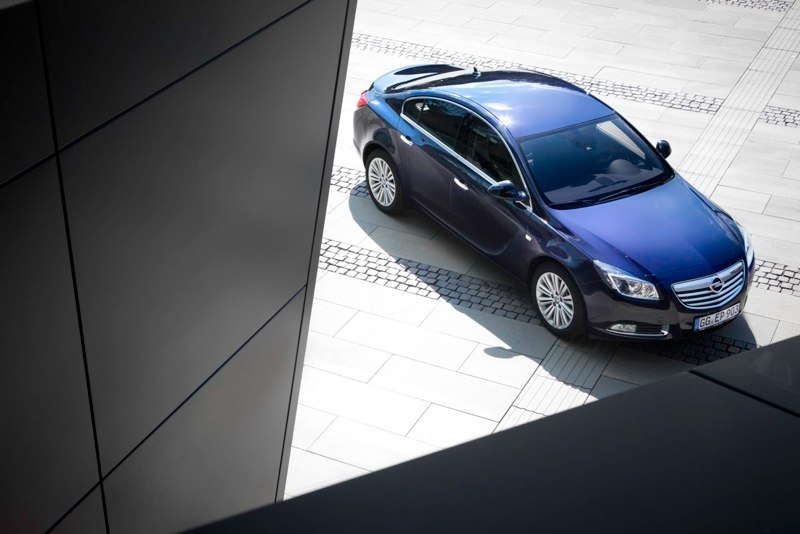
Road Test: Opel Insignia 2.0 CDTI EcoFlex


Price as tested: €29,680

+ Cracking diesel, looks, sharp chassis, quality
– High price, noisy, stiff ride
= Opel finally makes the diesel grade

OK, can we just start here with an oft-heard complaint? GM in general (pardon the pun) and Opel especially, really needs to work on its diesel engines. With the Detroit-based bosses still thinking that diesel is something you put in a Kenworth or Peterbuilt, Opel has always lagged behind its rivals in DERV development.

Er hang on, we may just have to revise that old cliché as the updated engine in the Insignia EcoFlex is one of the best you’ll come across.

On paper, it’s very impressive, with 160bhp yet 115g/km of Co2 emissions, one of the best power-to-emissions figures you can find, and a match for the 1.6 diesels that you’ll find in most of the competition, none of which can match the Insignia EcoFlex’s punch. How does 0-100kmh in 9.5secs grab you?

It is surprisingly noisy though, grumbling and rumbling away to itself almost constantly, a fact which could damage its prospects were it not for one facet of its performance; its fuel consumption. Opel claims 4.3-litres per 100km (about 65mpg) on average and, amazingly, we reckon with a bit of  care, you could actually manage that. Leave off the aircon, turn down the heated seats and make full use of the stop-start system and you might be able to crack a 60mpg average on a long-ish journey. That is massively impressive for such as big car, and the Monopoly card in its back pocket that keeps the Insignia EcoFlex out of noisy diesel jail.

Elsewhere, updated as it is the for new year that’s in it, the Insignia feels and looks just as impressive as it did when launched in late 2008. It’s still a seriously handsome car, looking very Secret Service-y if you get it in a dark metallic, or very Garda-y if it comes in the same shade of bright white as our test car did. Still, with Brendan Gleeson making Guards iconic these days, maybe it’s a look that could catch on.

Inside, there are some minor trim updates that keep things feeling fresh and it has to be said that the Insignia is, along with the Skoda Superb, one of very few ‘mainstream’ cars that can seriously challenge the premium brands for cabin fit and finish. The seats are a bit narrow and perched-up though, which is a shame, but space in the back is good (in legroom terms if not in headroom; that swoopy roofline eats into space for taller passengers) and the 500-litre boot os generous. Mind you, we’d go for the five-door liftback over our four-door saloon test car. You get an extra 30-litres in the boot, plus the added versatility of a liftback and from the outside, only the most finely trained car anorak could tell the difference.

To drive, the Insignia has actually benefited from the fitting of a new electric power steering system. Now, normally we moan about electric steering as it tends to rob you of road feel and feedback, and that’s once again the case here. But it’s actually better weighted and quicker to respond off-centre than the old hydraulic steering set up, so on balance, it’s an improvement. And it helps the Insignia retain its fluid, flowing chassis feel; not quite a match for the mighty Ford Mondeo in driver entertainment terms, but the gap is fag paper thin these days. A shame that the ride quality hasn’t been improved. It’s not terrible, but it bucks and bangs a bit too much on poor surfaces, and that does rather spoil the Insignia’s quasi-premium pretension.

It is a bit pricey though, indicative of Opel’s intention to become a semi-premium brand. €29,680 is a lot for a car that’s supposed to be the economy model, and that’s on top of a range that starts a good €1k above the level of most of the competition. And even with a diesel engine as good as this one, that might just be too much for the Insignia to carry.

Facts & Figures

Opel Insignia 2.0 CDTI EcoFlex SC
Price as tested: €29,680
Range price: €27,380 to €54,280
Capacity: 1,956cc
Power: 160bhp
Torque: 380Nm
Top speed: 221kmh
0-100kmh: 9.5sec
Economy: 4.3-100km (65mpg)
CO2 emissions: 115g/km
VRT Band: A. €160 road tax
Euro NCAP rating: 5-star; 94% adult, 79% child, 40% pedestrian, 71% safety assist


Road Test: Opel Zafira Tourer 2.0 CDTI EcoFlex


Price as tested: €30,495

+ Handsome, spacious, deft chassis, high quality
– Confusing badge and market position, 3rd row not spacious enough, engine noise
= Premium product but who will buy it?


The Zafira Tourer has two difficult jobs to do. First off, it has to be a competitor to the brilliant Ford S-Max, a car that has been a roaring success across Europe, if not so much in Ireland. Second, along with the Insignia saloon and Astra GTC coupe, it has to convince people that Opel can be taken seriously as a premium badge with a premium price tag. With sister brand Chevrolet increasingly making European inroads, Opel has no choice but to move upmarket, something that no mass-market car maker has ever managed to do.

But at least Opel is starting the right way; by getting the product right first, and not by trying to over-hype the marketing side of things. The Insignia can stand direct comparison to the likes of the Audi A4, the Astra GTC is handsome and capable enough to give the VW Scirocco and the Zafira Tourer... well, what is it here for, exactly?

Before we get onto the good bits and bad bits of the vehicle itself, it’s worth considering the marketing position. Who, exactly, is going to buy a premium MPV these days? MPVs are, distinctly, family cars. In other markets, there is a small, but significant, market for practically-minded people who want a cushy, pricey people carrier but in Ireland, premium equals saloon. Even an estate is a stretch for those in the premium market, while sensible family buyers simply purchase on price, and Opel will be realigning the price of the existing Zafira, down to a very reasonable €25k, to entice those people.

Which leaves the Zafira Tourer where exactly? It’s reasonably keenly priced, at €28,495 basic, in the seven-seat market, but that’s a price that soon inflates once you start adding trim or equipment. So, it’s a stretch, and probably a stretch too far, for hard-pressed family car buyers, and simply not on the radar for premium badge shoppers. And it has the same name as a car costing €3k less. Which could leave the Tourer marooned between audiences.

Which would be a shame, as it’s actually in isolation a very good car and a dramatic improvement on the existing Zafira. The current car is too plain inside, too bouncy in its ride and too undistinguished in its styling for our taste. The Tourer addresses, successfully, pretty much all of those complaints. It looks great, for a kick-off, with very sharp, layered styling that makes it one of the best looking monospace cars we’ve ever clapped eyes on.

Inside too, Opel’s stylists have done a very successful job; everything looks swoopy and cool, with most of the switchgear lifted straight from the Insignia (nothing wrong with that) and there’s a sense of very high quality. Our test car was a final pre-production prototype, so there were some unfinished surfaces and items, but even taking those into account, the Tourer’s cabin more than lives up to Opel’s hopes for premium status. And the view out is as good, thanks to dramatic-looking split a-pillars that fork down to form a massive quarterlight, which does wonders for forward visibility.

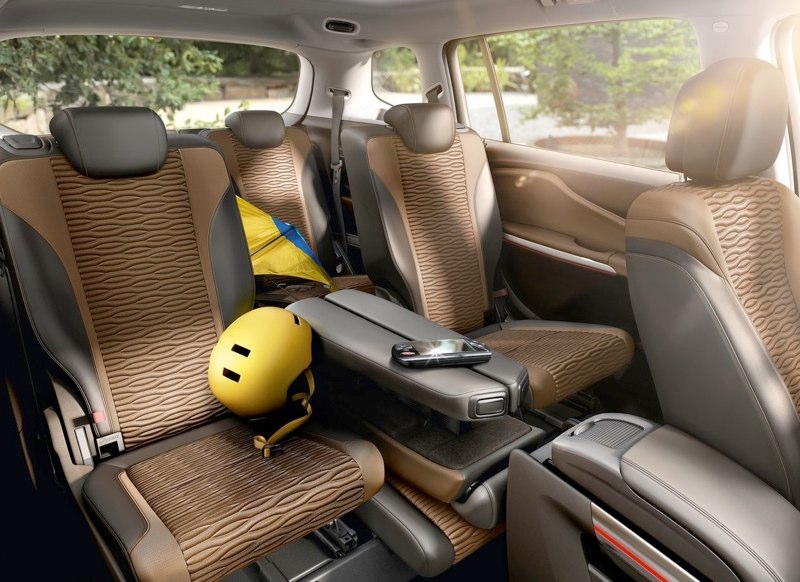
Of course, it’s practical. There’s lots of space in the middle row, and the seats are just as comfy in the back as they are in the front (very) but the disappointment comes when you try to climb in the back row; there’s just not enough room, even compared to the Ford S-Max which is hardly the best-endowed car in that sense. In the Ford, adults can fit, albeit only for short journeys. In the Tourer, it would be a squeeze even for a short hop. Kids only.

Behind the headlights (which look as if they have been taken straight from advanced Ampera range-extender hybrid) lies the 2.0-litre CDTI turbo diesel with 130bhp. Which sounds like not quite enough for a car that weighs 1,571kg with only one person on board. But actually, the Tourer feels quite sprightly, net of a touch of turbo lag. It is noisy though. OK, again, this one was a pre-prod early build car, but still, a bit too much gurgle and grump for our tastes.

Economy is, if it can match Opel’s claims, little short of excellent. Now, we haven’t had a chance to test the claimed figures (not enough time in the car yet) but our experience with an Insignia with the 160bhp version of the same engine suggests that they might not be too far out. 4.5-litres per 100km is pretty good, just over 62mpg, and its 119g/km Co2 rating means that you’ll be paying just €160 a year, whatever the real-world fuel economy turns out like.

The chassis is a peach though. It doesn’t quite engage the driver as much as an S-Max would but otherwise, the news is all good. The steering feels sharp and well weighted, the ride (praise be!) is firm but never jiggly or poorly controlled and the overall feeling is of a car that is well balanced between the demands of keeping things entertaining for the driver yet comfy for the passengers.

So, taken on its own, the Zafira Tourer is nothing short of a success. It looks, feels and drives the part, keeps the usefulness of the old Zafira but adds a thick veneer of dynamic competence and premium-esque design and quality.

If the marketing works out, then perhaps customers will come to the Zafira Tourer, if they take one for a test drive, they’d be hard pressed not to be impressed. But, given the tough competition in the car market, anyone coming in with a proposition that reads “Better, but it’ll cost you” is going to find life very hard indeed.


Facts & Figures

Opel Zafira Tourer 2.0 CDTI Ecoflex SC
Price as tested: €30,495
Range price: €28,495 to €38,995
Capacity: 1,956cc
Power: 130bhp
Torque: 300Nm
Top speed: 193kmh
0-100kmh: 11.4sec
Economy: 4.5l-100km (62.7mpg)
CO2 emissions: 119g/km
VRT Band: A. €160 road tax
Euro NCAP rating: 5-star; 94% adult, 83% child, 53% pedestrian, 86% safety assist


Friday, 21 September 2012

Road Test: Opel Astra GTC 2.0 CDTI 165 Sport


Price as tested: €25,495

+ Gorgeous styling, spacious, excellent chassis (with FlexRide), well priced
– Grumbly diesel engine, inert steering
= Best Astra ever

So the question, before we even get started, is; who will buy a coupe in 2012 Ireland? In the heyday of the now-defunct Celtic Tiger, the Opel Astra Sport Hatch (as the previous, slinky, three-door coupe Astra was known) sold like the proverbial heated cakes, making up around a third of Irish Astra sales, when the European average was around 15%.

Now though? Who can say? Opel is making the relatively sensible prediction of “less than 1,000” sales of its new Astra GTC coupe in Ireland next year, which seems a bit of a lo-ball figure for a car as good looking as this.

Being good looking is for a coupe as much of a raison d’etre as it is for Derek Zoolander, and the Astra GTC certainly hits its glamour marks spot on. The standard Astra 5-door hatch is hardly ugly, but this coupe version is really very handsome. 15mm lower, 40mm wider and 10mm longer in the wheelbase, the GTC looks low, lean and very tasty. Some will still prefer the more understated charms of its closest rival, the VW Scirocco, but it’s a clear nose in front, to these eyes, of the over-styled Renault Megane Coupe. It is a bit colour sensitive though. Yellow looks awful. ‘Mineral White,’ which is actually more of a matte pale grey, looks gorgeous on a sunny day, but will likely look dreary and washed out under Irish drizzle. Better stick with red.

It shares only three exterior components with the more family-friendly five-door; the radio aerial, the door handle and the door mirror. While you’d hardly mistake it for any other family line, the two cars are actually radically different. Even underneath, they diverge. The basic mechanical package is the same, but the GTC ditches the 5-door’s conventional McPherson strut front suspension in favour of the much more sophisticated, and expensive, GM-designed HiPer Strut. In simple terms, the HiPer strut is there to make the GTC drive with a great deal more verve than the 5-door Astra.

And it does so. Oddly, it’s rather lacking in true sporting sensations. A car so ground-hugging as this, you would assume, would be rather more direct and to the point about its sportiness. But the Astra GTC instead impresses initially with a healthy dose of refinement and comfort. Lower and stiffer the suspension may be, but the combination of HiPer struts and the optional electronic FlexRide dampers means that the GTC rides with a firm calmness that belies its hot hatch looks. In fact, it feels more like a big, comfy GT car at first.

Show it some corners, and it reacts well. The electric power steering robs you of true road feel (whatever the engineers may claim) but there is excellent grip, sharp turn in and real poise to be found. Keen drivers won’t be disappointed, even if ultimately they would be better served in the Scirocco.

One area where the GTC notably lags behind its rivals is in the engine department. The range topping engine, at least until the 280bhp turbocharged OPC high-performance variant arrives next year, is the 165bhp 2.0- CDTI diesel. With 380Nm of torque working its way through the front wheels, it never feels slow, and its on-paper 0-100kmh time of 8.9secs simply doesn’t reflect its muscular in-gear acceleration feel. The claimed fuel consumption figure of 4.8-litres per 100km and the Co2 emissions of 127g/km mean that even this range-topper will not be too expensive to run. But boy, is it noisy. There’s a constant obviously diesel clatter at low rpm that never really goes away, until it is drowned out by wind and tyre noise at motorway cruising speeds. Even then, the slightest touch of the throttle pedal will have it grumbling away to itself, and a distant turbo whistle, that sounds disconcertingly like a far-off ambulance siren, makes itself known at urban speeds.

At least the cabin plays a strong hand. With a layout and switchgear lifted straight from the impressive Insignia saloon, it could hardly do otherwise and everything looks and feels much more expensive than the entry price of €22,995 (for the 1.4T 120bhp petrol) would have you think. There’s even decent space in the back and boot; Opel engineers’ struggles to make the GTC as practical and useable as the 5-door paying, mostly, off.

So, as we asked when we came in, who will buy it? Younger buyers, drawn by its enticing looks and sporty promise, will likely not be able to afford it, or at least not be able to raise sufficient credit. Older buyers, able to pay the sticker price, will probably shun it in favour of a bigger, more practical Insignia. Which leaves the Astra GTC in an unfortunate middle ground.

Its clever front suspension and sharp-edged looks mean it’s without question the most impressive of the current Astra range. It’s not quite as satisfying to drive as an equivalent Scirocco, but is far cheaper. It’s more expensive than a Megane Coupe, but far more powerful and overtly sporting. Fix the diesel engine’s refinement and engineer a touch more feel into the steering and it could be a world-beater. But, their hands forced by economic realities, few enough buyers will ever realise what a good car it is.


Facts & Figures

Opel Astra GTC 2.0 CDTI 165 Sport
Price as tested: €25,495
Range price: €22,995 to €30,495
Capacity: 1,956cc
Power: 165bhp
Torque: 380Nm
Top speed: 210kmh
0-100kmh: 8.9sec
Economy: 5.9l-100km (58.8mpg)
CO2 emissions: 127g/km
VRT Band: B. €156 road tax
Euro NCAP rating: Not yet tested


Long Term Test: Opel Meriva


Ahhh, kids. Wonderful little things. So full of life, of fun, of energy. They are the future, you know. Of course, they’re also insane little tyrants, harbingers of jam-encrusted doom and the bane of every car designer. It is virtually impossible to design a car that can keep kids happy on a long journey and still keep it within the bounds of affordability. The only option I can think of would be a Mercedes Sprinter with a built-in Pixar-only cinema, a ball-pit and panoramic side windows. And it would all have to be hose-out.

Well, while I’m dreaming about that, here comes Opel’s Meriva for an extended stay at eDrive Towers, where the eDrive Junior 1 (6 years old) and eDrive Junior 2 (not quite 2 yet) will be able to do things, drop things and spread things that even Opel’s finest engineers at Russelsheim won’t have been able to think of.

It makes a good first impression, the Meriva. It looks good in its oh-so-trendy white paint job and the styling is about as handsome and distinctive as you could expect of a me-too mono-volume MPV. The little kinks in the window line atop the rear doors are questionable, aesthetically, but they do allow a better view out for rear seat passengers, and that’s a good thing.

Inside, the cabin trim is essentially lifted straight from the Astra which is in turn lifted more or less straight from the Insignia, so you’re getting very high quality and a good level of spec. Our SC spec car came with the optional Winter Pack which includes heated front seats and a heated steering wheel, which would have seemed a bit ridiculous if not for the fact that April brought a sudden cold snap with it. The seats themselves are covered in an interesting space-agey style cloth that seems very hard-wearing and (hopefully) stain resistant. Number 2 Son will be putting that to a rigorous examination shortly.

Out back there’s a decent 397-litre boot, that can be expanded by flipping the rear seats down to a whopping 1,400-litres if you load it to the roof. Those rear seats can also do a neat trick. Fold the centre seat flat and the outer two can slide back and inwards to create more leg and shoulder-room. It’s a system that was pioneered on the first generation Meriva, but I seem to recall that the effect was greater on the old car; the amount of movement doesn’t seem as great here.

And of course, there’s the doors. The tradition is to call them ‘Suicide’ doors, which seems a touch harsh (the name is alleged to come from the thirties gangster era; it’s a lot easier to shove some poor patsy from a moving car if the wind is holding the door open for you). Opel would prefer you call them FlexDoors and they are a neat and useful little innovation. To be fair, you probably need to be loading kids in and out of the back to appreciate them to the fullest. They’re most useful when fitting big, heavy child safety seats. In a conventional car, you would have to open the door, lean in and twist yourself around to fit the seat and anchor the seatbelt. With the Meriva, you pop the door and lean straight in, in the direction you need to. Besides, the kids really do love them. At least so far, the doors are a pleasing novelty when climbing aboard.

A final note about the engine. Opel has given us the 130bhp 1.7 CDTI engine to test, which is a bit of an old stager, with its roots in an Isuzu-sourced unit from the early nineties. It’s been fitted since with the latest injection and emissions systems, and the power output and economy figures (5.3-litres per 100km, 139g/km of Co2) seem just fine, but will it give its age away in refinement or performance terms? We’ll see.

For now though, the Meriva is settling in nicely to a bit of hard family work. Outings are being planned, liberal use is being made by certain passengers of the fold-down tables in the back and the space and ease of use granted by those clever doors are more than welcome.

It’s even proving good to drive so far, an occasionally too-firm ride apart. So, can the Meriva, with its trick doors and stylish cabin, finally make family MPV motoring seem like worth having kids for?