Showing posts with label executive. Show all posts

Tuesday, 29 January 2013

News: Skoda to car buyers: Don't buy! At least not yet...


It's not often that you hear a car company exhorting buyers not to go out and put their hands into their wallets, but that's exactly what Skoda is asking Irish car buyers to do. At least, for the moment...


You see, Skoda has this week announced specification and pricing details for their third new model in just six months with the imminent arrival of the new Octavia to Ireland. Unveiled internationally  late last year the new Octavia will be available in Ireland from March with three different specification variants, both manual and automatic transmission options and five engine alternatives the new Octavia offers the Irish motorist considerable choice with prices starting from €18,995.
 

Originally launched in Ireland back in 1998, the Octavia has become a firm favourite with Irish motorists with more than 40,600 sold to the end of 2012. Now as Skoda enters its 20thAnniversary in Ireland, the third generation of the Octavia will see Skoda challenge not only direct competitors in the medium family segment but, thanks to its increase in size, challenge vehicles in the Mondeo-Passat-Avensis class.
 
The new Octavia has grown significantly in length and width, the new model is 90mm longer and 45mm wider than the outgoing Octavia. The wheelbase has grown by 108mm enabling the Octavia break the mould for spaciousness in its model segment with interior length (1,782mm), more knee room (73mm) and more headroom at the back (980mm) as well as best in class boot volume of 590 litres.


The new Octavia is powered by the latest low emission TSI petrol engines as well as common rail diesel engines with Stop Start technology for excellent fuel economy.

Speaking on the price reveal for the new Octavia in Ireland, Raymond Leddy Head of Marketing, Skoda Irelandsaid: “We have increased specification levels for all versions of the new Octavia.  Additional airbags, Electronic Stability Control for increased safety and Stop Start Technology for reduced emissions and improved fuel economy are now standard features across the range.  Stylish alloy wheels are now offered on all models with the exception of the entry Active model. In dimension terms the new Octavia is wider and has grown in length by 9cm allowing for increased cabin space and luggage capacity. Despite this growth the new Octavia has in fact shed up to 100kg in weight compared to its predecessor. Less weight equates to better fuel economy and the new Octavia in its 1.6 TDI version consumes only 3.8 litres for every 100km travelled.


Leddy continued, “The new Octavia will be offered with attractive finance terms from €239 per month inclusive of servicing form Skoda Finance. The new Octavia goes on sale at Skoda Authorised retailers from 16thMarch.  We would encourage anyone thinking of purchasing a new car for 2013 to consider the next generation Octavia before making that all important purchase.”


Wednesday, 16 January 2013

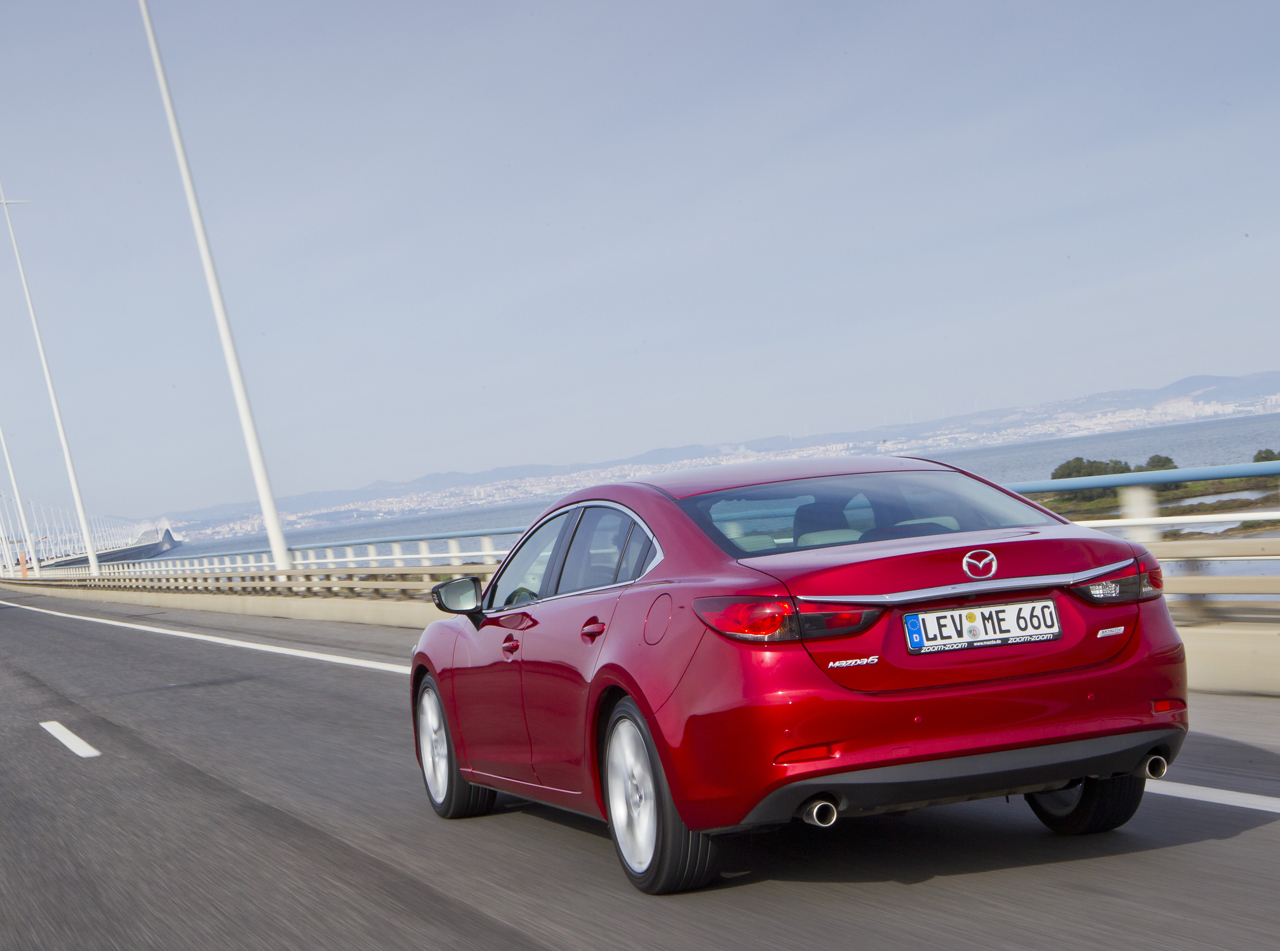
Road Test: Mazda 6 2.2 SkyActiv-D 150 Sport


Price as tested: €31,795

+ Handsome, frugal, fab to drive, solid
– Pretty much nothing
= As good a mid-size saloon as you'll find

An expensive Swiss watch has become a deep desire for so many of us. The thought of the expensive weight of all that carefully assembled stainless steel and titanium, our wrists tingling at the very thought of being topped by the logo of Omega, Rolex or Tag Heuer (delete according to taste), it's a status symbol we'd all love to have. But sadly, few of us will ever afford such a timepiece. Shame.

But what if I told you that you could have something just as good, possibly even better, for a lower cost, simply by trading in your timepiece's Swiss postcode for one from Japan? It's well known in high-end watch circles that, proud though the Swiss boys are of their products and movements, they collectively weep with jealously at the carefully crafted work of Seiko. The famed Japanese watch maker can produce wrist-wear of staggering reliability and accuracy, and no small amount of beauty, for a fraction of the cost of a Rolex.

There's something similar going on in the motoring world, too. Many of us desire a slick German sports saloon; we want our driveway to be adorned with the star of Mercedes, the four rings of Audi or the Munich colours of BMW, but their prices are just out of reach. So what if I told you that you could have a car as good to drive as a 3 Series, better looking than an A4 and more reliable than a C-Class, and all you have to do is pop into your Mazda dealer?

Most of the new 6's rivals come with 1.6 or 2.0-litre Diesel engines with outputs of around 115 to 120bhp, Band A emissions and a price tag circling the €26,000 mark. The Mazda, by contrast, has a price tag of €31,795 (for the diesel Sport model, which Mazda Ireland reckons will be its strongest seller), has a 2.2-litre engine with a muscular 150bhp and 380Nm of torque (an even more powerful 175bhp, 420Nm version is also available) and yet still hits that Band A emissions target, with 108g/km costing you just €180 a year to tax.

How has Mazda done this? Carefully, is the short answer. Its SkyActiv programme, which debuted on last year's very impressive CX-5 SUV, isn't one big whizz-bang fuel saving system but rather, like BMW's EfficientDynamics, a series of incremental improvements in every area. A little less friction here. A saving of a kilogram there. A touch less wind resistance somewhere else. It all adds up and the final sum of these parts is that low Co2 figure and a commensurately low fuel consumption of, claims Mazda, better than 65mpg on average. Part of that efficiency comes from a combination of i-Stop that kills the engine when you're waiting at the lights and a new system called i-ELOOP which uses a capacitor (like a battery; it reacts faster than a conventional battery but won't hold a charge for very long) that can power the electrical systems for up to a minute, independent of the engine, and recharges in just seconds from leftover braking energy. Clever stuff and the re-start time of the i-Stop is impressively fast.

Even so, I doubt you'll be able to match that fuel figure in real world driving, partially because almost no car ever does match its claimed figure, but partly because it's very hard to resist driving the new 6 in a somewhat brisk fashion. The last generation of 6 felt solid, planted and even a touch hefty to drive. This new one continues that tradition in part, but there's also a new-found litheness, a sense of fluidity and a truly engaging driving experience. The steering is the outright star here, feeling almost Jaguar-like in its combination of weight (except at parking speeds when it can occasionally get oddly heavy) and with great levels of feedback. It's a very confidence inspiring car, the 6, and even at very high continental motorway speeds, feels safe, secure and reactive. The ride quality, as long as you don't go for the optional 19" wheels, is also exceptionally supple.

Refined too. There's a rustle of wind noise around the mirrors at 120kmh and a touch of road and tyre noise on coarser surfaces, but the SkyActiv diesel 2.2 is impressively quiet and even manages to sound a little bit entertaining at higher rpm, with a gruff warbling noise rather than the usual bland diesel blare.

The cabin marks a particularly high point for the 6. It's very similar to the CX-5's to look at, but the quality of the materials has kicked up a notch and while it's a touch dark at times, it's also a terrifically comfy and pleasing space in which to spend time, helped in no small part by a well-located driving position and expensive-looking, clear instruments. There's good space in the back too although the boot is a touch smaller than much of the competition. Family buyers will be pleased to see that Mazda is emphasising the safety levels of the 6, with a host of new electronic aids including a city braking system that slams on the anchors if it senses you're going to run up the back of the car in front, a lane keeping warning and a blind spot monitor, as well as radar guided cruise control.

It's also a very good looking car, much more obviously so in the flesh (so to speak) than in photos, where the sweeping lines are more obvious and the muscular stance more noticeable.

That €31,000 price tag may hurt the 6's chances though. Its rivals all have significantly lower price points, even if they are for lesser engines with less equipment. Mazda is effectively competing with bottom-end versions of the BMW 3 Series and Audi A4 at that price too, and while it's a lovely car, that's a tough battle for any mainstream car maker, and Mazda has as yet no plans to try and match or beat the Koreans in the warranty war; three-year unlimited mileage is your lot.

But just as a Seiko will have true watch afficionados nodding in quiet respect, so I reckon this new Mazda 6 will have true car fans doing the same. Gorgeous, lithe to drive and solidly built, and with astonishing fuel efficiency, it's an early nod for one of the best cars of 2013.

Facts & Figures
Mazda 6 2.2 SkyActiv-D Sport 150

Price as tested: €31,795

Range price: €28,745 to €38,895

Capacity: 2,191cc

Power: 148bhp

Torque: 380Nm

Top speed: 211kmh

0-100kmh: 9.1sec

Economy: 4.2l-100km (67mpg)

CO2 emissions: 108g/km
VRT Band: A3. €190 road tax

Euro NCAP rating: Not yet tested


Thursday, 27 September 2012

Road Test: Lexus GS450h F-Sport


Price as tested: €72,950

+ Drivetrain, refinement, comfort, chassis balance, quality
– Silly grille, numb steering
= The best hybrid we’ve yet driven


Here’s a funny thing. Lexus can’t tell me how much torque the new GS450h has. Nerdy fact that it is, a healthy torque figure is deeply significant for driving both relaxed and invigorating. A lack of torque is inimical to fun and lots of it gives you that lovely, deep-down thumpy feeling as you accelerate hard out of a tight corner. It’s what makes American V8s so addictive and its absence is what makes small petrol engines such hard work. Normally you just look up the figure, either in Newton-Metres (Nm) or foot-pounds (lb-ft) in a car’s technical data list. And it’s not that the GS has no torque; quite the opposite. You can feel its presence every time you tap the throttle.

The thing is that the GS450h, a hybrid as was its predecessor and almost every other Lexus, draws its torque from two sources. A 3.5-litre V6 petrol with 352Nm and an electric motor with 275Nm. Add the two together and you get a fairly tyre-shredding 627Nm or about what you’d get from a 1970s Can Am racer...

It’s not that simple though, says Lexus and I seriously doubt that the GS ever gets the full combined 627Nm or the rear Bridgestones wouldn’t be long for this world. Instead, the fearsomely clever computer management system (which can presumably calculate lunar orbit trajectories and file your tax returns) juggles and apportions the power and torque outputs of the two motors until you have an essentially seamless whole.

Now, hybrids have been criticised in the past, and frequently on these pages, for not being up to snuff. The idea of backing up a downsized petrol engine with an electric motor seems entirely sensible and effective, but never in the past have we driven a hybrid that either lived up to its fuel economy claims or gave us much in the way of driving pleasure. (The Honda CR-Z gets a by here because it’s fun in spite of being a hybrid.) The old GS450h was fun enough in a straight-line, drags-strip kind of way, its combination of petrol and electric grunt sufficient to hurl it up the road in a most uneconomical fashion, but it felt a bit lead-footed in handling terms and its economy and emissions were soon out-classed by the new hordes of hyper-efficient diesels.

This GS then, has rather a lot to prove, both as a hybrid and as a car. Can a hybrid ever match or beat the latest diesels in economy and emissions terms? Can Lexus produce a truly convincing challenger to the likes of the BMW 5 Series?

Well, you certainly can’t accuse Lexus of keeping its light under a bushel this time around. The new GS, when seen from the back and side is crisply handsome and subtly muscular. And that new grille, with its chrome fangs? Well, I can certainly see what Lexus was trying to do – to inject both distinctiveness and aggression, but for my money it just doesn’t work. It look inelegant and a bit OTT. A shame.

There’s better news on the inside though, where the previous GS’s slight sense of clunkiness is banished by a very slick and stylish cabin, with beautifully simple, clear instruments, a big central screen for controlling the infotainment and HVAC systems and a distinctly inviting sense of comfort and style. The seats a big, comfy and supportive. The space in the rear seats is excellent. I love the way that, when you push the Sport button, the instruments switch from a charging metre to a red-lit rev counter.

Way out back, boot space has dramatically improved. In the last GS, the hybrid system’s batteries ate so deeply into the luggage room that you were left with a narrow slot that wouldn’t hold very much at all. Now, thanks to better packaging, there’s a decent (if not class leading) 482-litres. That’s better.

Slip behind the wheel and push the starter button and there’s the usual hybrid car silence as the batteries take the strain for the initial few metres. When the 3.5-litre 292bhp petrol V6 engine comes to life, you’ll struggle to notice it. The usual Lexus superlatives of refinement and noise suppression apply.

Where that V6 really makes itself felt and heard is when you accelerate hard. We’ve become so used, over the past few years, to big executive cars being exclusively diesel-powered, so the crisp, sharp-edged snarl of the GS’s engine as it passes 4,000rpm (the point at which most diesels just give up and go home) is as refreshing as lemon zest and just as tasty. Combined with the batteries and electric bits, it makes for a very satisfying drivetrain to use, probably the best hybrid we’ve ever tried. There never seems to be a gap in the power, or a step when one system or the other dominates. The CVT gearbox doesn’t seem to suffer from the same problems that afflict over continously variable ‘boxes, such as letting the engine needlessy blare its head off at high rpm when accelerating. And it’s decently economical too. Lexus claims 6.0-litres per 100km on the combined cycle, which you probably won’t get near, but we averaged mid-sevens and that’s about what you’d get out of a comparable 3.0-litre diesel. Impressive.

Impressive too that emissions have been kept down to a Band B-friendly 139g/km, so you can match a BMW 520d buyer for tax smugness while matching a 535d for performance. That’s quite a combination, and it’s nice to notice how often the car automatically kicks into EV mode, not just when cruising around town, but also on the open road. It makes you feel like it was worth going down the hybrid route, even if in reality, a constantly-running diesel is little less efficient.

Our F-Sport spec test car came with option four-wheel-steering, and eighties Japanese obsession that seems to be making something of a comeback. I can honestly say that, in spite of trying, I could never actually feel the rear wheels doing anything much, but there’s no doubting that the GS felt unusually agile and chuckable for such a big car. A shame that the steering is too remote and distant for you to truly enjoy punting it along, but there’s no doubt that a pretty terrific chassis dwells beneath; an achievement made even more impressive when you remember that the GS’s is still packing the extra weight of all those batteries. Impressive too that the ride quality is generally excellent, only occasionally feeling too firm and mostly just cosseting nicely.

At €72,950, the F-Sport’s rear-steer and sporty bodykit and wheels may seem a bit of an extravagance over the cost of a €59,950 Executive model, but there’s no doubt that for the first time, Lexus has really hit the 5 Series market dead-on. It won’t be to the tastes of the me-too hordes who will only ever buy German at this price level, but here at least is a hybrid that’s a frugal as it should be and as invigorating to drive as you’d hope. Here is a Lexus of true character and enjoyment, as well as the expected quality and refinement.

Lexus GS450h F-Sport
Price: €72,950
Range price: €59,950 to €76,250
Capacity: 3,456cc
Power: 345bhp
Torque: See text
Top speed: 250kmh
0-100kmh: 5.9sec
Economy: 6.0-100km (47.0mpg)
CO2 emissions: 139g/km
Tax Band: B. €225 road tax
Euro NCAP rating: Not yet tested


Wednesday, 26 September 2012

Road Test: BMW 520d EfficientDynamics


Price as tested: €43,985

+ Startling economy, refinement, comfort, deportment
– Occasionally jiggly ride, feels a bit too big
= Astonishingly, one of the most economical all-round cars we have ever tested

I know I should be getting used to it by now. I know that BMW has been pulling economical and emissions rabbits out of hats since its Efficient Dynamics programme was introduced back in 2007. But the overall economy of this 520d ED simply startled me. It is staggering to think that this large, comfortable, luxurious saloon should be able to average better than 50mpg. But it can. Far better under certain circumstances.

We’re used, on these pages, to pillorying car makers for not being able to produce vehicles that an reproduce their claimed fuel consumption figures in the real world. The fact that cars can achieve such figures, under rigorous laboratory conditions is admirable. And it is only because the EU tests cars under those stringent laboratory conditions that we can make a properly scientific comparison between the performance of different cars. The figures are all recorded under identical conditions, so they are comparable. By contrast, comparing the figures we achieve under normal user conditions is the scientific equivalent of sticking a finger in the air to gauge wind speed. Yes, the cars we test on these pages are driven, generally, over the same network of road, but the conditions for each test can be wildly different. Wind, ambient temperature, traffic and a thousand other factors all come into play, so take both official and observed figures with a pinch of salt.

However, and having said all that, the 520d ED is only the second car (the first was a VW Golf BlueMotion) that actually matched its claimed economy figure. Not over my whole week with the car (that figure worked out at 5.4-litres per 100km, or 52mpg) but on one long journey, between Schull in West Cork and Cork city, the 520d averaged exactly 4.5-litres per 100km, or 62.7mpg. Precisely the figure that BMW quotes for it.

That was not achieved after stripping the car of excess weight and driving like a nun on her way to confession. The car was full of both people and luggage, and while I was observing the posted speed limit, neither was I exactly hanging around.

This, I remind you, is in a large, executive saloon with comfortable space for four adults, leather, aircon, sundry electronic gadgets and an all-up weight of 1,695kg. It has 184bhp for heaven’s sake, and sprints from 0-100kmh in a GTI-like 8.1secs. Yet its Co2 emissions rating is just 119g/km, thwarting the Government’s plan to punitively tax such tax-band-busting executive cars. Quite why Phil Hogan and Michael Noonan want to tax people out of such astonishingly efficient vehicles at a time when it costs more than €100 to brim their fuel tanks is possibly one for the conspiracy theorists...

As for the rest of the car, it’s standard 5 Series fare; subtly handsome body, deftly balanced chassis, ideally weighted (if less than perfectly communicative steering) and a handsome, beautifully made cabin. Its only flaw is its size, which seemed unremarkable when first we drove the current 5, but since testing the brilliant new 3 Series, it seems suddenly too broad, too big for Irish roads. Odd that, but it just goes to prove that the 3, as it always has been, is the natural gravitational centre of the BMW range.

But when you see a 520d ED pass by, don’t be tempted down the Government’s daisy path of assuming the owner to be a jammy bastard who should be compelled to pay through the nose for his or her road tax. Instead, appreciate the simple, yet effective engineering (weight reduction, active electronics to control the radiator grille, the brake energy recovery, the stop-start etc) that has gone in to trimming its consumption and emissions, and be thankful that such technology, so much more useful in daily driving than expensive, heavy hybrid tech, is already trickling through to more mundane, more affordable cars.

Despite its plutocratic nature, the 520d has already started a revolution against the rising cost of fuel. Arise, brothers and sisters...

Facts & Figures

BMW 520d EfficientDynamics
Price as tested: €43,985
Range price: €43,530 to €134,430
Capacity: 1,995cc
Power: 184bhp
Torque: 380Nm
Top speed: 226kmh
0-100kmh: 8.1sec
Economy: 4.5-100km (62.7mpg)
CO2 emissions: 119g/km
Tax Band: A. €160 road tax
Euro NCAP rating: 5-stars; 95% adult, 83% child, 78% pedestrian, 100% safety assist


Tuesday, 25 September 2012

Road Test: Opel Insignia 2.0 CDTI EcoFlex


Price as tested: €29,680

+ Cracking diesel, looks, sharp chassis, quality
– High price, noisy, stiff ride
= Opel finally makes the diesel grade

OK, can we just start here with an oft-heard complaint? GM in general (pardon the pun) and Opel especially, really needs to work on its diesel engines. With the Detroit-based bosses still thinking that diesel is something you put in a Kenworth or Peterbuilt, Opel has always lagged behind its rivals in DERV development.

Er hang on, we may just have to revise that old cliché as the updated engine in the Insignia EcoFlex is one of the best you’ll come across.

On paper, it’s very impressive, with 160bhp yet 115g/km of Co2 emissions, one of the best power-to-emissions figures you can find, and a match for the 1.6 diesels that you’ll find in most of the competition, none of which can match the Insignia EcoFlex’s punch. How does 0-100kmh in 9.5secs grab you?

It is surprisingly noisy though, grumbling and rumbling away to itself almost constantly, a fact which could damage its prospects were it not for one facet of its performance; its fuel consumption. Opel claims 4.3-litres per 100km (about 65mpg) on average and, amazingly, we reckon with a bit of  care, you could actually manage that. Leave off the aircon, turn down the heated seats and make full use of the stop-start system and you might be able to crack a 60mpg average on a long-ish journey. That is massively impressive for such as big car, and the Monopoly card in its back pocket that keeps the Insignia EcoFlex out of noisy diesel jail.

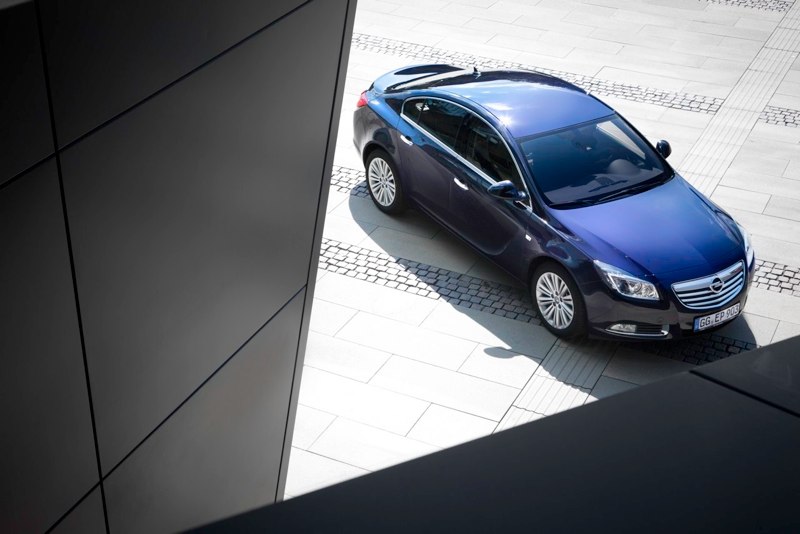
Elsewhere, updated as it is the for new year that’s in it, the Insignia feels and looks just as impressive as it did when launched in late 2008. It’s still a seriously handsome car, looking very Secret Service-y if you get it in a dark metallic, or very Garda-y if it comes in the same shade of bright white as our test car did. Still, with Brendan Gleeson making Guards iconic these days, maybe it’s a look that could catch on.

Inside, there are some minor trim updates that keep things feeling fresh and it has to be said that the Insignia is, along with the Skoda Superb, one of very few ‘mainstream’ cars that can seriously challenge the premium brands for cabin fit and finish. The seats are a bit narrow and perched-up though, which is a shame, but space in the back is good (in legroom terms if not in headroom; that swoopy roofline eats into space for taller passengers) and the 500-litre boot os generous. Mind you, we’d go for the five-door liftback over our four-door saloon test car. You get an extra 30-litres in the boot, plus the added versatility of a liftback and from the outside, only the most finely trained car anorak could tell the difference.

To drive, the Insignia has actually benefited from the fitting of a new electric power steering system. Now, normally we moan about electric steering as it tends to rob you of road feel and feedback, and that’s once again the case here. But it’s actually better weighted and quicker to respond off-centre than the old hydraulic steering set up, so on balance, it’s an improvement. And it helps the Insignia retain its fluid, flowing chassis feel; not quite a match for the mighty Ford Mondeo in driver entertainment terms, but the gap is fag paper thin these days. A shame that the ride quality hasn’t been improved. It’s not terrible, but it bucks and bangs a bit too much on poor surfaces, and that does rather spoil the Insignia’s quasi-premium pretension.

It is a bit pricey though, indicative of Opel’s intention to become a semi-premium brand. €29,680 is a lot for a car that’s supposed to be the economy model, and that’s on top of a range that starts a good €1k above the level of most of the competition. And even with a diesel engine as good as this one, that might just be too much for the Insignia to carry.

Facts & Figures

Opel Insignia 2.0 CDTI EcoFlex SC
Price as tested: €29,680
Range price: €27,380 to €54,280
Capacity: 1,956cc
Power: 160bhp
Torque: 380Nm
Top speed: 221kmh
0-100kmh: 9.5sec
Economy: 4.3-100km (65mpg)
CO2 emissions: 115g/km
VRT Band: A. €160 road tax
Euro NCAP rating: 5-star; 94% adult, 79% child, 40% pedestrian, 71% safety assist


Road Test: Ford Mondeo 1.6 TDCI Titanium


Price as tested: €32,311

+ Handsome looks, gorgeous cabin, brilliant chassis, frugal engine
– S-Max more versatile, C-Max more affordable, soon to be replaced
= It may be plain wrapper, but the Mondeo is still solid gold all the way through


I seem to have been driving a gaggle of Fords lately, all of them slightly different, at different stages of their commercial and technical lives and yet all anchored around a familiar focal point; the Mondeo.

The Mondeo, a name that first came to us aboard Ford's epochal 1993 Sierra replacement, has become an Acme in so many ways. For a time, before the inexorable rise of the premium brands, it was the vehicular encapsulation of the motoring middle class. So much so, that in his 1997 run for the British premiership, Tony Blair actively courted and wooed 'Mondeo Man.'

That stands true for Irish motorists too, for the Mondeo has always been a strong seller here in its two and a bit decades, usually loitering near the top end of the top ten and pleasing, in its unassuming way, both business and family customers.

Its ubiquity has been under threat over the past decade though by the likes of the Volkswagen Passat and Toyota Avensis (an intra-class struggle) and, when cheap financing became available, the BMW 3 Series ( a classically Marxist class war). After all, if the monthly repayments were much the same, wouldn't you rather have a Munich badge on your keyring?

That competition stirred Ford to great lengths though. The 2000-2006 Mondeo was always a fine car to drive, well made and spacious, but it lacked the stylistic or qualitative appeal of the German car. The 2007 Mondeo, the one that is still with us, changed that utterly, granting the Mondeo genuinely handsome looks and a cabin that was close to equalling the BMW in terms of sheer class, and besting it for space.

Now, the current Mondeo is coming to the end of its life, and faces not just competition from the hordes of similar saloons and premium brands but also some internecine rivalry from the other three Fords I've been driving lately; the C-Max, the S-Max and the Kuga.

Let's take the Mondeo first. While many of us now deride the conventional four-box family saloon as moribund, there is a compelling reason for its becoming the archetype of the everyday car; it works. And as a Mondeo, it must be said, it works a damn sight better than most. Our test car came in black, which not only served to highlight its snazzy new LED daytime running lights but also brought with it a brooding sense of being Government Issue; a men-in-black appeal that is alien to many but seductive to a certain type of unreconstructed comic book fan. Ahem.

Inside, while the pleasant silvery surfaces of the centre console have been replaced with a plain-jane black finish, the levels of quality on offer are genuinely second to none. Our (pricey) Titanium spec car came with part-Alcantara seats that cosseted and lovely soft-touch surfaces and expensive looking dials and digital displays that pleased. Only a malfunctioning Bluetooth connection blotted the copybook. There remains proper lounging space in the back for six footers, and the boot is ever cavernous.

A 1.6-litre engine in such a large car (easily matching a nineties Scorpio against the measuring tape) would once have seemed a bad joke but the 110bhp 1.6 TDCI diesel acquits itself well. It will never qualify for the Indy 500, but it pulls with reasonable strength, cruises with a hushed rumble and returned, in our hands, a 6.0-litres per 100km fuel average; not as good as advertised but not bad, and 114g/km means you benefit from the lowest tax band.

As ever, it is the Mondeo's chassis that leaves the strongest impression. Ford, since 1993, has believed strongly that a car which pleases enthusiasts is equally (if subconsciously) pleasing to dunder-heads and that's a tough argument to quibble with. I've always felt that a car that feeds information back to the driver with proper clarity, even if that information isn't properly understood, is a safer car than some light-to-the-touch car which seeks to distance the driver from the action. A majority of drivers may not understand the nuances of steering feel or dynamic balance, but if the car is telling them what it's up to, at least they have that information to work with, whatever they may choose to do with it.

Whatever, the Mondeo retains the best dynamic repertoire in the class, matching engagement with comfort in a near-perfect balance, and that’c combined with impressive safety levels, especially given our car’s optional (€811) Driver Assistance pack, which includes a blind spot monitor, lande departure warning and self-dipping high-beam lights, amongst other useful safety and convenience toys.

So what can the likes of the C-Max or S-Max offer against this? Well, both can offer a similar feel of quiet sophistication (the S-Max sharing many of the Mondeo's cabin fittings and much of its chassis deportment) and both have the same, gorgeously liquid feel to drive. The C-Max's Focus-derived cabin can't match the Mondeo or the S for class, but it feels rigorously well built and both cars are above the class average for refinement. Both make compelling alternatives to the Mondeo's mainstream, and the C-Max’s sharp pricing can make the Titanium spec Mondeo look dangerously overpriced.

The runt of the litter here is the Kuga. It's up for replacement very shortly, which explains many of its shortcomings, but one must remember that the current Mondeo was launched at much the same time and that was worn its years with a deal more grace. The Kuga still looks fresh and pleasing from the outside, but once inside its case quickly dissolves. The cabin is lifted more or less directly from the previous generation Focus and looks and feels appalling cheap. The driving position is too perched up. The 2.0 TDCI engine is noisy in this application and unnecessarily thirsty. Even dynamically, the Kuga falls flat, lurching around on a too-high centre of gravity and exhibiting none of the liquid assurance of any of the other three.

So which one to go for? Well, the Kuga's out straight away and I'll give the C-Max the next bullet, not because of any particular shortcoming (aside from an comically slow-moving powered tailgate, an utterly pointless option) but simply because it lacks the final sheen of quality and sophistication of the other two. Then again, it is significantly more affordable, spec-for-spec, so perhaps that is only right and proper.

While my family man instincts should draw me to the S-Max, and while I do find its style and dynamic abilities (it remains the only MPV that's truly satisfying to drive) appealing, it's the supposedly humble Mondeo I'm going to plump for. It remains a remarkably talented car, one that can be affordably purchased (new or secondhand) by a vast swathe of the motoring populace who probably don't even realise the Wilsonian levels of never having had it so good that they're getting in to. Like the Kuga, the Mondeo is up for replacement in the next six months, but unlike the SUV, you'd never know it; it's going out at the absolute peak of its talents. It's supposedly humble Ford that's as good to drive, to sit in and to live with as any of the more expensive premium badge rivals and one that, five years on, remains the benchmark vehicle for all of its class competitors. Conventional? Yes. Predictable? Certainly? Satisfying? Very. Being different isn't all it's cracked up to be.

Facts & Figures

Ford Mondeo 1.6 TDCI Titanium
Price as tested:€32,311
Range price: €26,295 to €40,851
Cubic capacity: 1,560
Power: 115bhp
Torque: 270Nm
Maximum speed: 190kmh
0-100kmh: 11.9secs
Fuel consumption: 4.3l/100km (65.6mpg)
Co2 emissions: 114g/km
Tax band: A (€160)
EuroNCAP rating: 5-star adult, 4-star child, 2-star pedestrian