Showing posts with label agile. Show all posts

Tuesday, 29 January 2013

Road Test: Citroen DS3 Cabrio 1.6 THP 155 DSport


Price as tested:

+ Cute styling, eager chassis, neat roof, refinement, engine
– Very little really
= Small, fun, affordable. Lovely.

There is not enough fun in our lives anymore. We sit at home, commute to work or shop at the weekend surrounded by the worst kinds of depression. A constant barrage of promissory notes, of legal or political controversy. Joe Duffy, 6-1 and Vincent Browne have sucked the very laughter from our lungs, and when we peek out onto our driveways, there's usually little enough joy to be had there, either. A succession of grey, sliver, black and dark blue hatchbacks and saloons, all purchased with an overriding obsession for low Co2 emissions and frugality. Of fun, there is little or none.

It doesn't have to be like this. It was once the case that fun cars were either too expensive, too impractical or too unreliable to be bought by the majority of us but that has long since changed.

Take, as an exemplar, this new Citroen DS3 cabrio. Citroen's revival of the DS badge has been a huge success for the French firm, a rare glimmer of such at a time of retrenchment and falling sales for the big three French car makers. In 30 months, 300,000 DS models have been sold globally, 200,000 of them the perky little DS3 hatch.

In Ireland, the success is rather more muted, if it's there at all. Citroen's sales have been nibbled away by the German premium boys at the top end and by the Korean warranty-wonders at the cheap end. The DS brand and the DS3 have failed to capture Irish hearts much, hardly a surprise when you remember both were introduced in the middle of 2009, when no-one was buying cars much at all, and few enough of them would even consider a quasi-premium sports hatch from a French manufacturer.

Let's get the Frenchy-ness, if that's what bothers you, out of the way with first. The DS3 feels distinctly Germanic inside thanks to high levels of quality and big, comfy seats. There's more space inside than its main Anglo-German rival, the Mini and outside, it's little short of gorgeous. Those chunky looks, that shark-fin b-pillar and the new 3D-effect tail lights all live up to the promise of the DS brand being the motoring answer to France's great luxury brands like Louis Vuitton or Hermés.

And it really is fun. OK, so we've been testing the 150bhp 1.6 petrol turbo engine (a unit actually co-developed with BMW) which will only be available to special order in Ireland, but the DS3 cabrio brims over with fun. It's light on its toes and agile, and if it gives in too easily to lurching understeer (especially in the wet) when pushed, then at lower efforts it's bubbling and fizzing with enthusiasm for the drive.

The convertible roof is a neat installation, and given that it's really a glorified sunroof (the pillars and side rails of the roof remain in place) then it's rather well suited to Irish conditions. A 16-sec retract or replace time and the fact that you can lower or raise the roof at speeds of up to 120kmh means that you can take advantage of the scattered bright spells.

The boot, at 245-litres, is more practically sized than that of the Mini cabrio or the Fiat 500C, and the boot lid opens with a delightfully quirky motion, cantilevering up almost flush with the body. A shame that the actual boot opening is so small, meaning larger items won't go through to the space beyond, but it is an inevitable compromise for an open-top car.

Top down, and there's plenty of wind and fresh air to enjoy, but even at motorway pace, buffeting is kept to a minimum. Top up and refinement and insulation are excellent, aside from a tendency for road noise to echo up through the rear wheel arches. The optional roof colours include a deep indigo blue and a version woven with the DS logo, that stands millimetrically proud of the cloth and can be traced with your fingers.

You can't even use the excuse of purchase price or running costs to count yourself out of the fun fest. The basic 1.2 VTi petrol model will cost from around €21,500 and the main-selling 90bhp 1.4 HDI diesel, with its Band A 94g/km Co2 output, will be around €24,500. So if you're in the market for one of those dingy diesel hatchbacks (and don't strictly need the cabin or boot space) you can afford one of these.

The launch of the DS3 was a new beginning for the DS name, resurrected from its legendary 1955 origins. The follow-on launches of the DS4 and DS5 haven't captured the same critical acclaim of the DS3, but perhaps can be best described as the end of the new beginning. The DS brand's future will snap more firmly into focus at this April's Shanghai motor show when a Mercedes CLA-sized three-box saloon, a compact SUV and a large executive model will all be shown off.

Will any of these new DS cars make more of an impact in the Irish market? It is, possibly, doubtful but that would be a crying shame. We can continue to buy the same grey, silver, blue and black hatches, we can continue to listen endlessly to Cooper, Hook, McWilliams, Kenny and Duffy. We can keep firm on our slide into national apathy.

Or we, some of us at least, could buy a cute French convertible, possibly painted in a bright, happy shade of yellow. We could open the roof on a rare sunny day and get some vitamin D. We could listen, on a rainy day, to the evocative sound of raindrops on the canvas roof. We could do all that safe in the knowledge that our motor tax and fuel bills will remain low and sensible. We could, in a vehicular sense, if nothing else, cheer up.


Facts & FiguresCitroen DS3 Cabrio 1.6 THP 155 DSport
Price as tested: €26,545Range price: €21,195 to €26,545Capacity: 1,598cc

Power: 154bhp

Torque: 240Nm

Top speed: 212kmh

0-100kmh: 7.4sec

Economy: 7.4l-100km (37.8mpg)

CO2 emissions: 137g/km
VRT Band: B2. €280 road tax

Euro NCAP rating: 5-star; 87% adult, 71% child, 35% pedestrian, 83% safety assist


News: Kia to take on Golf GTI with Cee'd GT


We've become used to Kias with high quality, Kias with style and Kias with a long warranty, but are we ready for a Kia with a high performance engine? Well, we will find out very soon as Kia will be presenting its Cee'd and Pro_Cee'd GT models at the upcoming Geneva Motor Show, with a new 1.6-litre turbocharged engine with 200bhp. 


That will put Kia head to head for the first time with the likes of the Volkswagen Golf GTI, Ford Focus ST and Peugeot 208 GTI. The GT models get lower, stiffer suspension, LED running lights, Recaro bucket seats and 18-inch alloy wheels. It sounds like an enticing cocktail, but once again; are we ready for a high-performance Kia?

Designed in Europe under the direction of President and Chief Design Officer, Peter Schreyer, the two debutants feature bold athletic styling, distinctive LED daytime running lights, dual-exhaust pipes, Recaro seating, 18-inch alloy wheels and eye-catching red brake calipers.

The new turbocharged 1.6-litre GDI petrol engine will produce 204 PS (201 bhp) and 265 Nm (195lb/ft), powering the front wheels through a six-speed manual transmission and allowing the Kia pro_cee’d GT and cee’d GT to accelerate from 0 to 100km/h (62mph) in 7.9 seconds.

Production of the newest members of the latest generation cee’d family is scheduled to start at Kia’s Žilina plant in Slovakia in mid-May.  The Pro_Cee’d GT is anticipated to go sale in the UK and Ireland from the middle of the year and be joined by its Cee’d GT counterpart towards the end of 2013.

Prices and specifications will be confirmed closer to the on-sale dates. Meanwhile, Kia will also be bringing a concept car that point the way to the replacement for the Soul compact SUV and a future rival for the Nissan Juke, Peugeot 2008 and Mini Countryman. No mechanical details as yet, but expect it to be based on the same platform as the hugely successful Rio supermini and that sharp-edged front styling and expanded grille should be the new corporate 'face' of Kia.


Wednesday, 16 January 2013

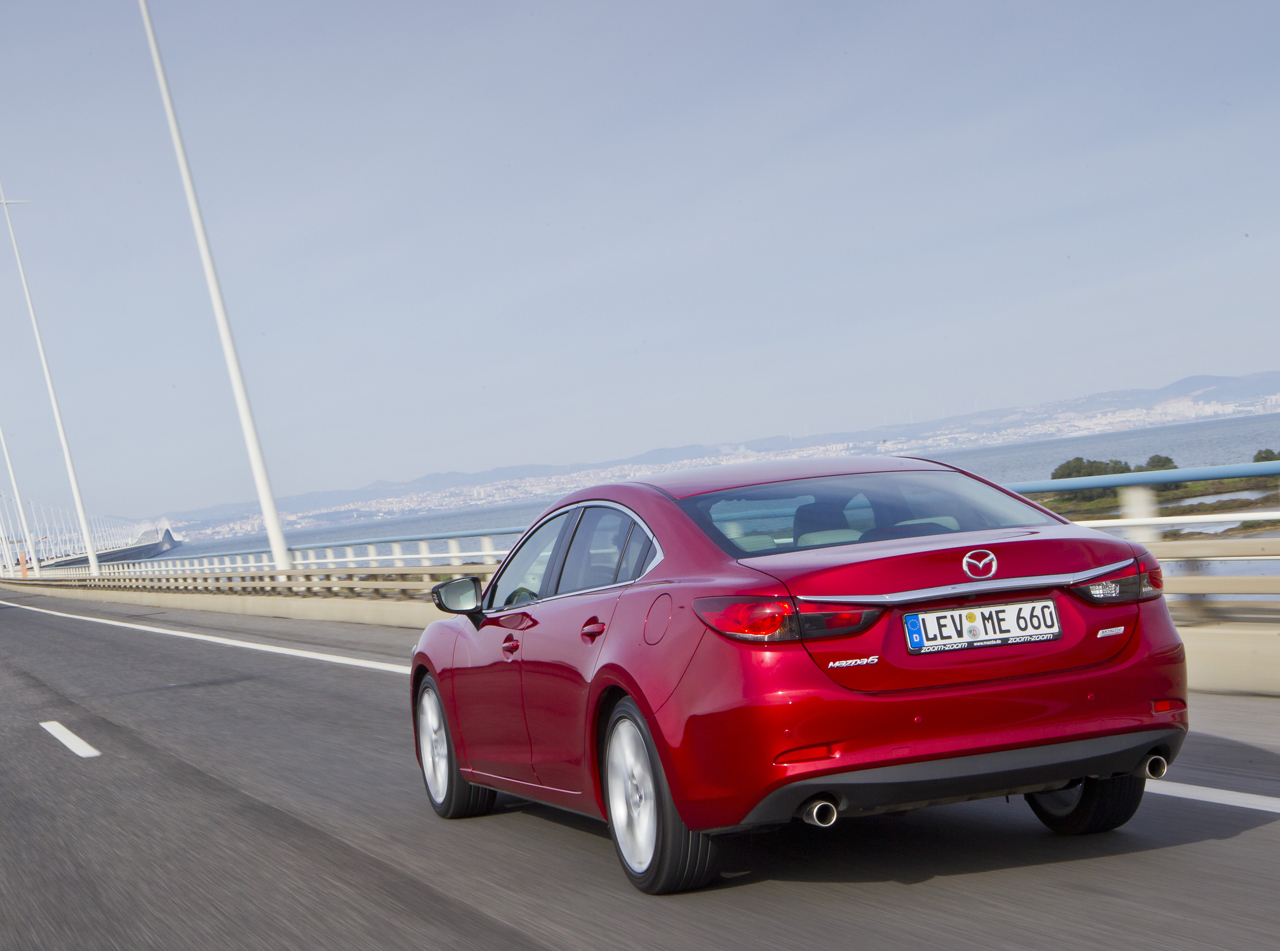
Road Test: Mazda 6 2.2 SkyActiv-D 150 Sport


Price as tested: €31,795

+ Handsome, frugal, fab to drive, solid
– Pretty much nothing
= As good a mid-size saloon as you'll find

An expensive Swiss watch has become a deep desire for so many of us. The thought of the expensive weight of all that carefully assembled stainless steel and titanium, our wrists tingling at the very thought of being topped by the logo of Omega, Rolex or Tag Heuer (delete according to taste), it's a status symbol we'd all love to have. But sadly, few of us will ever afford such a timepiece. Shame.

But what if I told you that you could have something just as good, possibly even better, for a lower cost, simply by trading in your timepiece's Swiss postcode for one from Japan? It's well known in high-end watch circles that, proud though the Swiss boys are of their products and movements, they collectively weep with jealously at the carefully crafted work of Seiko. The famed Japanese watch maker can produce wrist-wear of staggering reliability and accuracy, and no small amount of beauty, for a fraction of the cost of a Rolex.

There's something similar going on in the motoring world, too. Many of us desire a slick German sports saloon; we want our driveway to be adorned with the star of Mercedes, the four rings of Audi or the Munich colours of BMW, but their prices are just out of reach. So what if I told you that you could have a car as good to drive as a 3 Series, better looking than an A4 and more reliable than a C-Class, and all you have to do is pop into your Mazda dealer?

Most of the new 6's rivals come with 1.6 or 2.0-litre Diesel engines with outputs of around 115 to 120bhp, Band A emissions and a price tag circling the €26,000 mark. The Mazda, by contrast, has a price tag of €31,795 (for the diesel Sport model, which Mazda Ireland reckons will be its strongest seller), has a 2.2-litre engine with a muscular 150bhp and 380Nm of torque (an even more powerful 175bhp, 420Nm version is also available) and yet still hits that Band A emissions target, with 108g/km costing you just €180 a year to tax.

How has Mazda done this? Carefully, is the short answer. Its SkyActiv programme, which debuted on last year's very impressive CX-5 SUV, isn't one big whizz-bang fuel saving system but rather, like BMW's EfficientDynamics, a series of incremental improvements in every area. A little less friction here. A saving of a kilogram there. A touch less wind resistance somewhere else. It all adds up and the final sum of these parts is that low Co2 figure and a commensurately low fuel consumption of, claims Mazda, better than 65mpg on average. Part of that efficiency comes from a combination of i-Stop that kills the engine when you're waiting at the lights and a new system called i-ELOOP which uses a capacitor (like a battery; it reacts faster than a conventional battery but won't hold a charge for very long) that can power the electrical systems for up to a minute, independent of the engine, and recharges in just seconds from leftover braking energy. Clever stuff and the re-start time of the i-Stop is impressively fast.

Even so, I doubt you'll be able to match that fuel figure in real world driving, partially because almost no car ever does match its claimed figure, but partly because it's very hard to resist driving the new 6 in a somewhat brisk fashion. The last generation of 6 felt solid, planted and even a touch hefty to drive. This new one continues that tradition in part, but there's also a new-found litheness, a sense of fluidity and a truly engaging driving experience. The steering is the outright star here, feeling almost Jaguar-like in its combination of weight (except at parking speeds when it can occasionally get oddly heavy) and with great levels of feedback. It's a very confidence inspiring car, the 6, and even at very high continental motorway speeds, feels safe, secure and reactive. The ride quality, as long as you don't go for the optional 19" wheels, is also exceptionally supple.

Refined too. There's a rustle of wind noise around the mirrors at 120kmh and a touch of road and tyre noise on coarser surfaces, but the SkyActiv diesel 2.2 is impressively quiet and even manages to sound a little bit entertaining at higher rpm, with a gruff warbling noise rather than the usual bland diesel blare.

The cabin marks a particularly high point for the 6. It's very similar to the CX-5's to look at, but the quality of the materials has kicked up a notch and while it's a touch dark at times, it's also a terrifically comfy and pleasing space in which to spend time, helped in no small part by a well-located driving position and expensive-looking, clear instruments. There's good space in the back too although the boot is a touch smaller than much of the competition. Family buyers will be pleased to see that Mazda is emphasising the safety levels of the 6, with a host of new electronic aids including a city braking system that slams on the anchors if it senses you're going to run up the back of the car in front, a lane keeping warning and a blind spot monitor, as well as radar guided cruise control.

It's also a very good looking car, much more obviously so in the flesh (so to speak) than in photos, where the sweeping lines are more obvious and the muscular stance more noticeable.

That €31,000 price tag may hurt the 6's chances though. Its rivals all have significantly lower price points, even if they are for lesser engines with less equipment. Mazda is effectively competing with bottom-end versions of the BMW 3 Series and Audi A4 at that price too, and while it's a lovely car, that's a tough battle for any mainstream car maker, and Mazda has as yet no plans to try and match or beat the Koreans in the warranty war; three-year unlimited mileage is your lot.

But just as a Seiko will have true watch afficionados nodding in quiet respect, so I reckon this new Mazda 6 will have true car fans doing the same. Gorgeous, lithe to drive and solidly built, and with astonishing fuel efficiency, it's an early nod for one of the best cars of 2013.

Facts & Figures
Mazda 6 2.2 SkyActiv-D Sport 150

Price as tested: €31,795

Range price: €28,745 to €38,895

Capacity: 2,191cc

Power: 148bhp

Torque: 380Nm

Top speed: 211kmh

0-100kmh: 9.1sec

Economy: 4.2l-100km (67mpg)

CO2 emissions: 108g/km
VRT Band: A3. €190 road tax

Euro NCAP rating: Not yet tested


Tuesday, 20 November 2012

Road Test: Mercedes-Benz A180 CDI


Price as tested: €28,550

+ Styling, engine, handling
– Driving position
= Puts Merc right at the top of the premium hatch tree

I can still remember clearly the last time I drove an old-shape A-Class. You remember? The tall, slightly geeky looking one that was big on space but small on styling and driver appeal. I can still recall heading north up the M1 motorway, just passing the exit for Skerries and thinking “I just don’t like this.”

And that was odd, because I should have. I liked, and still do like, most Mercedes cars. I appreciate cars that are clever, spacious and useful and the old A was all of those things. But I just couldn’t appreciate the shopping-trolley handling, the awkward driving position or, especially on that warm August day, the feeble, non-air-conditioned ventilation.

While the old A certainly had its followers and was one of the most genuinely innovative cars of the past two decades, it just never resonated with customers the way that rivals like the BMW 1 Series and Audi A3 did.

I think that might all be about to change because on a chilly November afternoon, I have now driven the all-new A-Class and suddenly, Mercedes’ smallest car has snapped into sharp focus.

Gone is the tall, spacious MPV-like body of before, and gone with it the clever ‘sandwich’ floor arrangement (originally designed to leave space for the batteries for a proposed electric version) and in comes properly gorgeous, low-slung styling with a prominent bonnet and a cab-backward stance. The new A really is very handsome indeed and that alone should increase its potential sales by a significant figure.

Inside, you no longer get the massive space of the old one, but then you do now get a cabin that looks like it has come from a proper Mercedes. The big, iPad-style control screen in the centre of the dash looks like it should be a touch-screen (sadly it isn’t) and the retro-sixties-style circular air vents are a nice touch.

Slip behind the chunky, sporty, three-spoke steering wheel and you will instantly find the A-Class’ one major flaw. Its driving position. If you’re tall, then you’ll have to sit low to the floor and with your knees splayed out. That’s not a major issue, but at this point the angle of the throttle pedal becomes distinctly awkward and the pedal’s light action means you can’t rest your foot on it when holding a constant speed – you have to hover your foot over it all the time. That’s going to cause major leg ache on a long journey and will expose the fact that the A doesn’t have standard-fit cruise control.

Ah well, perfection is unattainable in nature and all that, so let’s press on and see what the new A-Class does well. And the answer to that question is; pretty much everything else. The 109bhp 180 CDI diesel engine is actually a 1.5-litre unit and while you wouldn’t think it would be especially muscular, it actually provides really decent amounts of poke. The 260Nm of torque is the key figure here, as is the A’s 1,395kg kerb weight. Stir the six-speed manual gearbox with a touch of vigour and you’ll never be less than impressed with its straightline performance, all of which is delivered while it averages a claimed 3.8-litres per 100km (74mpg) and emits as little as 98g/km of Co2, depending on which size of alloy wheels you specify.

To drive, at first, the A feels a little loose-limbed and remote. Trickling through traffic, there’s little or nothing to tell you that this is anything other than another comfort-oriented Mercedes. But get it on to a twisty, properly challenging road and the A-Class really comes alive. The steering weights up (without becoming intrusively heavy) and the chassis really starts to sing, allowing you to fully exploit the diesel grunt. It’s not merely precise, predictable and poised; it’s actually fun. In fact, it’s so good to drive that it just manages to nick the driver appeal trophy from the rear-drive BMW 1 Series.

To all of those talents you can add a cabin that’s decently spacious in the rear and a boot that’s large and square enough to make the A-Class feel truly practical.

At €28k for this most basic of diesel models, you can’t say that it’s exactly affordable but at long last, the A-Class does the job it was originally designed to do; to offer a truly desirable, properly Mercedes driving experience in a compact package at a compact price.


Mercedes-Benz A180 CDI
Price as tested: €28,995
Price range: €26,435 to €41,230
Capacity: 1,461
Power: 109bhp
Torque: 260Nm
Top speed: 190kmh
0-100kmh: 11.3sec
Economy: 3.8l-100km (74mpg)
CO2 emissions: 98g/km
Road Tax Band: A. €160
Euro NCAP rating: Not yet tested


Tuesday, 6 November 2012

News: Renault & Caterham team up to revive Alpine


Renault is going ahead with its revival of the classic Alpine sports car brand, and it's bringing in sports car specialists (and burgeoning F1 team) Caterham to help it out.
The Alpines which came from the original factory in the French seaside town of Dieppe were rallying legends back in the seventies, especially the achingly pretty A110 (pictured, bottom) which won the Monte Carlo Rally. The Alpine team was also instrumental in Renault's 1978 Le Mans 24hrs win, even though by then, the process to turn independent Alpine into wholly-Renault-owned RenaultSport had already begun.

Alpine's days as a road car maker ended in the mid-nineties when the little-seen A610, a rival for the Porsche 911, went out of production and the brand has been dormant since, even though its Dieppe home-base has still been busy with RenaultSport projects, including the much-loved hot versions of the Clio and Megane.

Now though, the Alpine badge is going to be revived for a series of road cars, which Renault teased earlier this year with a concept, based on the Dezir sports car concept (above). And to help it get future Alpines designed and into production, Renault has brought Caterham on board.

Caterham is well known to motoring enthusiasts as the makers of the long-lived Caterham 7 sports car, a no-frills, back-to-basics two-seater that generally regarded as one of the best-to-drive, and fastest, cars around. The two companies, Renault and Caterham, already have a connection as Caterham's Formula One team uses Renault F1 engines. Caterham was bought last year by Malaysian businessman Tony Fernandes, who owns the Air Asia airline and who brought the Lotus name back into Formula One three years ago, only to buy up Caterham following a gruelling court battle that saw Lotus Cars take the name back off him. Now, Caterham doesn't just have its small sports car factory and its F1 team, it also has CTI, Caterham Technologies International, which is the bit that Renault is interested in – CTI's expertise in low-volume designs and carbon-fibre construction is just the ticket to get Alpine back on the road.

So what can we expect? Well, Alpine's traditions are based around mid-or-rear-engined sports cars, using relatively simple, low-powered (compared to some of the competition) Renault engines and majoring on light weight and agility. The hefty-looking concept version, which was based around the engine and chassis of a Megane race car, will likely not make it through to production.

“This innovative partnership with Caterham embodies a longstanding ambition: the creation of a sports car with the Alpine DNA. It carries both opportunities for the Dieppe plant and the development of its historic know-how" said Carlos Ghosn, CEO of Renault.

“I have not felt as excited about a new venture since I launched AirAsia in 2001 and I want to thank Carlos Ghosn and Carlos Tavares and everyone in our new Renault family for having the belief in Caterham Group to create this partnership" said Tony Fernandes. "Many people doubted us 11 years ago when we launched our airline and I am sure that there will be doubters again this time, but we will not fail your trust. We know the markets we are going into and, particularly in my playground in Asia, there is a huge opportunity to replicate the AirAsia model and give consumers access to exciting, affordable products that marry our interests in F1 and technology and help make their dreams come true.”


Thursday, 18 October 2012

Features: Nissan's Big Day Out


You could be forgiven for thinking, lately, that Nissan has become a one-car manufacturer. The Qashqai, so beloved of aspirational families, givein them a hint of SUV styling but keeping the hatchback running costs, has been a runaway success for Nissan, and is currently the no.2 selling car in Ireland. The only problem is that its success does tend to obscure the fact that Nissan makes other cars, and some damned exciting ones at that...

Take this GT-R, for instance. Jet black, in Spec-V form, so it gets 545bhp and is around 60kg lighter than standard. Four wheel drive that could outfox a tax accountant, paddle-shift gearbox that’s faster than an Uzi and a glowering, menacing mien. Looking for all the world like Darth Vader’s company car. This is not a mere vehicle, this is practically weaponised, a stealth bomber with wheels. And oh look, someone’s left the keys in it...

We’re down at Mondello Park and it’s lashing rain, a weather report that would normally have us huddling in the pits, trying to keep dry. But today it’s well worth the sloshy stride across to the waiting cars, because the chance to drive a GT-R is one thing, the chance to drive a GT-R when it’s wet enough to really explore the capabilities of that remarkable 4wd system is something else again.

Sit in and thumb the red starter button and the GT-R 3.8-litre V6 twin-turbo engine kicks into a smooth, gently menacing idle. In spite of its high performance credentials, it’s no harder to slide yourself aboard and acquaint yourself with the cockpit than it would be in a rental Micra. Nissan has kept things simple and user-friendly in here, and comfort levels are remarkably good. You could happily spend the day in those seats.

Tug the stubby selector for the twin-clutch transmission back to A for automatic mode. You can of course take full manual control with the column-mounted paddle shifters, but today I’m going to leave it in auto so that I can concentrate harder on not crashing. The transmission clunks into first and with no fuss at all, we trundle down the soaking pitlane.

Up till this point it’s all been drama free, but as soon as we’re past the marshaling post and under the spectator bridge, the GT-R comes to life. A quick stab of the throttle annihilates the short chute between the pits and the first corner and it’s time to get turned in. A nudge of understeer is the first sensation as the GT-R’s not insubstantial bulk tries to push straight on. It’s a fleeting sensation and the nose soon turns obediently towards the apex of the hairpin corner, the GT-R still feeling pussy-cat-ish at these sighting lap speeds.

I up the ante through the second corner and instantly the GT-R’s chassis shows its mettlre. Even a delicate squeeze of the throttle has the rear tyres skittering out in a fast arcing motion, but even before I apply opposite lock, the computer that controls the car’s motions has figured out, adjusted the brakes, traction control, stability control and 4wd split and stopped me spinning embarrassingly off. And it does the same at the next corner, and the next, and the next. 


That sounds like it might be a recipe for having a smothering nanny computer on board when you’re trying to have fun, but oddly, it isn’t. The GT-R is just so capable, so easy to drive, even when driving very fast indeed, that you soon start to develop a rhythm and rapport with both the mechanical car and the electronic one. It soon becomes second nature to kick the back end out to ludicrous angles, dabbing on opposite lock all the time, confident that your own excesses and lack of skill will be safely mopped up.

And of course, there’s the sheer, nutter power of the thing. Fast enough to flatten your eyeballs and bend your ribs out of shape, the GT-R is, in spite of its astonishingly friendly nature, a true Porsche hunter, a sleek mechanical panther stalking its skittish German prey. How does 0-100kmh in a hair over 3.0secs sound, and a top speed above the magic 300kmh barrier? Nissan might even put the Spec V’s back seats back in if you ask nicely.

After all that, a 370Z, even in race-track spec with a trick diff, should seem so pedestrian, but it just doesn’t. After a hairy first lap with a lot of sliding and not a lot of throttle (just the rear-wheels driven, then) the 370Z starts to come to life, and you learn to trust the very stiff diff to plant the back end in place (and the fabulous steering to correct when it doesn’t) and suddenly the 370Z feels like its old self again. A hairy-arsed, old-fashioned rear-drive drift machine with a warbling V6 engine and a meaty, muscular gearchange. Although not as capable as the GT-R, obviously, it was if anything probably slightly more fun on a soaking Mondello International circuit.

And the Juke R? Ah, well, that’s another thing again. It looks more or less like a standard Juke, bar some crazily over-extended wheelarches and an oddly bisected roof spoiler, but underneath it’s basically a GT-R, complete with the full-fat 545bhp (not the 480bhp that the original Juke R concept had), 4wd and paddle-shift gearbox. It’s nuts, of course, but it is a real car, and you can, sort of, buy one. Assuming you have €400,000 to spare. Plus local taxes.

Is it as quick as a GT-R? Well, it was damned near impossible to catch in a straight line on the track, even if the lower, leaner GT-R would probably do it over through the corners. If Nissan would consider putting the back seats back into the Juke R, it could be the ultimate school run vehicle.

All of this was, of course, a demonstration, a reminder that Nissan, while it’s busy turning out Qashqais, Mircras and the all-electric Leaf, is still a sporty car company at heart. If the GT-R, Juke R and 370Z weren’t sufficient proof, then don’t forget the Nissan-backed DeltaWing race car that stunned the crowds at Le Mans this year and is set to have its own one-make racing series in the future. Nissan Ireland will be ramming the point home early in the new year when it introduces the Nismo sporting sub-brand to our market, starting with a hot 1.6 turbo version of the Juke, which you'll be able to bodykit-up to look like a reasonable facsimile of the Juke R.

Consider us reminded. 542bhp reminded.


Tuesday, 2 October 2012

Road Test: BMW 320d SE Touring


Price as tested: €51,930

+ Style, chassis, practicality, comfort, economy, performance; everything really
– Engine too noisy around town. That's it.
= As close to perfection as currently mechanically possible.


They. They are omnipresent. They are all-knowing. They are the They who show up in every pub conversation, They are the true and all-seeing know-alls of the universe. You know, the They in "They say that..."

Well, They say that perfection is unattainable in nature. To which I say, well, what about Scarlett Johansson? And perhaps more pertinently for a motoring website, what about the new BMW 3 Series Touring?

Now, perfection is a dangerous word for any critic to use. It essentially paints you into a corner, as if this thing here is perfect, then what about the next thing, which may be even better again. Do we need to have a graduated system of perfection? A Johansson scale, as it were?

BMW's mighty 3 Series has always been pretty high up the scale of perfection, certainly since the iconic E30 version of the 1980s and the current F30 3 Series is for my money the best one ever. It manages to combine traditional BMW virtues of style, agility and an entertaining driving experience with a level of comfort and refinement that few other cars, indeed few other BMWs, can match.

And here's the Touring version, the estate, which really and truly pushes all my buttons. Now, I know many of you still dismiss estates as Brewery Rep's cars and you'd all rather be seen in your trendy compact SUVs. To which I say, good luck to you and enjoy the fuel bills. I'll be happy in my wagon.

To turn the regular 3 Series into a Touring, BMW has really been doing its homework. The expected separate opening glass rear window, a feature pioneered by the original E30 Touring, is there as ever, while the main tailgate is now electrically powered as standard. A shame that; electric 'gates are just an annoyance in my book. Why not just offer it as a no-cost option? Still, the boot once open is large (495-litres, which BMW claims is a best-in-class figure), square and luxuriously carpeted. The sill is just 620mm off the ground the the standard stainless steel scuff plate should keep dings and scratches in the paint work down to a minimum.

The rear seats split into three 40:20:40 sections and if you fold everything flat, there's 1,500-litres of load space. Practical, then.

Up front, it looks and feels the same as any 3 Series, which is to say really rather wonderful. I've heard complaints from some quarters that the cabin looks too plain or too similar to the previous E90 3 Series, but to that I say just take a long journey in one. Then, when you've noticed the spot-on driving position, the comfy seats, the space, the clear dials and the general air of purposefulness, get back to me.

Sufficient eulogies to the brilliance of the 181bhp 2.0-litre turbo diesel engine found herein have been written that future archaeologists will be forced to conclude that there was at one time a church that deified a Munich-built oil-burning engine, so it's enough here to say that it remains powerful, smooth and very efficient. Thanks to the now-expected battery of EfficientDynamics technologies, you should easily enough be able to match the claimed 5.1-litres per 100km fuel consumtion figure, That's mid-fifties in MPG, and I managed low forties bombing around with the sport setting on the gearbox activated. Select the Eco Pro mode and you should do better still.

If there is a chink in the armour of perfection though, it's in the engine. Simply put, refinement is not quite all it should be. On the main road, at a cruise, it's fine, blending seamlessly into the background. But around town, especially from cold, and it just growls and gurgles a bit too much, an effect heightened by the otherwise excellent 8-speed automatic transmission, which tends to hunt around for cogs at low speeds.

Still, if that's enough to put you off then you'll never sample the 320d's greatest party trick. In the past, BMWs would always wow you with sharp steering, iron-fisted body control and an entertaining attitude to wet roundabouts, but then punish you when the road got bumpy, something that got progressively worse from 2002 onwards when the runflat tyre systems arrived. Now though, you'll be pitching your 3 Series down a favourite back road, revelling in the steering and chassis balance when a traditional Irish pothole will appear. You'll brace yourself for the impact, getting your wince face ready and then... nothing. The car will glide over the cratered surface as if it isn't there. Wonderful.

And that, to me at any rate, is why the 3 Touring flirts so closely with perfection. It's that combination of talents, that blending into one of sports car, family car and practical holdall. You can drop the kids to school, clean out the garage and go for an invigorating spin on a challenging road, all in one morning, all without changing cars.

Perfect? Not quite, but probably as close as They will allow.

BMW 320d SE Touring
Price as tested: €51,930
Range price: €36,620 to €52,120
Capacity: 1,995cc
Power: 181bhp
Torque: 560Nm
Top speed: 250kmh
0-100kmh: 5.6sec
Economy: 5.1-100km (55.4mpg)
CO2 emissions: 135g/km
Tax Band: B. €225 road tax
Euro NCAP rating: 5-star; 95% adult, 84% child, 78% pedestrian, 86% safety assist