Showing posts with label fast. Show all posts
Thursday, 7 February 2013
Road Test: Mini Cooper S John Cooper Works GP
Price as tested: €47,640
+ Handling, performance, styling, seats, noise, fun
– Hard ride, impractical
= Small car, massive fun
Labels:
Cooper S,
eDrive,
expensive,
fast,
for sale,
fun,
GP,
hot hatch,
Ireland,
John Cooper Works,
limited edition,
lowered,
Mini,
new car,
Road Test,
track day,
turbo
Sunday, 27 January 2013
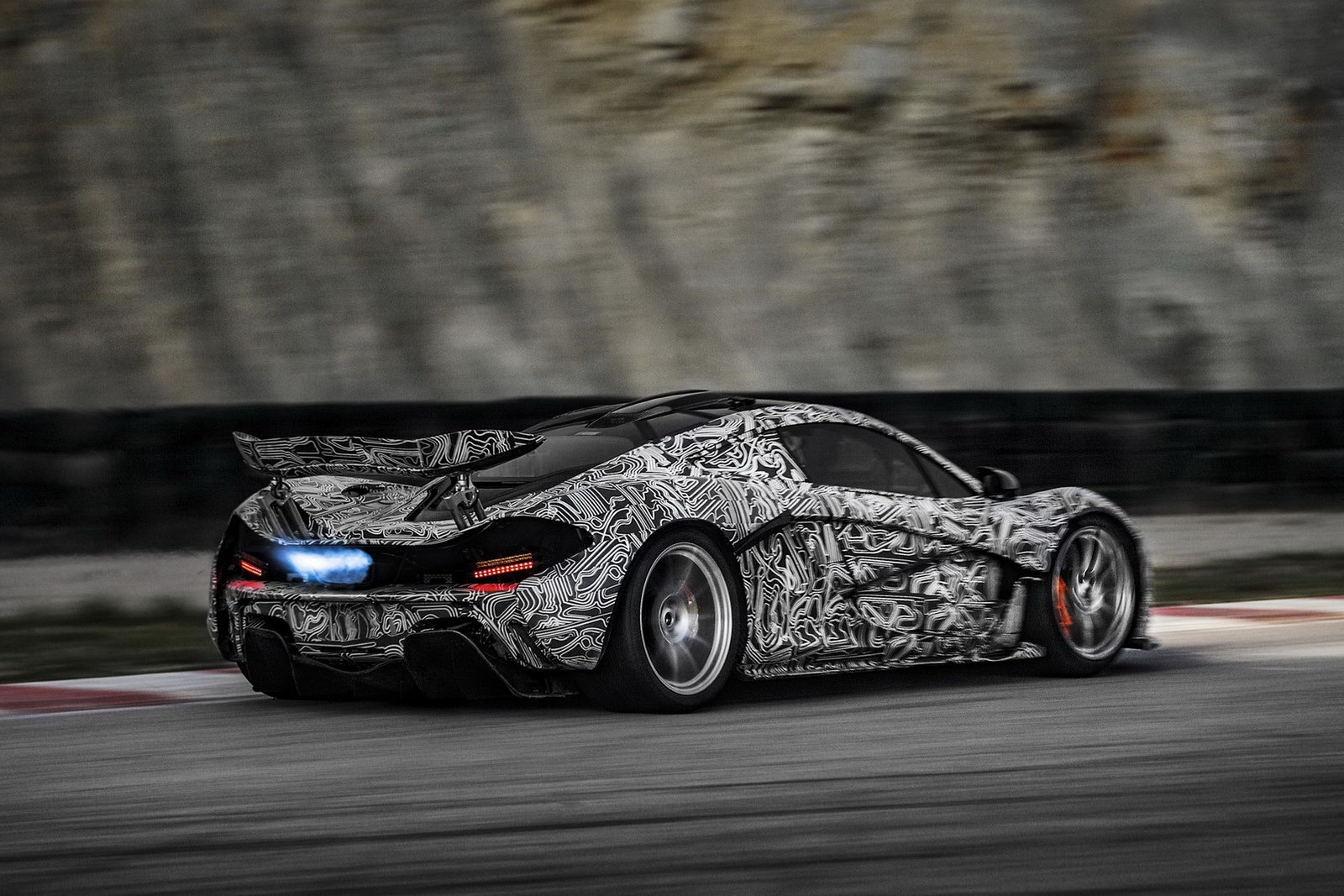
News: McLaren's P1 supercar hits the test track
It was almost exactly 20 years ago that we car enthusiasts were getting all girlishly excited about the prospect of McLaren's first ever road car, the original F1. That went on to be the fastest car in the world, and to win Le Mans at its first attempt. So just imagine how excited we are at the prospect of this, the P1, McLaren's successor to the F1...
Just 500 of this amazing looking car will be built, and while its engine is structurally similar to the 3.8-litre V8 turbo that's in the existing MP4-12-C supercar, not only will the P1 get a power boost, it will also get a hybrid KERS setup that will boost power again for overtaking bursts. Quite what you'd need an overtaking burst to get past in one of these remains unexplained. A Veyron perhaps?
Anyway, expect power to be at least 750-800bhp, and with all the active aerodynamics and computer controlled suspension that you'd expect from McLaren. And judging from the still-camouflaged styling (why, when they showed the car un-disguised at the Paris Motor Show last year?) it will look remarkably like being violated by a Le Mans racer when it does overtake you, boost or no boost.
Enjoy the photos and check out the video too. It spits fire...
Labels:
carbon fibre,
eDrive,
F1,
fast,
Formula One,
Hybrid,
Ireland,
KERS,
Le Mans,
McLaren,
new car,
News,
P1,
performance,
supercar
Wednesday, 23 January 2013
Road Test: Ford Focus ST
Price as tested: €36,800
+ Massive grunt, lairy soundtrack, chassis, solid build, practicality
- Styling doesn't look premium enough inside or out, not well enough equipped
= Ford's working class hero for the 21st Century rekindles old Cosworth romance
Like so many of my age group, I grew up on fast Fords. My first motoring memory is of standing on a ditch, somewhere near the village of Ballydehob, where my dad had taken me to see a stage of the West Cork Rally. Now, my dad's a football nut, not a car nut but he still seemed excited to be there, and as a curious six year old, I wondered why. Then I saw, for the first time ever, Billy Coleman gunning, slipping and opposite-locking a MkII Escort between the hedges, BDA engine burping, farting and snorting away like a cage of warthogs with IBS. I wondered no more.
If by then the MkII was already something of a dinosaur, then I didn't have to wait long for more iconic hot Fords to come along and trawl for my desire. First came the XR3i, then the short-lived RS200, then the mighty first generation Sierra Cosworth. By the time I came to driving age, I was fully convinced that a Sierra Sapphire Cosworth 4x4 was the ideal and perfect car for me. Sadly, in lieu of a Lotto win, I was relying on my dad's generosity of spirit and he duly let me learn how to drive in his Sierra. A hatchback LX with the 1.6-litre engine. I think it had about 12bhp...
Still, by the time I passed my test there was the Escort Cosworth to lust over and then... And then there wasn't much at all. The Escort Cossie was the apogee of the hot hatch, a car which cost more to insure than it did to buy and for a time, Ford more or less entirely retreated from the affordable hot car market. A few trickles came along, such a the Mk1 Focus ST (sweet chassis but not actually much more fun than a diesel 1.8 TDCI) and a few ST Mondeos, but it too until 2003 and the arrival of the Mk1 Focus RS to really kick-start the fast Ford revival. Since then, we've had an even more extreme (properly Porsche-quick) Mk2 Focus RS and a warbling, five-pot ST (lovely but too thirsty by half). And now this, the Mk3 Focus in ST spec, with a new 2.0-litre 250bhp four-cylinder turbo EcoBoost engine. It's a five-door only model (in direct contrast to most previous Ford hot hatches, although there is a rather anti-cool estate version) and seeks to finally bridge the gap between previous lairy and uncouth performance Ford models and the more sophisticated likes of the Volkswagen Golf GTI.
First off, the ST's looks are a little odd. In spite of big wheels and a chunky bodykit, there is little to tell the unassuming bystander that this is a performance flagship. Yes, there's the gaping, Aston-Martin-esque grille, but you can now find something similar on a boggo Fiesta, so that's hardly a telling item. No, this Focus, for the first time in hot Ford history since that long-desired Sierra Sapphire Cossie, majors on subtle looks.
That's true of the interior where the overwhwelming impression is that of standard Focus. Yes, there's an extra bank of dials atop the dash, the steering wheel and seats have bold ST logos and there's a plaque on the centre console indicating your car's build number, but other than that it looks stock. Beware of the seats, incidentally. They look gorgeous but the bolsters and supports are so chunky that if you're built along similarly husky dimensions to myself, you may find them restrictively tight. Better lay off the cupcakes. (It also feels curiously bare. Not cruise control? No heated windscreen? On a €35k car? Really?)
And when you first fire up the powerful new engine and pull out onto the road, you may also feel a slight lack of being whelmed. Unlike previous fast Fords, there's little sense of urgency or hairy-chestedness, assuming that is that you tickle it along and upshift early, as we've all become accustomed to doing from driving tourquey, low-revving diesels. The ride is certainly firm and thumps hard over sharp obstacles, but mostly, it's just refined and easygoing, with a hint of muscularity underneath.
And then you drop a gear and venture beyond 3,000rpm and all hell breaks loose with a side order of demons. Then the engine shows is true colours and they are fully red (shade: tooth & claw). It emits a hard but tuneful bark that swiftly becomes addictive. It's not the musical roar of a big V12 or the grumble of a V8 but a blunt, business-like shout that speaks of racing heritage and serious intent. That seriousness is hammered home by the fact that the traction control light has by now more than likely become constantly lit and the steering is bucking in your hands as the front tyres try to choose between being traction devices or simply smoke emitters. It is, just a bit, exciting.
But curiously, not OTT. Yes, the torque steer is there, as mentioned, but a firm grip on the wheel easily quells it. And yes, there's wheelspin there for the taking, but the odd thing is that the Focus ST feels like a duck. You know that old adage about a duck swimming on a lake looking serene and effortless on the surface while underneath it's paddling like hell? That's what I mean. If it can be said that the Focus ST has a split personality, then it's split along the horizontal axis, all thunder and fury down below, while you sit calmly atop, deciding the precise degree of fury to unleash.
The handling is just excellent. Yes, it would be nice for Irish conditions if the ride had a touch more pliancy, but the way the meaty steering pulls you into corners and spits you, cannon-shell-like, out the far side is a truly terrific experience. In some ways, with that wheelspin never far away and the sledgehammer power output, you could see the Focus ST as a bit of a crude weapon, all point-and-squirt. But learn to hold back the throttle a touch to keep the wheelspin quelled, learn to lean on the grip of the front end and realise that the engine, far from being peaky or laggy, actually does a convincing impression of being a much larger, naturally-aspirated unit, and you will unlock the immense point-to-point ability of the ST.
And that, in a heartbeat, finally bridges the gap between a fast Ford and a supposedly more sophisticated Golf GTI. Yes, the VW badge will continue to carry more kudos and apparent classiness, and the Focus isn't helping its own cause by persisting with a cabin that still feels a salary band lower than that of the Golf (even if its actual quality is unimpeachable) but here at last is a Ford hot hatch that works equally well as a daily driver and a Sunday morning cobweb remover.
Any car that can sprint from standstill to 100kmh in 6.5secs and on to a top speed of almost 250kmh has to be considered as a serious performance player. But any car that can seat for in easy comfort, has a big boot and can manage 9.0-litres per 100km (31mpg) can also be safely considered for family use. Drive with a modicum of sense (and a low-carb diet to make sure you fit into the seats) and none of your passengers would guess that this Ford has the potential to smoke high-end German sports saloons on the right road. Equally, drive it the way it was designed to be driven and hear its aggressive bark, and you'd be hard-pressed to guess that it's a practical family hauler.
It hasn't quite supplanted the childish desire in my heart for a Sierra Cosworth, but as a more caring, sharing, efficient and (let's face it) faster modern alternative, I guess I can make space for an ST poster on my 12-year-old self's bedroom wall.
Facts & Figures
Ford Focus ST
Price as tested: €36,800
Range price: €20,315 to €39,100
Capacity: 1,997cc
Power: 250bhp
Torque: 360Nm
Top speed: 248kmh
0-100kmh: 6.5sec
Economy: 7.2l-100km (39mpg)
CO2 emissions: 169g/km
VRT Band: D. €570 road tax
Euro NCAP rating: 5-star; 92% adult, 82% child, 72% pedestrian, 71% safety assist
Thursday, 10 January 2013
News: Merc's AMG E-Class gets boost to 585bhp
Mercedes' updated E-Class will now be available with a 585bhp wunder-weapon E63 AMG version.
The hot AMG versions of the new-look E-Class saloon and estate will now be made available as a 'standard' (if that's quite the right word) version with a BMW M5-bothering 557bhp and 720Nm of torque from an updated version of the 5.5-litre twin-turbo V8 engine. But there will also now be an S model, with a whopping 585bhp and 800Nm of torque, from a tweaked version of the same engine. That one will accelerate this large, comfy, four door saloon (or estate) from 0-100kmh in just 3.6secs. That's not far off McLaren F1 supercar pace.
The S model will also get a locking rear-diff as standard (which should lead to some interesting on-track moments...) Both models can be fitted with massive 420mm ceramic brake discs as an option, while inside, the cars will be fitted with a high-end Bang & Olufsen sound system and a specially-designed IWC dash clock.
Mercedes' 4Matic four wheel drive will also be available as an option, which sound like it might be a good idea for the 585bhp S version, but there's no official word yet on whether you'll be able to have 4Matic with right-hand-drive.
Labels:
585bhp,
AMG,
E-Class,
E63,
eDrive,
fast,
German,
high performance,
Ireland,
Kompressor,
Merc,
Mercedes,
Mercedes-Benz,
new car,
News,
premium,
supercar,
V8
Tuesday, 6 November 2012
News: All-new Maserati Quattroporte revealed
Maserati's new Quattroporte isn't just a (gorgeous) new luxury saloon, to take on the likes of the Mercedes S-Class and BMW 7 Series; it's also the kicking off of a massive renewal for the Maserati brand with three all-new models and a plan for 50,000 sales a year.
That's a massive increase on current Maserati sales, but Fiat bosses have big plans for its premium performance brand, and to leave clear air between it and in-house rival Ferrari, the three new models (including this new Quattroporte) are going to be as far from mid-engined supercars as is possible.
The Quattroporte, seen here, will make its official debut at the Detroit motor show in January, and will continue with Ferrari-based V8 power; most likely an updated version of the 4.7-litre engine currently found in Maserati's GranTurismo coupe.
The new Quattroporte is longer and more spacious than before, but with more light weight aluminium in its structure in an attempt to keep its bulk under control.
“Maserati stands today at the edge of an unparalleled strategic and industrial growth that will see our presence in the world rise to 50,000 units a year by 2015" Harald Wester, Maserati's CEO told us. This growth is a challenge for which Maserati has carefully prepared itself and that we all welcome with anticipation.
“It is a growth based on those values of style, elegance, quality and performance for which Maserati has always been recognised and praised in almost 100 years of history. This exciting progression will make the new Maserati a true global player with two new production sites in two different continents and a heart solidly planted in Modena, Italy, where our roots are.
“It is a growth that will be based on three new models entering two new segments of the automobile market – and it starts with the all-new 2013 Maserati Quattroporte.”
The two other models? Well, this is where the mouth really starts to water. First up, probably late next year, will be a new Ghibli; but unlike the sixties original, this Ghibli will be a four-door saloon, smaller than the Quattroporte, that will take on the likes of the BMW 5 Series and Audi A6. There may even be a high-po diesel version using a twin-turbo derivative of the VM Motori V6 diesel found in the Ghibli's distant cousin, the Chrysler 300C.
After that will be the Levante, Maserati's first foray into the SUV world and a rival to the Porsche Panamera. Expect a swoopy body atop a much-modified Jeep Grand Cherokee platform with, again, likely diesel as well as petrol, powerplants.
Labels:
eDrive,
fast,
Ferrari,
gorgeous,
high performance,
Ireland,
Italian,
luxury,
Maserati,
new car,
News,
Quattroporte,
S-Class,
saloon,
V8
Thursday, 18 October 2012
Features: Nissan's Big Day Out
You could be forgiven for thinking, lately, that Nissan has become a one-car manufacturer. The Qashqai, so beloved of aspirational families, givein them a hint of SUV styling but keeping the hatchback running costs, has been a runaway success for Nissan, and is currently the no.2 selling car in Ireland. The only problem is that its success does tend to obscure the fact that Nissan makes other cars, and some damned exciting ones at that...
Take this GT-R, for instance. Jet black, in Spec-V form, so it gets 545bhp and is around 60kg lighter than standard. Four wheel drive that could outfox a tax accountant, paddle-shift gearbox that’s faster than an Uzi and a glowering, menacing mien. Looking for all the world like Darth Vader’s company car. This is not a mere vehicle, this is practically weaponised, a stealth bomber with wheels. And oh look, someone’s left the keys in it...
We’re down at Mondello Park and it’s lashing rain, a weather report that would normally have us huddling in the pits, trying to keep dry. But today it’s well worth the sloshy stride across to the waiting cars, because the chance to drive a GT-R is one thing, the chance to drive a GT-R when it’s wet enough to really explore the capabilities of that remarkable 4wd system is something else again.
Sit in and thumb the red starter button and the GT-R 3.8-litre V6 twin-turbo engine kicks into a smooth, gently menacing idle. In spite of its high performance credentials, it’s no harder to slide yourself aboard and acquaint yourself with the cockpit than it would be in a rental Micra. Nissan has kept things simple and user-friendly in here, and comfort levels are remarkably good. You could happily spend the day in those seats.
Tug the stubby selector for the twin-clutch transmission back to A for automatic mode. You can of course take full manual control with the column-mounted paddle shifters, but today I’m going to leave it in auto so that I can concentrate harder on not crashing. The transmission clunks into first and with no fuss at all, we trundle down the soaking pitlane.
Up till this point it’s all been drama free, but as soon as we’re past the marshaling post and under the spectator bridge, the GT-R comes to life. A quick stab of the throttle annihilates the short chute between the pits and the first corner and it’s time to get turned in. A nudge of understeer is the first sensation as the GT-R’s not insubstantial bulk tries to push straight on. It’s a fleeting sensation and the nose soon turns obediently towards the apex of the hairpin corner, the GT-R still feeling pussy-cat-ish at these sighting lap speeds.
I up the ante through the second corner and instantly the GT-R’s chassis shows its mettlre. Even a delicate squeeze of the throttle has the rear tyres skittering out in a fast arcing motion, but even before I apply opposite lock, the computer that controls the car’s motions has figured out, adjusted the brakes, traction control, stability control and 4wd split and stopped me spinning embarrassingly off. And it does the same at the next corner, and the next, and the next.
That sounds like it might be a recipe for having a smothering nanny computer on board when you’re trying to have fun, but oddly, it isn’t. The GT-R is just so capable, so easy to drive, even when driving very fast indeed, that you soon start to develop a rhythm and rapport with both the mechanical car and the electronic one. It soon becomes second nature to kick the back end out to ludicrous angles, dabbing on opposite lock all the time, confident that your own excesses and lack of skill will be safely mopped up.
And of course, there’s the sheer, nutter power of the thing. Fast enough to flatten your eyeballs and bend your ribs out of shape, the GT-R is, in spite of its astonishingly friendly nature, a true Porsche hunter, a sleek mechanical panther stalking its skittish German prey. How does 0-100kmh in a hair over 3.0secs sound, and a top speed above the magic 300kmh barrier? Nissan might even put the Spec V’s back seats back in if you ask nicely.
After all that, a 370Z, even in race-track spec with a trick diff, should seem so pedestrian, but it just doesn’t. After a hairy first lap with a lot of sliding and not a lot of throttle (just the rear-wheels driven, then) the 370Z starts to come to life, and you learn to trust the very stiff diff to plant the back end in place (and the fabulous steering to correct when it doesn’t) and suddenly the 370Z feels like its old self again. A hairy-arsed, old-fashioned rear-drive drift machine with a warbling V6 engine and a meaty, muscular gearchange. Although not as capable as the GT-R, obviously, it was if anything probably slightly more fun on a soaking Mondello International circuit.
And the Juke R? Ah, well, that’s another thing again. It looks more or less like a standard Juke, bar some crazily over-extended wheelarches and an oddly bisected roof spoiler, but underneath it’s basically a GT-R, complete with the full-fat 545bhp (not the 480bhp that the original Juke R concept had), 4wd and paddle-shift gearbox. It’s nuts, of course, but it is a real car, and you can, sort of, buy one. Assuming you have €400,000 to spare. Plus local taxes.
Is it as quick as a GT-R? Well, it was damned near impossible to catch in a straight line on the track, even if the lower, leaner GT-R would probably do it over through the corners. If Nissan would consider putting the back seats back into the Juke R, it could be the ultimate school run vehicle.
All of this was, of course, a demonstration, a reminder that Nissan, while it’s busy turning out Qashqais, Mircras and the all-electric Leaf, is still a sporty car company at heart. If the GT-R, Juke R and 370Z weren’t sufficient proof, then don’t forget the Nissan-backed DeltaWing race car that stunned the crowds at Le Mans this year and is set to have its own one-make racing series in the future. Nissan Ireland will be ramming the point home early in the new year when it introduces the Nismo sporting sub-brand to our market, starting with a hot 1.6 turbo version of the Juke, which you'll be able to bodykit-up to look like a reasonable facsimile of the Juke R.
Consider us reminded. 542bhp reminded.
Tuesday, 2 October 2012
News: Toyota breaks more electric records
Toyota has been out breaking electric car records again, with its TMG EV P002 electric race car setting a new electric record on the legendary 20.8km Nürburgring Nordschleife circuit in Germany.
Using TMG’s (Toyota Motorsport GmbH) motorsport-tuned electric powertrain, driver Jochen Krumbach set a lap time of 7mins 22.329secs, breaking the electric record set by TMG last August by over 25 seconds.
This achievement marks the second milestone for TMG’s electric powertrain this year following its new record at Pikes Peak International Hill Climb in Colorado, United States.
As with the Pikes Peak success, TMG’s latest electric milestone used pioneering off-board battery-to-battery charging technology.
The TMG DC Quick Charger was developed in partnership with Schneider Electric GmbH to meet the challenge of recharging an electric race car at tracks without reliable access to grid power.
Mounted in the rear of a Toyota Hiace van, the TMG DC Quick Charger uses Schneider Electric’s EV Link technology and includes a 42kWh lithium ion battery, which can be charged direct from the AC power grid.
After an overnight charge, the TMG DC Quick Charger is able to quickly deliver high levels of power to a battery-based electric car without additional installation or infrastructure, making it the perfect solution for electric motorsport.
Ludwig Zeller, TMG General Manager Electrics and Electronics said that “Since our Nürburgring record last year, we have developed our electric powertrain to deliver more power, more consistently, over a longer distance by managing the temperature of batteries, motors and inverter. Pikes Peak was a clear illustration of the improvements and we have now reinforced that at the Nürburgring.
"But this achievement is not only about on-track performance; we are also very proud of the DC Quick Charger which again provided a reliable power supply in a remote location. This is an aspect of electric motorsport which has not been discussed at length but it is very significant; electric race cars need to be charged and it is a challenge to have the right infrastructure at race tracks, particularly temporary street circuits. Together with our partners at Schneider Electric, we have developed a solution to charge a race car literally anywhere in the world. This, along with the TMG EV P002 powertrain, represents a major step forward for electric motorsport.”
Friday, 28 September 2012
Road Test: Mercedes-Benz CLS 63 AMG Shooting Brake
Price as tested: €192,000 (approx)
+ Gorgeous but practical, explosive but smooth
– Thirsty and expensive. Do you care?
= Awesome performance matched with everyday usability
It’s all too temping to describe the Mercedes-Benz CLS AMG with the same terminology that you’d use for armaments and munitions. The artillery barrage of noise from the engine, the machine-gun speed of the gearchange, the sheer weapons-grade explosiveness of the performance. A great wall of Prussian might (Swabian might, actually, but Swabia never had Prussia’s PR machine), a steel hand in a steel glove with some small velvet edging.
But it’s not really like that at all. You see, AMG is in some ways a both a victim of its own publicity and a cunning usurper of its own image. The once independent tuner, now long since an official, fully-owned subsidiary of Daimler-Benz, is happy to project an image of tyre-smoking lunacy, V8-powered bombast and a general mien of being the chief of staff car for the Autobahn Aggressor Corps. And if you were to pick one of the more deliberately lairy AMG models, a Black Series C63 Coupe for example, that’s what you’d have.
This, the CLS 63 AMG Shooting Brake is rather a different kettle of seafood, and in many ways a much more pleasing one. One of the nice things about all but the most hardcore AMG models is that, long ago, Mercedes laid down a diktat that no matter how much AMG DNA is injected, the core genes must always be those of Mercedes. So comfort, usability, practicality and refinement are at least as high up the list as sideways shenanigans.
Let’s deal with the CLS Shooting Brake in isolation for a moment. An oddball idea, to take a four-door coupe, itself closely mechanically related to the saloon and estate E-Class, and turn it into an estate, but Mercedes, like so many car makers, is using its manufacturing power and its scales of economy to explore niches in the market that no-one previously knew existed. The original CLS itself was just such an odd idea, and one that proved massively successful. So who knows, maybe there are people out there who want a car with CLS looks and B&Q practicality. Certainly, I can see the appeal myself and that lushly carpeted (or American cherry wood trimmed) load bay is actually quite practical – the 590-litre luggage capacity easily matches the supposedly more upright and practical BMW 5 Series Touring or Audi A6 Avant.
Back to the AMG, and it’s hard not the feel a touch intimidated when you climb aboard first. I recently drove the new 560bhp BMW M5 and pronounced it glorious, but almost impossible to drive legally on the public road. The CLS, with 525bhp, is giving away a touch of power but with 700Nm of torque and a fast-acting twin-clutch seven-speed paddle-shift gearbox, it sure isn’t going to be hanging around.
Like the M5, you can use a series of buttons on the centre console, adjoining the stubby gear selector, to tune the suspension, gearbox and throttle response to your liking. Or you can simply jab a finger at the button marked AMG and get the full-on, full noise performance.
Do so and... and the CLS still feels remarkably docile. Oh, the 5.5-litre twin-turbo V8 still snarls and barks as you’d want it to, and the horizon is reeling in towards you at a massive rate, but it never feels intimidating or overwhelming. The power seems to be delivered at a more steady rate than the all-of-a-sudden thump of the M5. The CLS just feels like it leaves a tiny cushion between you and the serious end of the performance spectrum, and that is all to the good when it comes to driving on the road with some level of sanity.
Of course, start to push a little harder, build up your confidence and things really start to come to life. Suddenly, the scenery is flashing by, the steering, accessed through a small, squared-off, suede-wrapped wheel, is alive with information and devilishly quick at getting the CLS’ snub nose pointed into an apex. The whole car feels delightfully slim-hipped and agile, seeming almost to hang weightless between movements, never exhibiting slack yet also never feeling as if it’s going to turn and bite. Add in some wet surfaces or slippery autumnal leaves, and that may change but the CLS’ demeanour is mostly that of a pussycat.
All of which makes it one of the most bewitching performance cars I have ever sampled. Beautiful, practical, comfortable, refined and yet with the kind of rocket-assisted sledgehammer performance that you subliminally expect from an AMG, all wrapped in a delightfully unusual package. It won’t be to all tastes, and certainly won’t be within the reaches of many pockets (235g/km and 10-litres per 100km how are you?) but as an icon of what can be done with modern high performance technology, it is little short of ballistic.
Mercedes-Benz CLS 63 AMG Shooting Brake
Price as tested: €192,000 (approx)
Range price: €70,000 (approx) to €192,000 (approx)
Capacity: 5,461cc
Power: 525bhp
Torque: 700Nm
Top speed: 250kmh
0-100kmh: 4.4sec
Economy: 10.1-100km (27.9mpg)
CO2 emissions: 235g/km
Tax Band: G. €2,258 road tax
Euro NCAP rating: Not yet tested
Labels:
63,
AMG,
CLS,
coupe,
eDrive,
estate,
fast,
German,
gorgeous,
high-performance,
Ireland,
luxurious,
Merc,
Mercedes,
Mercedes-Benz,
new car,
practical,
premium,
Road Test,
Shooting Brake
Thursday, 27 September 2012
Road Test: Fiat Abarth 500C
Price as tested: €31,000 (approx)
+ Styling, engine, handling, seats, quality, sense of fun
– Tiny boot and rear seats, quite thirsty, no official imports yet
= Funnest hot hatch of the moment
Like a Scottish Terrier carrying a Kalashnikov, the Fiat Abarth 500C is packing way more aggression than befits something so small. The standard 500 is cute, chic, even (whisper it) a bit girly. The Abarth is its mildly psycho brother who's into body piercing and headbutting walls.
As with all great Italian cars, the heart of the Abarth is its engine, a 1.4-litre turbo petrol developing 135bhp. 135bhp doesn't sound like much these days, but it's accompanied by a decent slug of 200Nm of torque and, in practice, there's more than enough grunt to both hoick you up the road at a suitably impressive rate and keep you making rapid gearchanges on the stubby five-speed manual, punching them through from the elbow.
When you do that, and especially during fast upshifts as you accelerate, the optional Monza exhaust (which actually adds 5bhp thanks to improved engine breathing, bringing the Abarth up to 140bhp), with its mildly hilarious quad exit pipe, bangs and growls like a grumpy howitzer battalion. It's all ludicrously entertaining, and thanks to the 500's diminutive dimensions, it all happens at a reasonable rate of consumption. 8.1-litres per 100km sounds a touch thirsty for a small car, but in the context of the fun on offer, it's a perfectly acceptable price of admission.
It always used to be the case that with high-performance Italian cars, you paid for the (glorious) engine and the rest of the car was thrown in (and together) for free. Famously, journalist and racer Paul Frére complained to Enzo Ferrari that his Testarossa Le Mans racer had such a big, flat windscreen that it was crawling down the Mulsanne Straight while the sleek Jaguars and others blasted past. "Well you know," declared Il Commentadore airily, "aerodynamics are for people who can't design proper engines..."
Thankfully, the Abarth 500 proves that such dismissiveness is truly a thing of the past for fast Fiats (effectively what Ferraris have been since the seventies; heresy I know). The 500C feels beautifully built for a start, with high levels of cabin quality and gorgeous high-backed Alcantara bucket seats. Rear space is somewhat compromised by these bulky buckets, but it was hardly all that roomy to begin with, and by choosing the C over the regular hatch 500, with its peel-back convertible roof, you are effectively resigning yourself to having no boot space to speak of. A squashy bag is about the limit.
No matter. Once you get rolling, you won't care about the practicalities. It may sound odd to say it of a stiffly sprung sporty thing with big optional alloys and watch strap Pirellis, but the Abarth actually rides better than the standard 500.It bounces around less, even though it's plainly harder than the standard car, and the steering, so remote on a normal 500, is here full of feel and delightful weight. There is simply tonnes of grip, a little hint of the back end squirming around when you corner seriously hard and an abiding sense of out and out fun and enjoyment. Occupying an even smaller amount of road than Mini's conceptually similar Cooper S Works, the 500C feels ideally suited to Ireland's twisty and narrow back roads. And because it's not over-burdened with some silly specific output, you can enjoy ringing its neck a little without attracting the attention of either sides of the legal profession.
When the going gets properly twisty and slippery, it’s best to thumb the TCC button just below the aircon controls. That activates an electronic differential which brakes an unloaded front wheel to prevent power being spun away and which also helps the Abarth’s chassis to reduce understeer to an effective minimum. Unlike some similar systems (or a pure mechanical diff) it doesn’t bring with it unnecessarily hefty steering or camber-following tendencies, it’s much more subtle and effective than that.
As yet, Abarth models are still not officially imported into Ireland, but their visa status is due to be updated any time now. For the meantime, you can personally import one (a process that I’m sure your local Fiat dealer would be more than happy to help with) and you’ll have to fork out in the region of €27,000 for the 500C, about €2,000 less for the hatch. Our test car came loaded with options including that wonderful Monza exhaust and the gorgeous high-back Sabelt seats which swelled its price by €4,000. Pricey for such a small car then, but very much worth it to my mind. Besides, try speccing a Mini Cooper S up to similar levels and see where you get to...
You could spend even more and upgrade to the Essesse kit, which brings with its more power (160bhp), uprated brakes and tweaked suspension, but the extra stiffness would probably ruin the Abarth’s rather lovely ability to flow with bad roads rather than fighting them, so I wouldn’t bother.
Personally, I'd skip the C part too (the roof is nice and all, and works at speeds of up to 80kmh, but its usability in Ireland is always going to be limited) and go for the hatch, which also brings with it a more practical boot and that slight cut in price. Would I buy one? Oh, if only I could afford it. Hot hatches have become, as a species, somewhat too refined and practical of late. Even the likes of a 200bhp Clio or DS3 can fail to provide much in the way of outright thrills, so steady and safe are they. The Abarth feels a touch more unruly, raw and on the edge than that. It's the hot hatch as she is meant to be spoken.
Fiat Abarth 500C
Price as tested: €31,000 (approx)
Price range: €12,895 to €27,000 (approx)
Capacity: 1,368cc
Power: 135bhp
Torque: 200Nm
Top speed: 205kmh
0-100kmh: 7.9sec
Economy: 6.5l-100km (43.4mpg)
CO2 emissions: 155g/km
Road Tax Band: C €330
Euro NCAP rating: 5-star adult, 3-star child, 2-star pedestrian

Subscribe to:
Posts (Atom)