Showing posts with label seven seats. Show all posts

Sunday, 13 January 2013

Road Test: Volkswagen Caravelle 2.0 TDI 140 DSG Highline


Price as tested: €68,725

+ Huge space, versatility, classy, comfy, luxurious, quality
– Occasionally harsh ride, price tag, tax, not quick
= One of the world's great all-rounders

You know it’s going to be a good Saturday night when you get to the front of the taxi queue and there’s something nice waiting to whisk you home. Not just another sad, tired old Japanese or European family saloon with 100,00k on the clock and nasty aftermarket seat covers. No, it’s a good Saturday night when your chariot with a yellow roof bar is a nice squidgy old Merc E-Class, or maybe even a big old Lexus LS400 – mellowed by age but still full of creaky, comfy leather and with a ride quality from back before everyone got obsessed with the Nurburgring. Nice.

Well, if you want to have that feeling everyday, then you’ll be needing one of these. A Volkswagen Caravelle in full-on, leather and everything spec. It’s probably the ultimate taxi, the perfect airport run car and in many ways is the best family car you could possibly buy.

It is, of course, basically a mechanically identical VW Transporter T5, but one what’s been upgraded to full tart’s handbag specification. So, up front you get superbly comfy leather seats, a DSG dual-clutch automatic gearbox, a touch-screen stereo and split-zone climate. But, as with all great chauffeur’s cars, the best place to be in the Caravelle is in the back. There you will find five more seats – two individual, swiveling Captain’s chairs and a braod bench. All of these are upholstered in the same lovely leather you’ll find up front and the rear bench slides back and forth to allow you to choose between more luggage space or more comfort for your passengers. They also all fold flat and I can tell you from personal experience that you can then get a double divan bed and mattress in the back. And a few bedside lockers. Luxurious, it may be but it hasn’t forgotten its van roots entirely.

Under the bonnet is VW’s venerable 2.0-litre TDI diesel with 140bhp and 340Nm of torque, Which sounds like a lot, but unladen, the Caravelle weighs a not inconsiderable 2,153kg, so while it’s not what you’d call sluggish, neither will you be taking on and beating GTIs at the lights.

No matter, what the Caravelle is about is comfort, and the relaxed and relaxing performance encourages you to drop your hands down to the 8-and-4 driving position (as recommended to professional drivers by Rolls-Royce as it “significantly reduces any chance of perturbing your rear seat passengers”) and go about your business that much more slowly. It will still happily wind its way up to a cruise-controlled 120kmh on the motorway and when it does that, you can really relax (within the bounds of keeping an eye on things, of course). The front of the Caravelle is a wonderfully comfortable place to be, damn near as good as the back.

Obviously when you get to a corner, you’re going to be reminded in no uncertain terms that this is a tall, heavy commercial vehicle and not a sports saloon. It heels over onto the outside wheel, the steering is slow and if you’re asking too many questions of it the ride just gets ridiculously crashy and bumpy. Much better, once again, to slow down and take the relaxed path home.

You will be tempted to stop off though. With the folding centre table in the back, the Caravelle makes an absolutely ideal portable picnic spot, so requests from the back seats for more sandwiches and Taytos are frequent. Other stops can be kept to a reasonable minimum though – Volkswagen quotes 8.2-litres per 100km average fuel consumption and we managed to get mid-nines, so it’s believeable. The fact that it emits 216g/km of Co2 (slightly less than the six-speed manual manages, actually) and isn’t taxed as a commercial vehicle though means you’ll have to pay the full whack of €1,200 Band F tax and with a purchase price hovering around the €68,000 mark, this is not going to be a cheap way to haul your family around.

That said though, this is a truly multi purpose vehicle and in that sense it makes a mockery of other, lesser cars that claim the same mantle. What others mean when they say MPV is that they’ve basically got a lot of seats. What the Caravelle means is that it is truly multi-purpose. Clean it up and, especially in the black paint of our test car, it’s handsome and crisp looking enough to mix it effortlessly in the executive car park. We’ve already alluded to its abilities as a taxi, van, airport tender and picnic spot, but it’s equally adept at being a shopping trolley, school bus, work commuter, and, thanks to the built-in window blinds and my wife’s preference for swimming in the seat, a handy and modesty-preserving beach hut. Just don’t hit the electric side door ‘open’ button on the key fob when she’s half way through getting changed. That was a bit cruel, actually...

Classy, cool and astonishingly useful, it’s hard (price and ride quality apart) to pick many holes in the Caravelle’s performance. Being a Transporter means that it should prove robust and reliable and all the Caravelle trimmings make it feel genuinely luxurious. What more can I say other than that, alongside the Toyota GT86 and Jeep Grand Cherokee, it has found a place in my imaginary Lotto-win garage.

Facts & Figures
Volkswagen Caravelle 2.0 TDI 140bhp DSG Highline
Price as tested: €68,725
Range price: €52,850 to €81,165
Capacity: 1,968cc
Power: 140bhp
Torque: 340Nm
Top speed: 172kmh
0-100kmh: 14.7sec
Economy: 8.2l-100km (34.4mpg)
CO2 emissions: 216g/km
VRT Band: F. €1,200 road tax
Euro NCAP rating: 4-star adult, 4-star child, 1-star pedestrian (results for 2008 T5 test)

Friday, 19 October 2012

News: Volkswagen plans new SUVs, launches hotter Scirocco


Volkswagen has confirmed that it will begin developing a huge range of SUV style vehicles, dramatically expanding its range beyond the current Tiguan and Touareg,


It's not exactly a surprising move, considering that compact SUVs are pretty much the only market segment still capable of pulling in a few buyers at the moment, and VW's range is looking somewhat light on SUVs compared to some rivals, especially Nissan's

So, two new SUVs are already in the works, both designed to compliment the next-generation Tiguan (which should look very similar to VW's CrossCoupe concept car, above). The first will be a compact, Polo-based car designed to take on the Nissan Juke, Mini Countryman and in-house rival Skoda Yeti. The current CrossPolo kind of fills that niche at the moment, but VW product planners are convinced that what buyers want is a car that's more obviously 4x4 based and more versatile too.

Then there will be a Passat-based seve-seat SUV, to take on the likes of the Hyundai Santa Fe and next-generation Land Rover Freelander. That won't arrive till 2015 at the earliest though, and kind of revives an abandoned plan that would have seen the last-gen Passat spin off a luxurious seven-seat Mercedes R-Class rival.

In the meantime, VW is tilting at enthusiasts with the new Scirocco GTS. Don't get your hopes up; there's no new or more powerful engine. GTS is a trim level that includes those bonnet stripes,  red mirrors and brake calipers, spoiler, diffuser and 18" wheels. Inside, there's loads of red stitching, piano black panels and a retro-eighties golf-ball gearknob.


Friday, 28 September 2012

Road Test: Renault Scenic 1.6 dCi Bose Edition


Price as tested: €32,390

+ Looks good, spacious, comfy, punchy, cracking stereo
– Quite pricey, mushy steering
= Proves that MPVs don’t have to be a fun-free zone


You know that old cliche about buying a people carrier being the equivalent of social death? An admission that your youth is gone and your virility has crumbled to dust? I have felt the icy hand of that concept close to the hairs on the back of my neck. Once, a decade or more ago, I found my (still single and child-less) self in the car park of a major out of town driving centre driving a large, practical, mumsy people carrier. You should have heard the silent scream that went off in my head. It was quite something.

These days, things have changed somewhat. I’ve changed for a start. Married. Two kids. House in the ‘burbs. I can see now the appeal, even the necessity of a people carrier. People carriers have changed too. The Ford S-Max proved that a tall roof and seven seats was not inimical to driving enjoyment and others have at least attempted to follow suit.

And when the Renault Scenic Bose Edition rocked up on my driveway, it seemed to be almost purpose designed to appeal to me. With white coachwork set off by gorgeous (and faintly seventies in style) alloy wheels, the Scenic was looking pretty tasty for Soccer Mom transport. And that badge on the flank; Bose. Now, techie geek that I am, I know at first hand that no-one, and I do mean no-one, makes stereos quite like Bose. They may not have the whizz-bang design elements of some other hi-fis, but those deceptively simple grey and white boxes can provide sound like nothing else. Rich, warm, crisp, perfect. A family motor with that kind of sound system can really tickle my fancy.

Before we get to that though, there’s the small matter of the engine to deal with. Renault’s old range-topping 1.9 dCi diesel is now dead and it’s been replaced by this all-new 1.6-litre unit which matches the outgoing one for power with 130bhp yet manages just 114g/km on the Co2 emissions cycle and claims an average of 4.4-litres per 100km fuel consumption. Now, as is so often the case, that claim is pure bunkum and I managed to eke around 6.0-litres per 100km out of it, but that’s still not bad considering that a lot of that mileage was four-up with luggage and much of it was on the motorway. It’s also reasonably refined (especially at cruising speed, less so at low speeds) and pulls strongly. 0-100kmh in 11secs doesn’t sound too brisk, but it feels punchier than that through the gears.

Inside, thanks to the Bose Edition upgrades, the Scenic is looking better than ever before. The TFT digital instrument display is rather nice, and you can theoretically customise the display to your taste. I say theoretically because I couldn’t for the life of me figure out how to do it. My six year old son did it in an instant, so I may hire him out as an aid to befuddled Scenic owners.

The seats, wrapped in an enticing mix of black leather and Alcantara, are really lovely, firmly supportive on a long run but with just enough of that classic Renault squidge to feel luxurious. Space is decent, but not exceptional. Kids will be more than happy in the middle row, but bulky child seats will eat quickly into the available space and adults will find the seats themselves a touch narrow. It’s a common failing amongst compact seven-seat MPVs, but it’s partly compensated for by a boot that’s a massive 564-litres if you keep the third-row seats folded into the floor. That’s one thing I do love about MPVs; that pleasant feeling of not having to plan the packing up. Just fling everything into the boot with gay abandon.

To drive, the Scenic is as it ever was; not great but not bad either. On first re-acquaintance, it still has the mushy steering and generous roll angles that it’s always had. Such things are anathema to the driving enthusiast, of course, but the payoff is a ride quality that soaks up all but the very worst excesses of Irish roads, so it’s an acceptable trade-off. Better yet, when the kids are asleep and your wife’s not paying attention, you’ll find that you can push through the mush and get the Scenic a bit more up and at ‘em in the corners. Do that, and you’ll find plenty of front end bite and also that the roll stops and holds pretty quickly. Once learned you’ll find that the Scenic can be hustled along quite nicely.

Now for the Bose bit. As far as I can tell, Bose’s contribution to the Scenic is just the front speakers. There were no Bose logos on the rear ones, and no indication that Bose has been tinkering with the internals of the standard-fit Renault stereo. Now, my standard stereo test (John Barry’s theme from Zulu, played LOUD) showed that the Scenic’s sound system is pretty terrific, but I had been expecting awesome. Perhaps the boomy, echo-y surrounds of a big monobox shape are just too much for even Bose to overcome? Or maybe the budget didn’t allow more than a few simple tweaks to the sound. Whatever, it’s still head and shoulders above a standard car stereo, just not quite the enveloping experience I had been hoping for.

Speaking of budgets, your own will have to be pretty generous. Clocking in at €32k (there is a cheaper 1.5 dCi Bose edition) makes the Scenic Bose pretty pricey for a family car. Far be it from me to make assumptions about other families’ finances, but I certainly couldn’t afford the repayments on that.

Which is a shame as the Scenic Bose strikes just about the ideal family car balance. It’s got all the big, spacious, comfy and practical stuff down pat. It’s decently economical and rides well. Yet, in the precise spec of our test car, it looked pretty cool, had an inviting interior, a kick-ass stereo and a modicum of driving fun in its chassis. Thank you, Renault, for proving that family motoring really can be a phrase, not a sentence. Just make it a bit more affordable next time, eh?


Renault Grand Scenic 1.6 dCi Bose Edition
Price: €32,390
Range price: €23,990 to €32,390
Capacity: 1,598cc
Power: 130bhp
Torque: 320Nm
Top speed: 183kmh
0-100kmh: 11.1sec
Economy: 4.4-100km (62mpg)
CO2 emissions: 114g/km
Tax Band: A. €160 road tax
Euro NCAP rating: 5-star; 91% adult, 76% child, 42% pedestrian, 99% safety assist


Tuesday, 25 September 2012

Road Test: Opel Zafira Tourer 2.0 CDTI EcoFlex


Price as tested: €30,495

+ Handsome, spacious, deft chassis, high quality
– Confusing badge and market position, 3rd row not spacious enough, engine noise
= Premium product but who will buy it?


The Zafira Tourer has two difficult jobs to do. First off, it has to be a competitor to the brilliant Ford S-Max, a car that has been a roaring success across Europe, if not so much in Ireland. Second, along with the Insignia saloon and Astra GTC coupe, it has to convince people that Opel can be taken seriously as a premium badge with a premium price tag. With sister brand Chevrolet increasingly making European inroads, Opel has no choice but to move upmarket, something that no mass-market car maker has ever managed to do.

But at least Opel is starting the right way; by getting the product right first, and not by trying to over-hype the marketing side of things. The Insignia can stand direct comparison to the likes of the Audi A4, the Astra GTC is handsome and capable enough to give the VW Scirocco and the Zafira Tourer... well, what is it here for, exactly?

Before we get onto the good bits and bad bits of the vehicle itself, it’s worth considering the marketing position. Who, exactly, is going to buy a premium MPV these days? MPVs are, distinctly, family cars. In other markets, there is a small, but significant, market for practically-minded people who want a cushy, pricey people carrier but in Ireland, premium equals saloon. Even an estate is a stretch for those in the premium market, while sensible family buyers simply purchase on price, and Opel will be realigning the price of the existing Zafira, down to a very reasonable €25k, to entice those people.

Which leaves the Zafira Tourer where exactly? It’s reasonably keenly priced, at €28,495 basic, in the seven-seat market, but that’s a price that soon inflates once you start adding trim or equipment. So, it’s a stretch, and probably a stretch too far, for hard-pressed family car buyers, and simply not on the radar for premium badge shoppers. And it has the same name as a car costing €3k less. Which could leave the Tourer marooned between audiences.

Which would be a shame, as it’s actually in isolation a very good car and a dramatic improvement on the existing Zafira. The current car is too plain inside, too bouncy in its ride and too undistinguished in its styling for our taste. The Tourer addresses, successfully, pretty much all of those complaints. It looks great, for a kick-off, with very sharp, layered styling that makes it one of the best looking monospace cars we’ve ever clapped eyes on.

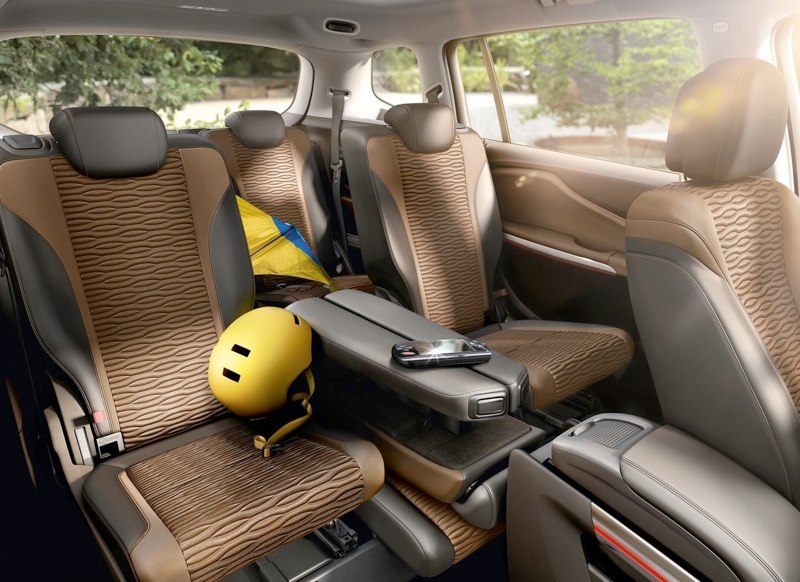
Inside too, Opel’s stylists have done a very successful job; everything looks swoopy and cool, with most of the switchgear lifted straight from the Insignia (nothing wrong with that) and there’s a sense of very high quality. Our test car was a final pre-production prototype, so there were some unfinished surfaces and items, but even taking those into account, the Tourer’s cabin more than lives up to Opel’s hopes for premium status. And the view out is as good, thanks to dramatic-looking split a-pillars that fork down to form a massive quarterlight, which does wonders for forward visibility.

Of course, it’s practical. There’s lots of space in the middle row, and the seats are just as comfy in the back as they are in the front (very) but the disappointment comes when you try to climb in the back row; there’s just not enough room, even compared to the Ford S-Max which is hardly the best-endowed car in that sense. In the Ford, adults can fit, albeit only for short journeys. In the Tourer, it would be a squeeze even for a short hop. Kids only.

Behind the headlights (which look as if they have been taken straight from advanced Ampera range-extender hybrid) lies the 2.0-litre CDTI turbo diesel with 130bhp. Which sounds like not quite enough for a car that weighs 1,571kg with only one person on board. But actually, the Tourer feels quite sprightly, net of a touch of turbo lag. It is noisy though. OK, again, this one was a pre-prod early build car, but still, a bit too much gurgle and grump for our tastes.

Economy is, if it can match Opel’s claims, little short of excellent. Now, we haven’t had a chance to test the claimed figures (not enough time in the car yet) but our experience with an Insignia with the 160bhp version of the same engine suggests that they might not be too far out. 4.5-litres per 100km is pretty good, just over 62mpg, and its 119g/km Co2 rating means that you’ll be paying just €160 a year, whatever the real-world fuel economy turns out like.

The chassis is a peach though. It doesn’t quite engage the driver as much as an S-Max would but otherwise, the news is all good. The steering feels sharp and well weighted, the ride (praise be!) is firm but never jiggly or poorly controlled and the overall feeling is of a car that is well balanced between the demands of keeping things entertaining for the driver yet comfy for the passengers.

So, taken on its own, the Zafira Tourer is nothing short of a success. It looks, feels and drives the part, keeps the usefulness of the old Zafira but adds a thick veneer of dynamic competence and premium-esque design and quality.

If the marketing works out, then perhaps customers will come to the Zafira Tourer, if they take one for a test drive, they’d be hard pressed not to be impressed. But, given the tough competition in the car market, anyone coming in with a proposition that reads “Better, but it’ll cost you” is going to find life very hard indeed.


Facts & Figures

Opel Zafira Tourer 2.0 CDTI Ecoflex SC
Price as tested: €30,495
Range price: €28,495 to €38,995
Capacity: 1,956cc
Power: 130bhp
Torque: 300Nm
Top speed: 193kmh
0-100kmh: 11.4sec
Economy: 4.5l-100km (62.7mpg)
CO2 emissions: 119g/km
VRT Band: A. €160 road tax
Euro NCAP rating: 5-star; 94% adult, 83% child, 53% pedestrian, 86% safety assist


Friday, 21 September 2012

Road Test: Seat Alhambra 2.0 TDI 140 Reference


Price as tested: €38,743

+ Massive space, sliding doors, comfy, well made
– Totally contrary to Seat’s sporting image, missing some key equipment
= Just not the kind of car Seat should be building


Let me start first off by saying that I genuinely, properly like Seats. Four have passed through the hands of variously myself and other family members in the past decade and a bit and none have ever given trouble or had more than a day off the road. Cracking cars, every one.

And the whole idea behind the Seat brand, since its takeover by Volkswagen in the late eighties, is a belter. VW sought to create a Spanish Alfa Romeo, a sporting brand full of passion and brio, but with the promise of the solidity of VW-derived engines and chassis underneath to allay any fears over reliability or quality.

On some Seat models, that all works fine. The Leon hatchback, especially in hot 260bhp Cupra form, is a cracking hot hatch and I have a major soft spot for the sharply styled Ibiza supermini. But the rest of the range is... well, not living up to the billing.

Take this, the Alhambra people carrier. Nothing wrong with it, when taken in isolation. It’s big, spacious, has seats for seven, it’s safe and I love the sliding rear doors, which give such good access to the rear cabin, especially in tight parking spaces.

It’s also well made, comfy and, with that excellent 2.0-litre TDI diesel engine (140bhp, 320Nm of torque) doing the shunting, it’s got decent performance and good fuel economy. In fact, with claimed economy of 5.6-litres per 100km comparing well with our observed economy of 6.0-litres per 100km, it must be one of the most consistently economical big cars going. That’s helped by standard-fit Stop-Start and the Alhambra, as tested in Reference specification, comes with seven airbags, ESP, electric child locks, front fog lights, electronic handbrake and climate control. Our test car also came with an optional €613 Lifestyle pack which includes 16” alloys, multi-function steering wheel, extra chrome bits and more. All of that for €38,743. Not bad.

Except... Well, there are a couple of quibbles. First off, let’s talk about price and spec. On the upside, the Alhambra is around €3,000 cheaper than the equivalent (and cirtually identical in every respect) Volkswagen Sharan, so that makes it something of a bargain. On the downside, who exactly is expected these days to pay the guts of €40k for a new car and find that such items as a leather steering wheel, parking sensors and Bluetooth phone connection are still on the options list? Come on Seat, look across the road at the competition from the likes of Kia and Hyundai and wake up and smell the coffee.

Meanwhile, there is a serious disconnect between the Alhambra in and of itself and the whole brand image that Seat wants to project. If Seat is supposed to be the sprawling VW Group’s sporty, youthful brand, why is it in the first place making an Alhambra at all? Surely such a big, practical car is more in the line of in-house rival Skoda? Why isn’t Seat making something more aimed at the family driver who still loves driving? Ford’s S-Max is an obvious rival in this sense; a seven-seater family hack that still has the sharp styling and equally sharp chassis that those of us who combine driving enthusiasm and the burden of kids crave.

Instead, the Alhambra majors on being comfy and spacious, but as a thing to drive, it’s a bit of a bus; lumbering awkwardly around corners and never, ever doing anything to engage the driver. The Alhambra also suffers from the same complaint we have of its Exeo saloon sister; the cabin is just too grey and too plain to give you even a tiny hint of the Spanish style that Seat is supposed to exude. Only at night, when it’s pleasantly lit with read and white backlighting, does the Alhambra’s cabin come to life.

As an individual vehicle, the Alhambra’s just fine. A big, spacious family hauler that’ll provide years of faithful, useful service. And there’s nothing wrong with that. But come one Seat, please start giving us more cars that live up to the marketing message.


Facts & Figures

Seat Alhambra 2.0 TDI 140 Reference
Price as tested: €38,743
Price range: €38,180 to €43,700
Capacity: 1,995cc
Power: 138bhp
Torque: 320Nm
Top speed: 215kmh
0-100kmh: 11.3sec
Economy: 5.6l-100km (50.4mpg)
CO2 emissions: 146g/km
Road Tax Band: C €302
Euro NCAP rating: 5-star adult: 96% adult, 80% child, 46% pedestrian, 71% safety assist